What happened to FTX?
UTXOHub · Bitcoin's history
FTX, one of the world's biggest crypto exchanges, collapsed in November 2022 when it could not give customers their money back. Billions of dollars of their deposits had gone to Alameda Research, a trading firm owned by FTX's founder, Sam Bankman-Fried. FTX stopped withdrawals on 8 November and filed for bankruptcy on 11 November. Bankman-Fried was convicted of fraud and is serving 25 years in prison. Customers with approved claims have since been paid 105% to 120% of what their accounts were worth in dollars when FTX failed. Their advocates say they still lost out, because bitcoin later became worth several times more.
What FTX and Alameda were
FTX was a crypto exchangeExchangeA business where people swap ordinary money for bitcoin and other coins. Coins left there are held by the exchange, which controls their keys.: a website where people bought and sold bitcoin and other coins, and left them in an account there between trades. It opened in May 2019 and was run from Hong Kong and later the Bahamas. It served most countries but not the United States, which had a sister exchange, FTX US, according to the complaint that the US Securities and Exchange Commission (SEC) later filed against FTX's founder.
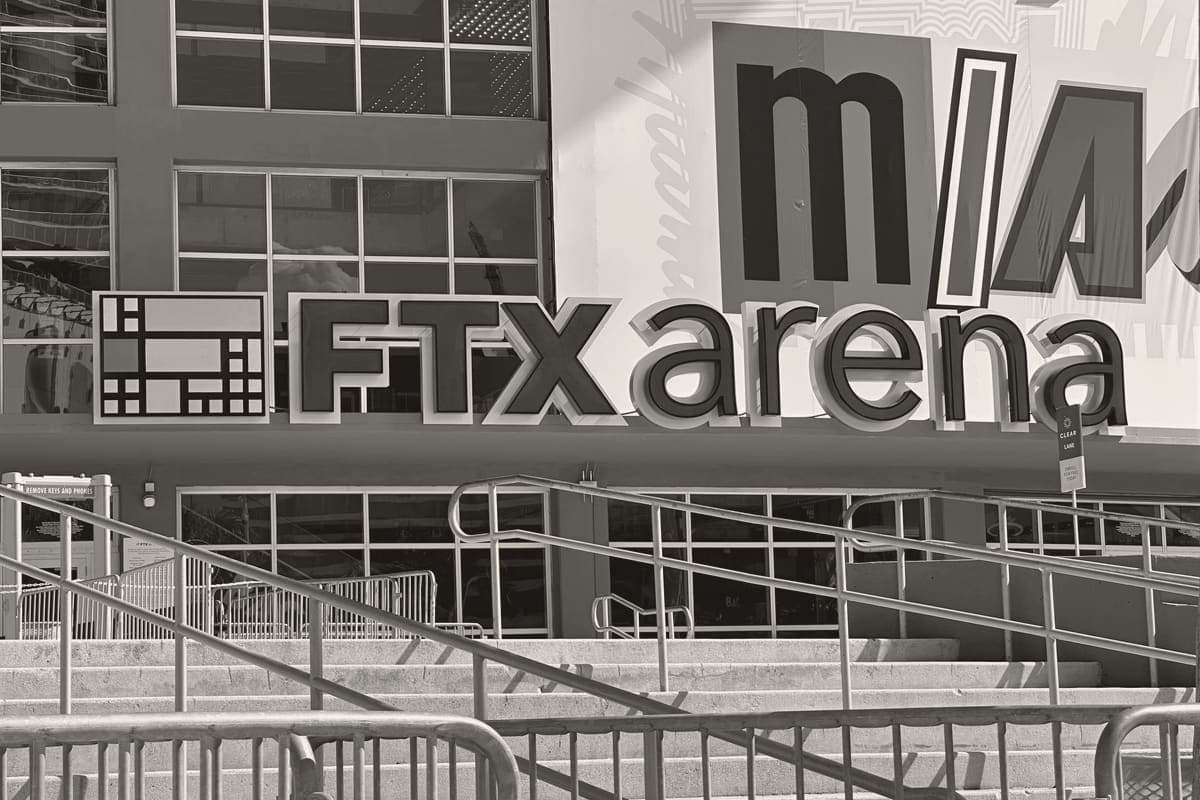
FTX grew fast. At its peak it handled more than $20 billion of trades a day and was valued at $32 billion, according to a second complaint, from the Commodity Futures Trading Commission (CFTC), which polices US markets in commodities such as bitcoin. It paid for the naming rights to a sports arena in Miami and ran a 2022 Super Bowl commercial that called FTX “the safest and easiest way to buy and sell crypto”.

Its founder, Sam Bankman-Fried, was the son of two Stanford law professors. He studied physics at the Massachusetts Institute of Technology and then traded for Jane Street, a Wall Street trading firm, giving about half his pay to charity. He followed effective altruism, a movement that asks how to do the most good, and spoke of “earning to give”: making as much money as possible in order to give it away. By 2022, aged 30, he was what Reuters called “the darling of the crypto world”, known for “his mop of unkempt curly hair and for wearing shorts and T-shirts rather than business attire”.
In October 2017 he and Gary Wang, a programmer, founded Alameda Research, a firm that traded crypto with its own money. Two years later they launched FTX with Nishad Singh, an engineer. Bankman-Fried owned 90% of Alameda and most of FTX, and Alameda became one of the main traders on FTX. Caroline Ellison, who joined Alameda in 2018, rose to run it, but the SEC says Bankman-Fried “remained the ultimate decision-maker” there.
FTX told customers their coins stayed theirs. Its terms of service, quoted in the CFTC's complaint, said: “Title to your Digital Assets shall at all times remain with you and shall not transfer to FTX Trading.” None of those assets, the terms went on, “shall or may be loaned to, FTX Trading”.
Ten days in November 2022
The collapse began with a news story. On 2 November 2022 CoinDesk, a crypto news site, reported on a leaked Alameda balance sheet. Of the $14.6 billion in assets it listed at the end of June, the biggest single item was $3.66 billion of FTT, a token FTX had created that gave holders discounts on its trading fees. Another $2.16 billion was listed as “FTT collateral”. Alameda, CoinDesk wrote, “rests on a foundation largely made up of a coin that a sister company invented”.
Four days later, at 15:47 UTC on Sunday 6 November, Changpeng Zhao, the founder of Binance, the world's largest crypto exchange, posted that Binance would sell its FTT. Binance had been an early investor in FTX and was paid partly in FTT when it sold its stake in 2021. “Due to recent revelations that have came to light, we have decided to liquidate any remaining FTT on our books,” he wrote.
Sixteen minutes later Ellison offered to buy the lot: “Alameda will happily buy it all from you today at $22!” That evening Zhao added: “We gave support before, but we won't pretend to make love after divorce.” Binance, he said, would not “support people who lobby against other industry players behind their backs”.
Because Alameda held so much FTT, the SEC says, “any further drop in the value of FTT threatened the solvency of FTX”, its ability to cover what it owed. Customers rushed to take their money out. FTX “saw roughly $5b of withdrawals on Sunday”, Bankman-Fried wrote later that week. On Monday he posted: “FTX is fine. Assets are fine,” adding: “We don't invest client assets (even in treasuries).” He deleted the post, which the SEC calls “false and misleading”.
By the morning of Tuesday 8 November FTX had stopped paying out. The last withdrawal left its main wallets on the Ethereum network at 6:37 a.m. New York time (11:37 UTC), The Block, another crypto news site, found from public blockchain data. At 16:03 UTC Bankman-Fried announced that Binance would buy FTX.
Zhao confirmed it six minutes later. FTX had asked for help with a “significant liquidity crunch”, meaning it didn't have the cash and coins on hand to pay everyone who asked, and Binance had signed a non-binding letter of intent, an agreement to try to agree a deal. “Binance has the discretion to pull out from the deal at any time,” he added. At 21:00 UTC the next day, it did: “As a result of corporate due diligence, as well as the latest news reports regarding mishandled customer funds and alleged US agency investigations, we have decided that we will not pursue the potential acquisition of FTX.com.”
On 10 November Bankman-Fried apologised: “I'm sorry. That's the biggest thing.” The next day FTX, Alameda and more than 100 related companies filed for bankruptcy in Delaware under Chapter 11, the US process that shields a company from its creditors while it reorganises or sells what it owns.
Bankman-Fried agreed to resign at about 4:30 a.m. New York time (09:30 UTC) that day, according to the sworn statement of the man who replaced him, John J. Ray III, a restructuring specialist who had dealt with the collapse of the energy company Enron. The same day at least $372 million left FTX in transfers nobody had authorised, and Ray's team began moving what was left into cold storageCold storageKeeping your keys on something that never touches the internet, such as a hardware wallet. An online wallet is a hot wallet., wallets kept offline. “Never in my career have I seen such a complete failure of corporate controls and such a complete absence of trustworthy financial information as occurred here,” he wrote.
Where the customers' money went
The regulators' complaints, filed on 13 December 2022, set out where the money had gone. From FTX's launch until at least 2021, customers sending dollars were told to wire them to bank accounts controlled by Alameda, some in the name of a subsidiary called North Dimension. Alameda mixed that money with its own and spent it. FTX recorded what Alameda owed in an internal account named “fiat@ftx.com”, and Alameda's share grew to more than $8 billion, the SEC says.
FTX's software also treated Alameda as it treated no other customer. Code written at Bankman-Fried's direction let Alameda run a negative balance, through what the CFTC calls an “allow negative flag”, and gave it an “effectively limitless line of credit” funded by other customers' deposits. When crypto prices fell in May 2022 and Alameda's lenders asked for their money back, it drew billions more from FTX to repay them. Customers' money also paid for “luxury real estate purchases, political contributions, and high-risk, illiquid digital asset industry investments”, the CFTC says.
Bankman-Fried told a different story. On 10 November he blamed “a poor internal labeling of bank-related accounts”. In a chat with a reporter from the news site Vox, quoted by the CFTC, he described FTX deciding “oh FTX doesn't have a bank account, I guess people can wire to Alameda's to get money on FTX” and, three years later, finding that “people wired $8b to Alameda and oh god we basically forgot about the stub account”.
The hole was deep. In March 2023 FTX's new managers reported a “$9.3 billion net borrowing by Alameda Research LLC from the FTX.com wallets and accounts”. Of $2.2 billion in assets found at FTX.com, only $694 million was cash or coins that were easy to sell. And when it failed, FTX.com held “only 0.1% of the Bitcoin and only 1.2% of the Ethereum customers believed it held”, they said in 2024.
What it meant for bitcoin
Bitcoin itself carried on: new blocksBlockA batch of transactions added to Bitcoin's shared record, about every 10 minutes on average. kept arriving about every ten minutes. What failed was a company holding coins for its customers. The price fell all the same. On mempool.space's price feed, bitcoin was $20,924 at the start of 6 November and $15,898 three days later, about a quarter lower, with more than half of that fall coming on 8 November, the day FTX stopped withdrawals. On 21 November it reached $15,761, its lowest on the feed since November 2020, and it didn't get back to its 6 November level until January 2023. The fall shows on UTXOHub's price chart, which uses the same feed.
Unlike Black Thursday in March 2020, when bitcoin fell with shares around the world at the start of the pandemic, this fall began inside the crypto industry, and it spread to firms that had lent to Alameda or kept money at FTX. BlockFi, a crypto lender, filed for bankruptcy on 28 November, saying it would focus on recovering what was owed to it “by its counterparties, including FTX and associated corporate entities”.
Not your keys, not your coins
To many bitcoin users, FTX taught an old lesson again: “not your keys, not your coins”. Bitcoin can be spent only by whoever holds its private keyPrivate keyThe secret number that lets you spend your bitcoin. Whoever knows it controls the coins, so it must never be shared., the secret number that signs payments. FTX's terms said customers owned their coins, but FTX held the keys, so a balance on FTX was only FTX's promise. Andreas Antonopoulos, author of the book Mastering Bitcoin, says he coined the phrase in 2013, the year before customers of another exchange, Mt. Gox, lost their bitcoins.
Many people acted on it. In the seven days from 6 November, exchanges saw “one of the largest net declines in aggregate BTC balance in history, falling by 72.9k BTC”, the analytics firm Glassnode found. “Last week saw Ledger's highest sales week in history,” Pascal Gauthier, chief executive of the hardware-wallet maker Ledger, told Decrypt. “‘Not your keys, not your coins.’ A saying as old as crypto itself, but it has never been more relevant.”
Even Zhao, who ran the biggest exchange, wrote on 13 November that “Self custody is a fundamental human right”, with a warning: “Mistakes here can be very costly.” The SEC's guide to custody for investors makes the same two-sided point. If an exchange or other custodian “is hacked, shuts down, or goes bankrupt, you may lose access to your crypto assets”; if you hold your own keys and “your crypto wallets are lost, stolen, damaged, or hacked, you may permanently lose access to your crypto assets.”
Zhao's answer for exchanges was proof of reserves, published evidence that an exchange holds the coins its customers' balances add up to. “Banks run on fractional reserves. Crypto exchanges should not,” he wrote on 8 November. Jesse Powell, a co-founder of the rival exchange Kraken, warned that such reports could mislead: “The statement of assets is pointless without liabilities.”
Arrest, trial and prison
Bankman-Fried was arrested at his apartment complex in Nassau, in the Bahamas, shortly after 6 p.m. on 12 December 2022, over financial offences against US law. The next day federal prosecutors in Manhattan made public eight criminal charges against him, and the SEC and CFTC filed their complaints. Damian Williams, the US attorney there, said the charges showed “this was not a case of mismanagement or poor oversight, but of intentional fraud, plain and simple”.
He was extradited on 21 December, and prosecutors revealed that Ellison, who had run Alameda, and Wang, FTX's co-founder, had pleaded guilty and were cooperating. A judge released him on a $250 million bond to live at his parents' home in Palo Alto, California.
In August 2023 Judge Lewis Kaplan, who was to try the case, sent him to jail, finding “probable cause to believe the defendant tried to tamper with witnesses at least twice”. At the month-long trial that autumn, three of his former inner circle testified against him. He testified that he had made mistakes but had not stolen customers' money. On 2 November 2023, a year to the day after CoinDesk's report, the jury found him guilty on all seven counts, two of fraud and five of conspiracy, after just over four hours, Reuters reported.
On 28 March 2024 Kaplan sentenced him to 25 years in prison and ordered him to forfeit $11 billion. “He knew it was wrong,” the judge said. “He knew it was criminal. He regrets that he made a very bad bet about the likelihood of getting caught.” Of his former colleagues, Bankman-Fried told the court: “They put a lot of themselves into it, and I threw that all away. It haunts me every day”. Ellison, his former girlfriend and the prosecution's star witness, was later sentenced to two years in prison; Wang and Singh received no prison time, CNBC reported.
His appeal argued that Kaplan had wrongly stopped him telling the jury that FTX and Alameda had enough assets to repay everyone in the end. The US Court of Appeals for the Second Circuit rejected it on 12 June 2026: “Whether the assets purchased by Bankman-Fried appreciated in value is irrelevant as to whether he committed fraud.”
On 10 September 2026 he asked the Supreme Court to hear his case, and the government's reply is due by 16 November, its docket shows. He is held at a federal prison in Lompoc, California, with a projected release date of 25 December 2043, according to the Bureau of Prisons.
Will he be pardoned?
Bankman-Fried has sought a pardon from President Donald Trump. In early 2025 his parents were exploring how to seek one, meeting lawyers and others “considered to be in Trump's orbit”, Bloomberg reported. That March, in an interview from prison, he told the broadcaster Tucker Carlson: “I don't think I was a criminal,” according to Cointelegraph.
In 2026 he applied formally: the Justice Department lists a pending request for a “pardon after completion of sentence”, CNBC reported in June. His family argues that he was treated unfairly. His mother, Barbara Fried, called the prosecution “essentially political” in a CNN interview in March 2026, described by CoinDesk.
Trump, who pardoned Zhao in October 2025, has said no. He told The New York Times in January 2026 that he had “no intention of pardoning” Bankman-Fried, as CNBC quoted him, and a White House spokesperson repeated that to Fortune the next month: “The President is the ultimate decider on all pardons.” Fortune noted that his reputation as one of the top donors to Joe Biden's campaign had limited his appeal to Trump's administration.
On 15 July 2026 the Senate unanimously passed a resolution that he should not be pardoned, put forward by Ruben Gallego, a Democrat, and Cynthia Lummis, a Republican. “Bankman-Fried stole billions from hardworking Americans,” Gallego said. “He's a criminal who deserves to stay locked up.”
Were customers made whole?
Ray, FTX's new chief executive, and his team spent almost two years rebuilding its books from the ground up and selling what the companies owned, mostly investments made by Alameda and FTX's venture arm. The court confirmed their repayment plan on 7 October 2024. Each customer's claim was valued in dollars at prices on the day FTX filed for bankruptcy, $16,871.63 for a bitcoin by the court's table, with interest of up to 9% a year on top.
Payments began on 18 February 2025 with claims of $50,000 or less. After the fifth round, on 31 July 2026, customers with approved claims had received 105% of their value and the smallest claims 120%, FTX said. Customers are paid only once they have proved their identity and chosen one of the firms handling payouts.
To the estate, that is full repayment. Ray said when the plan was confirmed that FTX was “poised to return 100% of bankruptcy claim amounts plus interest for non-governmental creditors”, and by the end of June 2026 it had paid about $9.6 billion on creditors' claims, its report to the court shows. It repaid in dollars, not coins, because the coins were gone: it had “not been able to benefit from the appreciation of these missing tokens”, it said in 2024.
Bankman-Fried goes further. “There have always been enough assets to repay all customers—in full, in kind—both in November 2022, and today,” he wrote in a paper dated 30 September 2025, Cryptonews reported. His father, Joseph Bankman, told CNN in March 2026: “The money was always there.”
Creditors' advocates see it differently, because customers who had bitcoin on FTX got dollars back, not bitcoin. A bitcoin counted as $16,871.63 in the plan; on mempool.space's feed, bitcoin passed $126,000 in October 2025. “FTX creditors are not whole,” wrote Sunil Kavuri, who has represented FTX creditors, according to CoinDesk. A prosecutor, Thane Rehn, told the appeal court in November 2025: “Three Bitcoin are now worth about eight times what the value of those three Bitcoin were in November of 2022 so those victims aren't being close to being made whole in the bankruptcy,” CoinDesk reported.
References
- US Securities and Exchange Commission, “SEC v. Samuel Bankman-Fried, complaint”, 13 December 2022.
- US Commodity Futures Trading Commission, “CFTC v. Samuel Bankman-Fried, FTX Trading Ltd. and Alameda Research LLC, complaint”, 13 December 2022.
- Associated Press, via ESPN, “Heat arena, formerly FTX, renamed Kaseya Center on 17-year deal”, 4 April 2023.
- Wikipedia, “Sam Bankman-Fried”.
- Reuters (Luc Cohen and Jody Godoy), via Insurance Journal, “Ex-Crypto Mogul Sam Bankman-Fried Convicted of Multi-Billion Dollar FTX Fraud”, 3 November 2023.
- CoinDesk (Ian Allison), “Divisions in Sam Bankman-Fried’s Crypto Empire Blur on His Trading Titan Alameda’s Balance Sheet”, 2 November 2022.
- Changpeng Zhao, on X, “As part of Binance’s exit from FTX equity last year…”, 6 November 2022.
- Caroline Ellison, on X, “@cz_binance if you’re looking to minimize the market impact on your FTT sales…”, 6 November 2022.
- Changpeng Zhao, on X, “Liquidating our FTT is just post-exit risk management…”, 6 November 2022.
- Sam Bankman-Fried, on X, “1) I’m sorry. That’s the biggest thing.”, 10 November 2022.
- The Block (Yogita Khatri), “FTX appears to have stopped processing withdrawals, on-chain data show”, 8 November 2022.
- Sam Bankman-Fried, on X, “1) Hey all: I have a few announcements to make.”, 8 November 2022.
- Changpeng Zhao, on X, “This afternoon, FTX asked for our help…”, 8 November 2022.
- Binance, on X, “As a result of corporate due diligence…”, 9 November 2022.
- CNBC (MacKenzie Sigalos), “Sam Bankman-Fried steps down as FTX CEO as his crypto exchange files for bankruptcy”, 11 November 2022.
- US Bankruptcy Court for the District of Delaware, via CourtListener, “Declaration of John J. Ray III in support of chapter 11 petitions and first day pleadings, In re FTX Trading Ltd., No. 22-11068, Doc. 24”, 17 November 2022.
- US Commodity Futures Trading Commission, “CFTC Charges Sam Bankman-Fried, FTX Trading and Alameda with Fraud and Material Misrepresentations”, 13 December 2022.
- FTX Debtors, via PR Newswire, “FTX Debtors Publish Second Presentation for Stakeholders”, 2 March 2023.
- FTX, via PR Newswire, “FTX Files Consensus-Based Plan of Reorganization”, 7 May 2024.
- mempool.space, “Historical bitcoin price in US dollars (API)”.
- Gulf News, “Crypto lender BlockFi goes bankrupt in aftermath of FTX”, 28 November 2022.
- aantonop.com, “About Andreas”.
- Glassnode, “The Fall of FTX (The Week On-chain, week 46, 2022)”, 14 November 2022.
- Decrypt, “Crypto Cold Wallets in Ledger, Trezor Sales Moon After FTX Collapse”, 15 November 2022.
- Changpeng Zhao, on X, “Self custody is a fundamental human right…”, 13 November 2022.
- US Securities and Exchange Commission, Investor.gov (Internet Archive copy), “Crypto Asset Custody Basics for Retail Investors – Investor Bulletin”, 12 December 2025.
- Changpeng Zhao, on X, “All crypto exchanges should do merkle-tree proof-of-reserves…”, 8 November 2022.
- Jesse Powell, on X, “I’m sorry but no. This is not PoR…”, 25 November 2022.
- Royal Bahamas Police Force, via the Securities Commission of The Bahamas, “News release 317-2022: Arrest: Sam Bankman-Fried”, 12 December 2022.
- US Attorney’s Office, Southern District of New York (Internet Archive copy), “United States Attorney Announces Charges Against FTX Founder Samuel Bankman-Fried”, 13 December 2022.
- US Attorney’s Office, Southern District of New York (Internet Archive copy), “United States Attorney Announces Extradition Of FTX Founder Samuel Bankman-Fried To The United States And Guilty Pleas Of Former CEO Of Alameda Research And Former Chief Technology Officer Of FTX”, 22 December 2022.
- Al Jazeera, “FTX founder Bankman-Fried released on $250m bond”, 22 December 2022.
- CNBC, “U.S. judge sends FTX’s Sam Bankman-Fried to jail over witness tampering”, 11 August 2023.
- US Department of Justice (Internet Archive copy), “Samuel Bankman-Fried Sentenced to 25 Years for His Orchestration of Multiple Fraudulent Schemes”, 28 March 2024.
- AAP, “Bankman-Fried sentenced to 25 years for FTX fraud”, 28 March 2024.
- CNBC, via NBC New York, “FTX co-founder Gary Wang avoids prison time for role in crypto fraud”, 20 November 2024.
- US Court of Appeals for the Second Circuit, “United States v. Bankman-Fried, No. 24-961-cr, opinion”, 12 June 2026.
- Supreme Court of the United States, “Docket No. 26-349, Bankman-Fried v. United States”.
- Federal Bureau of Prisons, “Find an inmate (register number 37244-510)”.
- Bloomberg (Ava Benny-Morrison), via Bloomberg Law, “Sam Bankman-Fried’s Parents Explore Seeking Trump Pardon for Son”, 30 January 2025.
- Cointelegraph, “Ex-FTX CEO moved to transit facility after interview”, 27 March 2025.
- CNBC, “Sam Bankman-Fried files formal request for Trump pardon”, 8 June 2026.
- CoinDesk (Sam Reynolds), “Sam Bankman-Fried’s parents tell CNN no customer money was lost. FTX creditors see it differently.”, 23 March 2026.
- Fortune (Leo Schwartz), “Sam Bankman-Fried is waging a social media campaign for a pardon—but President Trump will not give him one, says the White House”, 24 February 2026.
- The National Desk, “Senate unanimously passes resolution saying Sam Bankman-Fried should not receive pardon”, 16 July 2026.
- FTX, via PR Newswire, “FTX Receives U.S. Bankruptcy Court Confirmation of its Plan of Reorganization”, 7 October 2024.
- US Bankruptcy Court for the District of Delaware, via CourtListener, “Order granting motion of debtors to estimate claims based on digital assets, exhibit 1, Doc. 7090-1”, 7 February 2024.
- FTX, via PR Newswire, “FTX Commences Initial Distributions to Convenience Class and Sets Next Distribution”, 18 February 2025.
- FTX, via PR Newswire, “FTX Announces Fifth Distribution of Approximately $900 Million to Creditors on July 31, 2026”, 17 July 2026.
- US Bankruptcy Court for the District of Delaware, via CourtListener, “FTX Recovery Trust, post-confirmation report for the quarter ending 30 June 2026, Doc. 36026”, 21 July 2026.
- Cryptonews (Shalini Nagarajan), via Yahoo Finance, “Sam Bankman-Fried Claims FTX Was ‘Never Insolvent’ — Here’s What Happened In His View”, 31 October 2025.
- CoinDesk (Nikhilesh De), “State of Crypto: SBF (Somehow) Had Another Bad Day in Court”, 8 November 2025.