
Jed McCaleb.
Founder of Mt. Gox; later co-founded Ripple and Stellar
Jed McCaleb started the bitcoin exchange Mt. Gox in 2010, on a web address left over from his Magic: The Gathering card-trading site. He sold it to Mark Karpelès in 2011; the two give different accounts of 80,000 bitcoins stolen in the handover.
Before Bitcoin
“I’ve been a programmer forever since I was a little kid,” McCaleb told Peter McCormack’s podcast What Bitcoin Did in 2019. Wired, profiling him in 2013, called him a “surfer and Berkeley dropout” who “likes building things that make powerful people nervous”. “I do have a distrust of authority,” he told the magazine, before correcting himself: “Or maybe not a distrust of authority, but I really appreciate freedom.”[1][5]
In 2000 he created eDonkey 2000, a network for sharing files directly between people’s computers, which Wired said soon became “the world’s most popular way of sharing music online”. In September 2006 six record companies sued McCaleb and the others behind eDonkey for copyright infringement. Within days the defendants agreed to a judgment and permanent injunction, which the court entered: they were to pay $30 million in damages and stop distributing the software. After that, Wired reported, he left file sharing behind.[1][2]
The name Mt. Gox comes from a side project he started once eDonkey had wound down. McCaleb noticed that people were playing an online version of the card game Magic: The Gathering but had no easy way to trade their cards, so he built a site for it: “Mt. Gox or Magic the Gathering online exchange”, as he put it to McCormack. “It allowed cards to be bought and sold like stocks,” he told the writer Gwern Branwen in 2014. It was up for “3 months maybe”, not many people used it, and “ultimately it wasn’t worth my time”.[3][5]
Starting and selling Mt. Gox
McCaleb read about Bitcoin in an article on the technology news site Slashdot in the summer of 2010, he recalled, and “was pretty immediately taken to it”. He hadn’t thought anyone could stop the same digital money being spent twice without a bank or some other “party in the middle”, and Bitcoin had solved “this double spendDouble spendAn attempt to spend the same bitcoin twice. Only one of the conflicting payments can ever confirm. problem”. It was hard to get then unless you mined it yourself, running a computer that earns new bitcoins for confirming payments, and its whole community was a couple of thousand people on one forum.[5]
So he built an exchange, a website where people trade bitcoin for ordinary money, partly to learn how Bitcoin worked, and put it on the old card site’s domain, which he “just had laying around”. On 18 July 2010 he posted on the Bitcoin forum: “I just put up a new bitcoin exchange. Please let me know what you think.” He ran it alone: it had no employees, he said years later in a sworn declaration filed in a US lawsuit over the exchange.[3][4][5][7]
It grew quickly. Customers paid in through PayPal, among other ways, until fraud and reversed payments led PayPal to shut the account: “they banned me for life.” Within months, Wired reported, customers were wiring him large sums, and he decided to get out, citing unclear regulation. When he announced the sale, he told the forum that making Mt. Gox what it could be “would require more time than I have right now”. Later he added that keeping the site secure “was going beyond hobby scale”, and that running an exchange was “not as intellectually challenging as I would like”.[1][5][6]
In January 2011 he offered the exchange to Mark Karpelès, a programmer who ran a web-hosting company, Tibanne, and posted on the forum as MagicalTux. Karpelès had already connected Mt. Gox to a European bank for him so that customers could deposit euros, though the two had never met in person. According to McCaleb’s declaration, he sold Mt. Gox to Karpelès and Tibanne on or about 3 February 2011 and handed over control during February and March. He described the price as “essentially free, although not free”: Karpelès was to pay him out of future revenue and cover money the exchange had lost. McCaleb kept 12% of the company, Ars Technica reported in 2014, citing a leaked company document.[5][6][7][8][10]
The collapse, and when the trouble began
Under Karpelès, Mt. Gox was run from Tokyo and grew into the world’s largest bitcoin exchange. In February 2014 it announced that 750,000 of its customers’ bitcoins and 100,000 of its own were gone, and sought bankruptcy protection. McCaleb heard about it “like everybody else”, he said later.[5][8]
What happened to Mt. GoxWithin weeks he was being sued. In March 2014 customers who had lost money at Mt. Gox added him, with Karpelès and others, to a class action in a federal court in Illinois accusing them of “fraudulent misappropriation of the money and property of Mt. Gox members”. McCaleb told Ars Technica he was “in the process of being dismissed from the Mt. Gox lawsuits”, having had no involvement “other than as a minority shareholder since early 2011”. It saddened him, he said, “to see the negative impact that Mt. Gox ended up having. Like many [others], I had money in Mt. Gox which I have also lost.” On 16 April 2015 Judge Gary Feinerman dismissed the customers’ claims against him without prejudice, which left them free to sue him again; the case went on against Karpelès and the Japanese bank Mizuho alone.[13][8][14]
Looking back in 2019, he said: “I never expected it to die that way.” He had thought Karpelès might run the business out of money, not lose its coins. “None of that had to happen.” Asked whether he bore any responsibility, he said: “I definitely could have found someone other than Mark to take it over. I think that’s like the number one thing.”[5]
Others have traced part of the losses back to the handover. Kim Nilsson of WizSec, a group of bitcoin security specialists who have spent years investigating Mt. Gox, found that on 1 March 2011 someone emptied the exchange’s hot wallet: the coins it kept online to pay out withdrawals. The thief had apparently copied the wallet file, which held the keys to those coins, from McCaleb’s server. About 80,000 bitcoins went in a single transaction, by Nilsson’s estimate about a third of customers’ deposits at the time. The coins have stayed where they were sent, he wrote in 2020.[9]
See the 80,000-bitcoin transactionKarpelès says the coins were taken before he had control. “Between the time I signed the contract and the time I got access to the server, 80,000 bitcoins were stolen… Jed was adamant that we couldn’t tell users about it,” he told Bitcoin Magazine in 2025. There had been an earlier loss too: in his declaration, McCaleb said a hacker took about $50,000 from Mt. Gox in January 2011, and that he told Karpelès about it before the sale.[7][10]
McCaleb tells it differently. The theft happened during a two-week stretch when both men had access, he said in 2019, after the site “already belonged to him”, and he advised Karpelès to cover the loss from trading fees. The amount “sounds like a lot now because it was a lot of Bitcoins, but it wasn’t a lot back then”, he said. What sank Mt. Gox, in his view, was a much larger theft that slowly drained it over the following years: “that is the nail in the coffin.” Nilsson also treats the two as separate: he traces the main theft, more than 600,000 bitcoins taken between 2011 and 2013, to a second theft of the hot wallet on 11 September 2011.[5][9]
Ripple, Stellar and Vast
Selling Mt. Gox left McCaleb thinking about how Bitcoin could be done better. First, Wired reported in 2013, he wanted to do away with mining, which had become an arms race of ever more specialised and powerful computers, and which he saw as excessive. He hired developers and started Ripple, a payment network with its own digital currency, XRP. He was one of three founders of the company, Ripple Labs, and split from it in July 2013, though he was still on its board that September.[1]
In July 2014 he launched Stellar, another payment network, this time run by a non-profit, the Stellar Development Foundation. He led its development with David Mazières, a Stanford computer scientist, starting from the technology he had created at Ripple; the code was later rewritten. “The visions are sort of the same obviously, because, you know, I created both of them,” he said in 2019. In the same interview he said he still owned some bitcoin and, though he thought most crypto projects lacked technical merit, counted Bitcoin among “the 10% of the projects that are quality”.[5][11]
Asked in 2019 whether he had booked a seat on Virgin Galactic’s short flights to space and back, he said: “I’m only interested to go to another planet.” He went on to found Vast, a company that builds commercial space stations, and is its executive chairman.[5][12]
Reviewed . To report a mistake, email hello@utxohub.com.
Picture: Jed McCaleb, from Vast’s website. Vast, toned by UTXOHub.
More people
The first years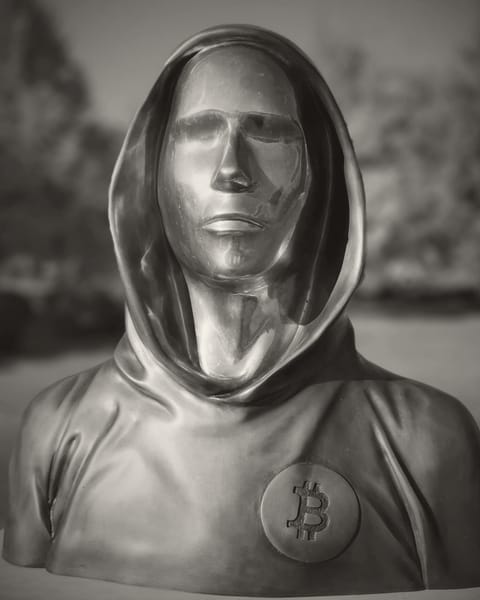 Satoshi NakamotoPseudonymous creator of Bitcoin
 Hal FinneyCryptographer who received the first bitcoin transaction
 Laszlo HanyeczEarly developer who paid 10,000 BTC for two pizzas
 Gavin AndresenLead Bitcoin developer after Satoshi, 2010–2014
 Marek PalatinusFounder of Slush Pool and co-founder of SatoshiLabs
 Mike HearnEmailed Satoshi, wrote bitcoinj, launched Bitcoin XT
 Charlie ShremCo-founder of BitInstant; Bitcoin Foundation vice chairman
References
- Wired (Robert McMillan), “Bitcoin Maverick Returns for New Crack at Digital Currency”, 30 September 2013.
- US District Court, Southern District of New York (via CourtListener), “Arista Records LLC v. MetaMachine, Inc., Sam Yagan and Jed McCaleb, No. 06-cv-6991: Judgment and Permanent Injunction”, 15 September 2006.
- Gwern.net (Jed McCaleb’s emails to Gwern Branwen), “2014 Jed McCaleb MtGox interview”, 16–17 February 2014.
- Bitcointalk, “New Bitcoin Exchange (mtgox.com)”, 18 July 2010.
- Hacker Noon (Peter McCormack, What Bitcoin Did), “Mt. Gox Interviews: Jed McCaleb on the Creation of Mt. Gox”, 26 February 2019.
- Bitcointalk, “Mtgox is changing owners”, 6 March 2011.
- US District Court, Northern District of Illinois (via CourtListener), “Greene v. Karpeles, No. 1:14-cv-01437: Declaration of Jed McCaleb (Document 467-14)”, 18 February 2020.
- Ars Technica (Cyrus Farivar), “Original Mt. Gox founder: “I lost around $50,000” in site’s collapse”, 1 May 2014.
- WizSec (Kim Nilsson), “The 80,000 stolen MtGox bitcoins”, 19 June 2020.
- Bitcoin Magazine (Juan Galt), “Former Mt. Gox CEO Mark Karpelès Reveals Details of 2014 Collapse and Japanese Detention”, 22 December 2025.
- Stellar Development Foundation, “Introducing Stellar”, 31 July 2014.
- Vast, “Team”.
- US District Court, Northern District of Illinois (via CourtListener), “Greene v. Karpeles, No. 1:14-cv-01437: Corrected First Amended Class Action Complaint (Document 37)”, 17 March 2014.
- US District Court, Northern District of Illinois (via CourtListener), “Greene v. Karpeles, No. 1:14-cv-01437: minute entry before Judge Gary Feinerman (Document 147)”, 16 April 2015.