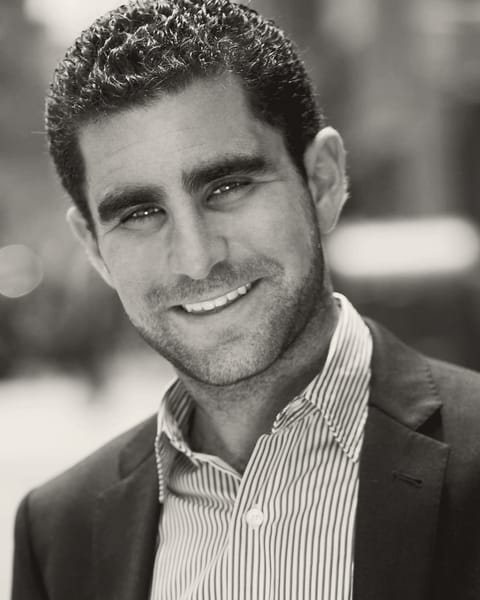
Charlie Shrem.
Co-founder of BitInstant; Bitcoin Foundation vice chairman · Also known as Charles Shrem
Charlie Shrem’s company BitInstant let people buy bitcoin with cash at shops such as Walmart. In 2014 he pleaded guilty to aiding and abetting the operation of a customer’s unlicensed money transmitting business that served Silk Road users.
BitInstant and the Bitcoin Foundation
Charlie Shrem started buying bitcoin as a student at Brooklyn College. In 2011 that was slow. You either found someone willing to sell you some, or wired money to a big exchange such as Mt. Gox and waited: because banks took days to process transfers, buying on an exchange could take as long as six days, The Verge reported. On 13 June 2011 a part-time student posted an idea on the Bitcoin forum for a service that would put customers’ money on Mt. Gox at once, for a small fee. Shrem replied the same day, asking for a private message: “PM some more info, I could work with you.” The two founded BitInstant, with Shrem as chief executive, and it opened that August.[1][2][13][3]
BitInstant made buying bitcoin “as easy as getting a money order”, as NPR’s Planet Money later put it: customers could hand over cash at a Walmart or a pharmacy and get bitcoin in their wallet, the app that holds a person’s coins. The bitcoin investor Roger Ver put in $125,000. Shrem also got the twins Cameron and Tyler Winklevoss, known for their settlement with Facebook, interested in bitcoin in 2012, and they invested $1.5 million. Before long, Shrem said, the company was “processing over a million dollars a day”.[1][2][5]
What a wallet isHe opened a bar in Manhattan, EVR. Looking back, he said on Planet Money: “I believed that I was completely right about everything all the time.”[1][2]
In September 2012 he joined the first board of the Bitcoin Foundation, a new non-profit set up “to accelerate the global growth of bitcoin through standardization, protection, and promotion of the open source protocol”. Alongside him sat Gavin Andresen, then Bitcoin’s lead developer, and Mark Karpelès, head of the Mt. Gox exchange. The foundation planned to pay for the work of Bitcoin’s core developers and to hold an annual conference. Shrem became its vice chairman.[6][7]
Silk Road and the arrest
One of BitInstant’s customers was Robert Faiella, who sold bitcoin under the name “BTCKing” on Silk Road, a black-market website “designed to enable users to buy and sell illegal drugs anonymously and beyond the reach of law enforcement”, in the Justice Department’s words. Bitcoin was the only payment Silk Road accepted. Faiella bought it through BitInstant, which prosecutors said let customers swap cash for bitcoin without giving personal details. He resold it to the site’s users at a markup, without meeting the federal registration rules for money transmitters. Together, prosecutors said, the two men exchanged nearly $1 million in cash for bitcoin for Silk Road users.[3][9]
Shrem later admitted he knew. “I knew about it. I did. And I didn’t really care and I was a young kid. I didn’t really care enough to stop it, because I was making money,” he told WNYC’s podcast Death, Sex & Money in 2017. Asked by Planet Money what he had been thinking, he said: “I wasn’t thinking. That was the whole point.” BitInstant stopped operating in July 2013, after his lawyers, he said, told him they would stop representing him unless he shut it down.[2][3][4]
On 26 January 2014, flying home from a talk in Amsterdam, Shrem was arrested at John F. Kennedy Airport in New York. Asked years later when he realised he had gone too far, he told NPR: “that was the moment they were placing the handcuffs on my hands.” The criminal complaint charged him with operating an unlicensed money transmitting business, conspiring to commit money laundering, and wilfully failing to file a suspicious activity report, the report a money business must send the US Treasury when a customer’s dealings look criminal. The US Attorney’s office said the charges were “merely accusations”. On 28 January he resigned as the foundation’s vice chairman. In April a grand jury indicted him on the same three charges.[1][15][2][8][14]
Guilty plea and prison
On 4 September 2014, before US District Judge Jed S. Rakoff in Manhattan, Shrem pleaded guilty to one charge, filed in place of the indictment with his agreement: aiding and abetting the operation of Faiella’s unlicensed money transmitting business. Faiella pleaded guilty that month too, prosecutors said. Reading a statement he had prepared that morning, Shrem admitted that between January and October 2012 he had helped BTCKing by processing bitcoin orders, knowing that BTCKing had not registered as a money transmitter and that the money was “converted into bitcoin and resold on a website called Silk Road”. “I knew that what I did here was wrong,” he said. “I am pleading guilty because I am guilty.”[9][3][10]
On 19 December 2014 Rakoff sentenced him to two years in prison, followed by three years of supervised release, a period of monitoring by probation officers, and ordered him to forfeit $950,000. That sum was, in the prosecutors’ words, “the amount of funds involved in the offense that were intended to promote illegal activity”. His plea agreement had put the range suggested by federal sentencing guidelines at 57 to 60 months. Rakoff said Shrem had been “knowingly, willfully, and to some extent excitedly, even passionately involved in activity that he knew was a serious violation of the law”. The April indictment was dismissed at the prosecutors’ request, and with it the money-laundering conspiracy and reporting charges.[3][9][10]
In 2015 he began his sentence at the federal prison in Lewisburg, Pennsylvania. In the first weeks, he told NPR, “the only place to cry is in the shower.” He read 137 books that year, he said, and found that the inmates’ money was packets of mackerel: “a haircut is two macks.” Lying on his bunk, he worked out how inmates could keep the accounts in notebooks, copied between many keepers so that no one was in charge. It was the way Bitcoin works, with each keeper playing the part of a node, one of the computers that each hold a copy of the record. It was against prison rules, and he never tried it.[2][4][5]
What a node isHe was released in mid-2016, after a little over a year. “You ever see that statue of Atlas with the world on his shoulders? Imagine having that, and imagine it being lifted within seconds,” he told NPR of the day he walked out. For six months he had to hold a job that officials could check on, and the only one he found was washing dishes in rural Pennsylvania, 11 hours a day for $8 an hour. “And you couldn’t quit. If I quit, I’d go right back to prison,” he said. He told Death, Sex & Money that “in hindsight it was one of the best experiences”. He had gone, as The New York Times later put it, from “one of the earliest Bitcoin millionaires” to being called Bitcoin’s “first felon”.[2][4][5]
After prison
Some in Bitcoin had thought the prosecution unjust. “Even if absolutely everything the government is alleging is true, Charlie has done nothing that’s morally wrong,” Ver, the investor who had backed BitInstant early, told The Verge after the arrest. Shrem has rejected that defence. In 2017 he said he hated being told he shouldn’t have been convicted: “Don’t say that. I was guilty. I did my time.” In prison, he said, “everyone tells you they’re guilty”, because claiming innocence “minimizes all that hard work you’re doing to get out”.[1][4]
He went back into the industry. In 2017 he told Planet Money he was “definitely not a bitcoin maximalist anymore”, no longer wanting Bitcoin to replace the whole financial system, and had started Intellisys Capital, a fund that planned to buy private American companies and sell its shares on a blockchainBlockchainBitcoin's shared record of every payment since 2009, stored in blocks that each link to the one before — which is what makes it a chain., a shared ledger like Bitcoin’s. By late 2018, the Times reported, two projects he had helped lead, a cryptocurrency credit card and an initial coin offering (a sale of new digital tokens to raise money), had had to give investors their money back when partnerships he had promised fell through.[2][5]
Also in 2018, the Winklevoss twins, early investors in BitInstant and by then the founders of the Gemini exchange, sued him through their fund. They said that in 2012 they had given him money to buy bitcoin for them, and that he had never delivered about 5,000 of the coins. Shrem’s lawyer, Brian Klein, called the claims baseless. In April 2019 the two sides told the court they had settled, and the case was dismissed.[5][11]
In May 2019 Shrem started a podcast of interviews with people from Bitcoin and other technologies, first called Untold Stories and later The Charlie Shrem Show. It had passed 400 episodes by October 2025. He has also invested in young crypto companies as a partner at Druid Ventures, a venture capital fund.[12]
Reviewed . To report a mistake, email hello@utxohub.com.
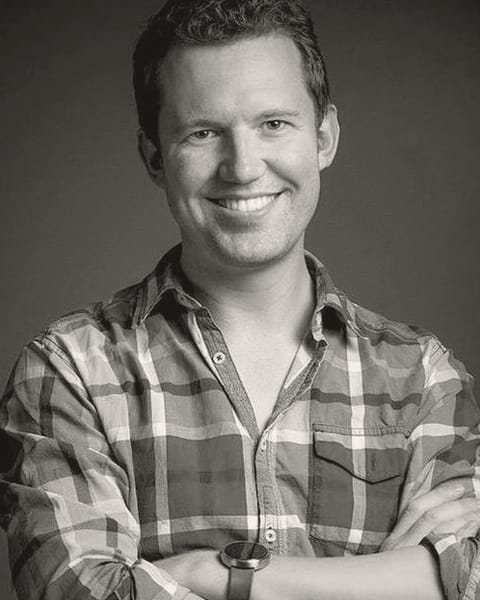
Picture: Charlie Shrem in 2013. Charlie Shrem, CC BY-SA 3.0, toned by UTXOHub.

More people
The first years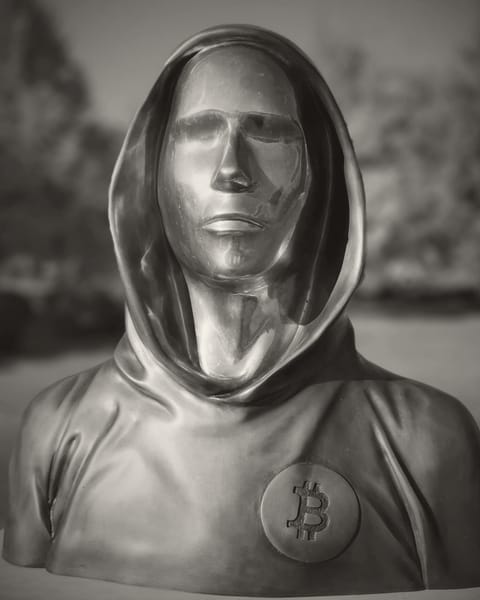 Satoshi NakamotoPseudonymous creator of Bitcoin
 Hal FinneyCryptographer who received the first bitcoin transaction
 Laszlo HanyeczEarly developer who paid 10,000 BTC for two pizzas
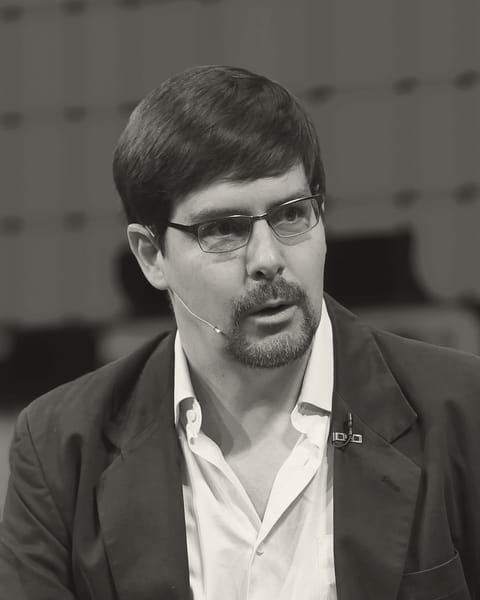 Gavin AndresenLead Bitcoin developer after Satoshi, 2010–2014
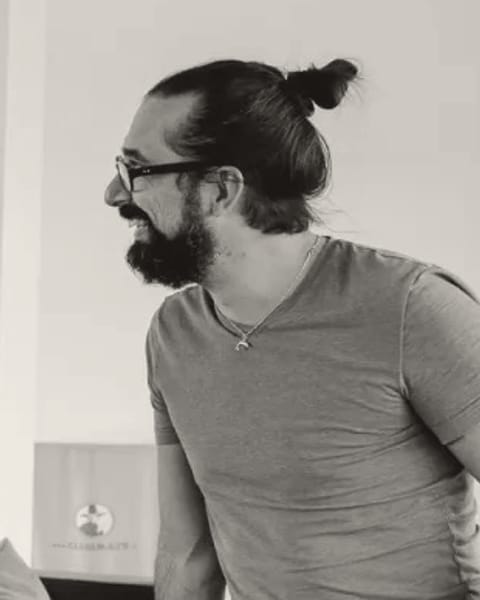 Marek PalatinusFounder of Slush Pool and co-founder of SatoshiLabs
 Jed McCalebFounder of Mt. Gox; later co-founded Ripple and Stellar
 Mike HearnEmailed Satoshi, wrote bitcoinj, launched Bitcoin XT
References
- The Verge, “The coin prince: inside Bitcoin’s first big money-laundering scandal”, 4 February 2014.
- NPR, Planet Money, “Episode 753: Blockchain Gang”, 10 February 2017.
- US Attorney’s Office, Southern District of New York, “Former CEO Of Bitcoin Exchange Company Sentenced In Manhattan Federal Court To Two Years In Prison For Helping To Sell Nearly $1 Million In Bitcoins For Drug Buys On Silk Road”, 19 December 2014.
- WNYC, Death, Sex & Money, “A Bitcoin Mogul Goes Broke”, 1 November 2017.
- The New York Times, “Bitcoin’s ‘First Felon’ Faces More Legal Trouble”, 2 November 2018.
- The Bitcoin Foundation (archived), “Bitcoin Foundation Launches To Drive Bitcoin’s Advancement”, 27 September 2012.
- The Bitcoin Foundation (archived), “Bitcoin Foundation: About: Board Members”.
- The Bitcoin Foundation (archived), “Bitcoin Foundation Response to Allegations Against Charlie Shrem”, 28 January 2014.
- US District Court, Southern District of New York (via CourtListener), “United States v. Charlie Shrem, 14 Cr. 243 (JSR): transcript of the plea hearing”, 4 September 2014.
- US District Court, Southern District of New York (via CourtListener), “Judgment in a Criminal Case: United States v. Charlie Shrem, S14 CR 243-02 (JSR)”, 23 December 2014.
- US District Court, Southern District of New York (via CourtListener), “Winklevoss Capital Fund, LLC v. Charles Shrem, 18-cv-8250 (JSR): order”, 5 April 2019.
- Apple Podcasts, “The Charlie Shrem Show”.
- Bitcointalk, “mtgox fast pay - looking for investors”, 13 June 2011.
- US District Court, Southern District of New York (via CourtListener), “United States v. Robert M. Faiella and Charlie Shrem, 14 Cr. 243: Indictment (Document 17)”, 10 April 2014.
- Drug Enforcement Administration (release of the US Attorney’s Office, Southern District of New York), “Manhattan U.S. Attorney Announces Charges Against Bitcoin Exchangers, Including CEO Of Bitcoin Exchange Company, For Scheme To Sell And Launder Over $1 Million In Bitcoins Related To Silk Road Drug Trafficking”, 27 January 2014.