
Mark Karpelès.
Head of Mt. Gox, the exchange that collapsed in 2014 · Also known as Mark Karpeles, MagicalTux
Mark Karpelès ran Mt. Gox, the Tokyo exchange that once handled most of the world’s bitcoin trading, until it collapsed in 2014 with about 850,000 bitcoins missing. A Japanese court later convicted him of falsifying data but cleared him of embezzlement.
From web host to bitcoin exchange
Mark Karpelès, a French programmer, moved to Japan in 2009 and founded a web-hosting company there, Tibanne, named after his cat. Online he went by MagicalTux. In 2010 a customer asked whether he could pay for hosting in bitcoin, and Karpelès agreed. “I was probably one of the first companies to implement Bitcoin payments back in 2010,” he told Bitcoin Magazine in 2025.[3][2][1]
In early 2011 he bought Mt. Gox, a bitcoin exchange: a website where people swap ordinary money for bitcoin and leave their coins in its care. Jed McCaleb had started it the summer before, and sold it to Karpelès and Tibanne on or about 3 February, McCaleb later said in a sworn statement. Announcing the handover on the Bitcoin forum that March, McCaleb wrote that MagicalTux had “much more experience with web programming, system administration and integrating with banks and other payment processors than I do.”[5][4]
What an exchange isTrouble came with it. Karpelès says 80,000 bitcoins were stolen between his signing the contract and getting access to the server; McCaleb has said the site “already belonged to him” by then. In June 2011 someone broke into an administrator account McCaleb had kept to check his share of the fees, gave himself a large number of bitcoins and sold them, driving the price on Mt. Gox down to a cent. “The truth is that Mt. Gox was unprepared for Bitcoin’s explosive growth,” the company said in its apology.[1][6][7]
It kept growing all the same. By April 2013 Mt. Gox handled 70% of all bitcoin trades, by one analyst’s count reported by Wired, and Karpelès sat on the first board of the Bitcoin Foundation, a non-profit set up in 2012 to promote bitcoin, with Gavin Andresen and Charlie Shrem. In May and June 2013 US agents seized about $5 million from the accounts of a Mt. Gox subsidiary, which, their warrant said, was not registered as a money services business.[8][9][10]
US investigators hunting “Dread Pirate Roberts”, the anonymous leader of the drug market Silk Road, also looked at Karpelès. The Baltimore office “later abandoned the theory” that he was the man, the US appeals court said in the case of Ross Ulbricht, Silk Road’s creator. Karpelès barred users linked to drug buying on Silk Road, Bitcoin Magazine reported: “If you’re going to buy drugs with Bitcoin, in a country where drugs are illegal, you shouldn’t.”[11][1]
The collapse
On 7 February 2014 Mt. Gox paused all bitcoin withdrawals. Three days later it blamed “transaction malleability”, a flaw that let a third party change a payment’s ID after it was sent, so that coins that had arrived could be made to look as if they had not. On 25 February it shut its website.[12][13][14]
What a transaction ID isOn 28 February the company asked the Tokyo District Court for civil rehabilitation, a Japanese court process for insolvent companies. It owed about ¥6.5 billion in current debts and had about ¥3.8 billion in assets. It blamed “illegal access through the abuse of a bug in the bitcoin system”: about 750,000 bitcoins belonging to customers and 100,000 of its own had disappeared, and about ¥2.8 billion of customers’ cash was missing too. Karpelès bowed in apology to reporters. “We had weaknesses in our system, and our bitcoins vanished,” he said. “I feel deeply sorry for what has happened.”[14][15][16]
On 20 March Mt. Gox said it had found 199,999.99 bitcoins in an old-format wallet used before June 2011, which cut the missing total to about 650,000. The court refused the rehabilitation request, and on 24 April 2014 it put the company into bankruptcy and appointed a lawyer, Nobuaki Kobayashi, as trustee to manage what was left. Karpelès lost control of its assets.[17][18]
Where the bitcoins went
How so many coins could vanish became the central question. In 2015 WizSec, a group of bitcoin security specialists, traced the losses to Mt. Gox’s hot wallet, the coins it kept online to pay out withdrawals. “Most or all of the missing bitcoins were stolen straight out of the MtGox hot wallet over time, beginning in late 2011,” it concluded. “As a result, MtGox was technically insolvent for years (knowingly or not).”[19]
Hot and cold walletsUS prosecutors later put names to it. In 2017 they charged Alexander Vinnik, a Russian who ran the exchange BTC-e, alleging that he “obtained funds from the hack of Mt. Gox and laundered those funds”. Vinnik pleaded guilty in 2024 to conspiring to launder money through BTC-e; the Justice Department’s announcement of his plea did not mention Mt. Gox. In February 2025 he was freed in a prisoner exchange with Russia. “It doesn’t feel like justice has been served,” Karpelès said. In June 2023 the Justice Department also charged two other Russians, Alexey Bilyuchenko and Aleksandr Verner, with conspiring to launder about 647,000 bitcoins stolen from Mt. Gox from September 2011. Its announcement did not say whether either man was in custody.[20][22][23][1][21]
Others put more of the blame on Mt. Gox itself. As it failed, Kenji Saito, a researcher at Keio University, said transaction malleability was “too small to shut down one of the largest bitcoin exchanges in the world”. “Rather, it must be that Mt. Gox has committed something unfaithful to its customers,” he said. Karpelès has said the malleability thefts were real but “nowhere near” the amounts taken by Vinnik or those working with him, and in 2018 he accepted his part: “the methods I chose to try to get MtGox out of its trouble ended up being insufficient, insufficiently executed, or plain wrong.”[16][24]
Arrest and trial
Japanese police arrested Karpelès on 1 August 2015 on suspicion of falsifying data in Mt. Gox’s computer system to add $1 million to an account, the BBC reported. Three weeks later they re-arrested him on suspicion of embezzling about ¥321 million of customers’ money, which he denied. He spent eleven and a half months in custody, more than six of them in solitary confinement, before he was released on bail on 14 July 2016. “It’s still quite painful,” he said in 2025.[25][26][27][1]
His trial opened on 11 July 2017. “I swear to God that I am innocent,” he told the three judges, and prosecutors asked for ten years in prison. On 15 March 2019 the Tokyo District Court found him guilty of tampering with computer data and acquitted him of embezzlement and breach of trust. According to Sankei Shimbun, the court found that he had made fictitious bitcoin trades to stave off the company’s collapse, and altered its records 21 times in 2013 to hide them, inflating account balances by $33.5 million. He had “harmed the users’ trust greatly”, the court said, as AFP reported, but had caused Mt. Gox no financial damage. It sentenced him to two and a half years in prison, suspended for four years.[28][29][3][30][31]
The acquittal on embezzlement became final, and Karpelès appealed the conviction. The Tokyo High Court upheld it on 11 June 2020, and on 27 January 2021 Japan’s Supreme Court dismissed his last appeal, making the suspended sentence final. In the United States, Mt. Gox customers had sued him in Illinois in 2014; after the two sides settled, the claims were dismissed with prejudice in January 2022, meaning they cannot be brought again.[31][3][32]
Repaying the creditors
The bankruptcy had an odd consequence. It fixed customers’ claims in yen at their 2014 value, so as bitcoin’s price rose, the coins left in the estate became worth far more than the claims. Whatever remained after creditors were paid would go to Mt. Gox’s shareholders, Karpelès explained in 2018: chiefly himself, through Tibanne. “I don’t want this. I don’t want this billion dollars,” he wrote. Some creditors had already asked the court to switch the case to civil rehabilitation, under which claims for bitcoin stay claims for bitcoin, and on 22 June 2018 it did.[24][33][42]
Kobayashi, now the rehabilitation trustee, held about 141,686 bitcoins in September 2018. Creditors approved his repayment plan on 20 October 2021, with about 99% of those voting in favour. Some reported receiving yen in late December 2023, and on 5 July 2024 the trustee made the first repayments in bitcoin and bitcoin cash, through exchanges chosen to pass them on. By March 2025 more than 19,500 creditors had been repaid in bitcoin and bitcoin cash.[27][34][35][36][37]
The deadline has moved back by a year each autumn since 2023. On 16 October 2026 the trustee said repayments were “largely completed” for creditors who had finished the paperwork without problems, but that “many rehabilitation creditors still have not received their Repayments”. With the court’s permission, he moved the deadline from 31 October 2026 to 31 October 2027.[38][39]
Karpelès stayed in Japan. In 2018 he became chief technology officer of London Trust Media, the company behind the Private Internet Access VPN; in 2024 he announced a new exchange in Europe, EllipX; and by 2025 he was working on another VPN, alongside Roger Ver. He says he owns no bitcoin and wants nothing from the Mt. Gox estate. “To just get a payout for something that’s essentially a failure for me would feel very wrong,” he told Bitcoin Magazine.[40][41][1]
Reviewed . To report a mistake, email hello@utxohub.com.
Picture: Mark Karpelès’s X profile picture. Mark Karpelès (@MagicalTux), toned by UTXOHub.
More people
Bitcoin in public life Michael SaylorFounder and executive chairman of Strategy (MicroStrategy)
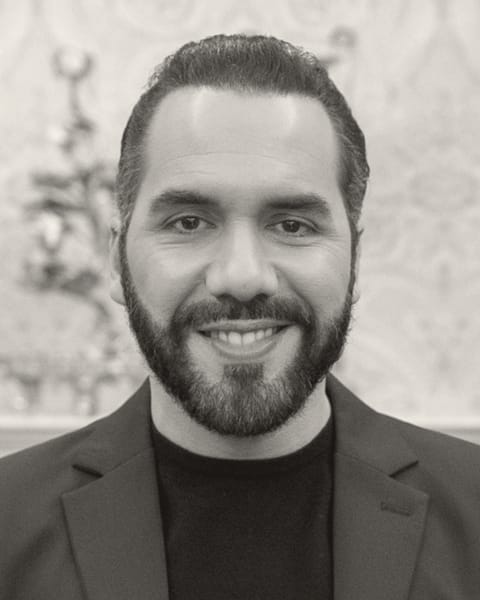 Nayib BukeleProposed El Salvador’s 2021 Bitcoin Law as president
 Ross UlbrichtCreator of Silk Road, convicted in 2015, pardoned in 2025
 Roger VerEarly bitcoin investor and promoter, later of Bitcoin Cash
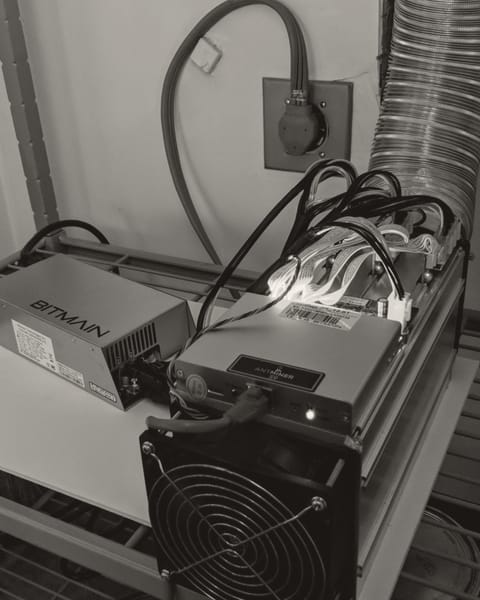 Jihan WuBitmain co-founder; chairman and chief executive of Bitdeer
 Brian ArmstrongCo-founder and chief executive of Coinbase
 Jack DorseyCo-founder of Twitter and of Block, formerly Square
 John McAfeeMcAfee antivirus founder who promoted cryptocurrencies
 Changpeng ZhaoFounder and former chief executive of Binance
References
- Bitcoin Magazine (Juan Galt), “Former Mt. Gox CEO Mark Karpelès Reveals Details Of 2014 Collapse And Japanese Detention”, 22 December 2025.
- AFP (via Phys.org), “Karpeles: Bitcoin baron brought down with a bump”, 13 March 2019.
- Associated Press (via Tech Xplore), “Japan court backs Karpeles conviction for data manipulation”, 12 June 2020.
- Bitcointalk (archived copy), “Mtgox is changing owners”, 6 March 2011.
- US District Court, Northern District of Illinois (via CourtListener), “Greene v. Karpeles, No. 1:14-cv-01437: Declaration of Jed McCaleb (Document 467-14)”, 18 February 2020.
- Hacker Noon (Peter McCormack, What Bitcoin Did), “Mt. Gox Interviews: Jed McCaleb on the Creation of Mt. Gox”, 26 February 2019.
- Mt. Gox (archived copy), “Clarification of Mt. Gox compromised accounts and major bitcoin sell-off”, 30 June 2011.
- Wired (Robert McMillan and Cade Metz), “The Rise and Fall of the World’s Largest Bitcoin Exchange”, 6 November 2013.
- The Bitcoin Foundation (archived), “Bitcoin Foundation Launches To Drive Bitcoin’s Advancement”, 27 September 2012.
- Bitcoin Magazine (Vitalik Buterin), “MtGox’s Dwolla Account Seized For Unlicensed Money Transmission”, 17 May 2013.
- US Court of Appeals for the Second Circuit (copy filed with the US Supreme Court), “United States v. Ulbricht, No. 15-1815, opinion”, 31 May 2017.
- Mt. Gox (archived copy), “Statement Regarding BTC Withdrawal Delays”, 7 February 2014.
- Mt. Gox (archived copy), “Addressing Transaction Malleability”, 10 February 2014.
- MtGox Co., Ltd., “Announcement regarding an application for commencement of a procedure of civil rehabilitation”, 28 February 2014.
- Wired (Robert McMillan), “The Inside Story of Mt. Gox, Bitcoin’s $460 Million Disaster”, 3 March 2014.
- Network World (Tim Hornyak), “Bitcoin exchange Mt. Gox files for bankruptcy with debts of $63.6 million”, 28 February 2014.
- MtGox Co., Ltd., “当社保有ビットコインの残高に関するお知らせ (notice on the balance of bitcoins held by MtGox, with English translation)”, 20 March 2014.
- MtGox bankruptcy trustee, “Announcement of Commencement of Bankruptcy Proceedings”, 24 April 2014.
- WizSec (Kim Nilsson), “The missing MtGox bitcoins”, 19 April 2015.
- US Department of Justice (US Attorney’s Office, Northern District of California; copy published by the FDIC Office of Inspector General), “Russian National And Bitcoin Exchange Charged In 21-Count Indictment For Operating Alleged International Money Laundering Scheme And Allegedly Laundering Funds From Hack Of Mt. Gox”, 26 July 2017.
- US Department of Justice (copy published by IRS Criminal Investigation), “Russian nationals charged with hacking one cryptocurrency exchange and illicitly operating another”, 9 June 2023.
- US Department of Justice (copy published by IRS Criminal Investigation), “BTC-e operator pleads guilty to money laundering conspiracy”, 3 May 2024.
- Associated Press (via WESA), “Convicted Russian criminal Alexander Vinnik being freed as part of swap for American Marc Fogel”, 12 February 2025.
- Reddit, r/Bitcoin (Mark Karpelès as u/MagicalTux; archived copy), “I’m Mark Karpelès, ex-CEO of bankrupt MtGox. Ask me anything.”, 4 April 2018.
- BBC News, “MtGox bitcoin chief Mark Karpeles arrested in Japan”, 1 August 2015.
- Yomiuri Shimbun (archived copy, in Japanese), “ビットコイン消失、社長再逮捕…業務上横領容疑 (Bitcoin disappearance: chief re-arrested on suspicion of embezzlement)”, 21 August 2015.
- MtGox rehabilitation trustee, “Report under Paragraph 1 of Article 125 of the Civil Rehabilitation Act”, 26 September 2018.
- Associated Press (Elaine Kurtenbach, via Phys.org), “Mt Gox CEO denies embezzling millions of dollars of bitcoins”, 11 July 2017.
- AFP (Harumi Ozawa, via Phys.org), “MtGox ‘bitcoin baron’ gets suspended sentence for data tampering”, 15 March 2019.
- Associated Press (Yuri Kageyama, via Phys.org), “Mt. Gox bitcoin exchanges’ Karpeles appeals conviction”, 29 March 2019.
- Sankei Shimbun (archived copy, in Japanese), “ビットコイン事件 カルプレス被告の有罪確定へ (Bitcoin case: Karpelès’s conviction to become final)”, 28 January 2021.
- US District Court, Northern District of Illinois (via CourtListener), “Greene v. Karpeles, No. 1:14-cv-01437: Stipulation of Dismissal (Document 575)”, 17 January 2022.
- MtGox rehabilitation trustee, “Announcement of Commencement of Civil Rehabilitation Proceedings”, 22 June 2018.
- MtGox rehabilitation trustee, “Notice of Confirmation Order of Rehabilitation Plan”, 20 October 2021.
- Finance Magnates (Arnab Shome), “Mt. Gox Creditors Start to Receive Payments after 10 Years”, 26 December 2023.
- MtGox rehabilitation trustee, “Notice regarding Repayment in Bitcoin and Bitcoin Cash”, 5 July 2024.
- MtGox rehabilitation trustee, “Notice regarding Repayment in Bitcoin and Bitcoin Cash (6)”, 27 March 2025.
- MtGox rehabilitation trustee, “Notice Concerning Change of Repayments Deadline”, 16 October 2026.
- MtGox rehabilitation trustee, “MtGox.com: notices from the trustee”.
- Engadget, “Mt. Gox chief returns as an exec at a VPN giant”, 22 April 2018.
- Cointelegraph, “Former Mt. Gox CEO to launch EllipX crypto exchange in Europe”, 4 September 2024.
- MtGox bankruptcy trustee, “Announcement Regarding Petition for Commencement of Civil Rehabilitation Proceedings Filed by Some of the Creditors”, 29 November 2017.