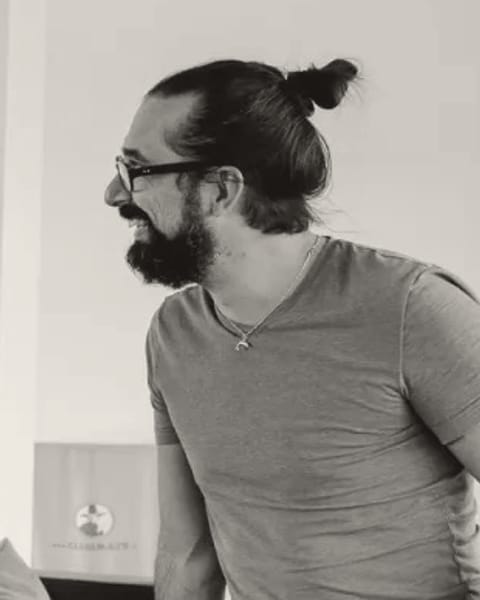
Marek Palatinus.
Founder of Slush Pool and co-founder of SatoshiLabs · Also known as Slush
Marek Palatinus, known as slush, opened one of the first Bitcoin mining pools in 2010, and it still runs as Braiins Pool. He went on to co-create the Trezor hardware wallet and BIP-39, the standard behind the recovery words many wallets use.
A pool for small miners
Palatinus was a programmer in Prague who had designed banking systems at Česká spořitelna, one of Central Europe’s largest banks, Forbes Česko reported in 2015. The first time he saw the word bitcoin, on a mailing list, he took it for tokens in some online game, he told the magazine. By late 2010 he was mining: running software that races to add the next block of payments to the chain, for the block rewardBlock rewardWhat a block's miner earns: new bitcoin from the subsidy, plus the fees of every transaction in the block., then 50 new bitcoins.[22][23]
Mining was getting harder. On 27 November 2010, writing on the Bitcoin forum, today’s BitcointalkBitcointalkThe Bitcoin forum Satoshi Nakamoto opened in November 2009. Much of Bitcoin’s early history, from the pizza offer to Satoshi’s last post, happened there., as slush, he said that since people had started mining with graphics cards, “mining became very hard for other people”. He had mined for a few weeks on three ordinary processors without finding a single block. His answer was to “Join poor CPU miners to one cluster”: many computers would work as one, and whenever one of them found a block, the reward would be split according to the work each had done. That is a mining poolMining poolA group of miners who share the work of finding blocks and split the rewards, so each gets paid steadily instead of rarely.. The catch, he admitted, was that members would “need to trust in central authority (me)”.[1]
Other forum members showed him how to stop cheats. Each computer would send in easier near-misses, called shares, which prove how much work it has done, and a winning block could pay out only to the pool. Satoshi Nakamoto, Bitcoin’s creator, joined the thread to call that plan “spot on”. “I think I definitely have enough information to knock up pool software now,” Palatinus replied.[3][2]
He opened the pool at mining.bitcoin.cz on 16 December 2010. That morning it found its first block, number 97,834, and shared the 50 bitcoins among its miners by the number of shares each had sent in. “I did not imagine there will be so large demand few hours after going live,” he wrote that evening.[4][5][6][7]
See the pool’s first blockHis pool was also the first to pay in a way built to resist “pool-hopping”, Meni Rosenfeld wrote in a 2011 analysis of how pools pay. Some miners joined a pool only at the start of each round, when a share was worth most on average, and then left; Palatinus made later shares count for more.[8]
Was it the first pool?
Palatinus’s pool has run ever since: it was renamed Slush Pool in 2016 and Braiins Pool in 2022. Braiins, the company that runs it, calls it the world’s first publicly available Bitcoin mining pool. The Bitcoin Wiki calls it the first publicly known one, and says it is widely cited as the oldest still running. The title of its thread on the forum still ends “World First Mining Pool”.[9][10][1]
Another programmer, Chris Double, says his came first. Using software for pooled mining that a forum member, puddinpop, had published in October 2010, Double opened a server to anyone by 29 November. It found block 95,420 on 4 December, twelve days before Palatinus’s first, and split the reward into 23 payments inside the block itself. Double shut it down on 17 December, after so many miners had left that a block would take too long. His page about it still calls it “the first public bitcoin mining pool”, and Palatinus’s “the second”.[11][12][13][14]
See the block Chris Double’s pool foundStratum and its critics
By 2012 the way pools handed out work was struggling to keep up with faster machines. That September Palatinus proposed StratumStratumThe protocol most mining pools use to hand out work to miners’ machines and collect the results. Marek Palatinus introduced it in 2012., a common language for a pool and the machines working for it, which he said let a single processor core serve 10,000 connections. “We don’t need a VHS vs Betamax competition,” wrote another pool operator, dropping his own design within half an hour. Braiins wrote in 2024 that Stratum has been “the standard protocol for pooled mining” ever since.[15][16]
Luke Dashjr, a developer, had spent months on getblocktemplate, an open standard for the same job set out in two Bitcoin Improvement ProposalsBIPA public document describing a proposed change to Bitcoin, or a standard that wallets can follow., BIP-22 and BIP-23. He doubted that Stratum was “really any different/better”; Palatinus found those BIPs “too complex in parts which are irrelevant for pooled mining”. The difference mattered later: getblocktemplate let each miner choose which payments went into a block, while under Stratum the pool chooses. Braiins came to call that Stratum’s “one significant downside”, and in 2019 its founders and the developer Matt Corallo designed Stratum V2 to give miners the choice back.[15][17][16]
From the pool to Trezor
The pool also made him a target. On 1 March 2012 someone broke into servers he rented from the web host Linode and took 3,094 bitcoins from the pool’s online wallet; its offline backup was untouched. The same intruder reached seven other Linode customers whose accounts mentioned bitcoin, among them the developer Gavin Andresen. Palatinus covered the loss from his own money, “to keep pool users out of this stupid issue”.[18][20][19]
See the theft from the pool’s walletBraiins and SatoshiLabs, the company Palatinus went on to co-found, both tie what came next to attacks like this one. In 2011 he had met Pavol Rusnák, a programmer known as Stick and a founder of the Prague hackerspace brmlab. On 5 November 2012 the two announced a hardware walletHardware walletA small device that holds your private keys and signs payments inside itself, so the keys never touch your internet-connected computer or phone.: a small device that holds a wallet’s private keysPrivate keyThe secret number that lets you spend your bitcoin. Whoever knows it controls the coins, so it must never be shared. and signs payments inside itself, so that “the keys never leave the device and thus cannot be stolen by a virus, malicious code or an attacker”. Its owner would write down a seed, a backup of every key, once, and that would be “enough forever”.[21][25][24]
Running the pool alone had taken over his life: he took his laptop to the theatre and had no time for friends, Forbes Česko reported. In April 2013 he handed its running to Braiins, a Prague software company that also took a majority stake, and with Rusnák and Alena Vránová he founded SatoshiLabs. Pre-orders paid in bitcoin funded the first devices, and the Trezor, now called the Trezor Model One, launched on 29 July 2014. SatoshiLabs calls it the first hardware wallet.[22][21][25][26]
The seed needed a form people could copy without mistakes. In September 2013 Palatinus, Rusnák and two co-authors published BIP-39, which turns the secret behind a wallet into recovery wordsRecovery words (seed phrase)A list of 12, 15, 18, 21 or 24 words that can restore wallet keys. Anyone who has them can take your bitcoin.: 12 to 24 ordinary words that “could be written on paper or spoken over the telephone”. Anyone who has the words can rebuild the wallet and spend its coins. The words feed BIP-32, in which the developer Pieter Wuille showed in 2012 how one secret can grow a whole tree of keys; in 2014 Palatinus and Rusnák added BIP-44, a standard layout for that tree. SatoshiLabs says these standards are now used in “all hardware wallets and most software wallets”.[28][29][30][27]
What BIP-39 doesOn 1 September 2020 Palatinus sold his remaining share of the pool to Braiins. “After ten years in #bitcoin, one epoch of my life is over,” he wrote; “my little baby is in good hands!” At SatoshiLabs, which he had run as chief executive, he handed the running of Trezor to Matěj Žák, its product director, in early 2023 and went back to technology, keeping the final say on strategy, Forbes Česko reported.[21][27][33]
See Braiins Pool’s blocks todayThe argument over BIP-39
Recovery words weren’t new: Electrum, a wallet Thomas Voegtlin created in 2011, used them two years before BIP-39. Voegtlin was at one point listed as an author of BIP-39 but took his name off it in October 2014, and Electrum does not create BIP-39 words. Its documentation gives two reasons. The checksum, a built-in check for typing mistakes, depends on one fixed list of words. And nothing in the words says how the wallet made its keys, so a future wallet that drops an old method could show an empty wallet, which “threatens users funds”.[32][31][34]
Gregory Maxwell, a Bitcoin Core developer, agreed. “The lack of versioning is a serious design flaw in this proposal,” he wrote in March 2017, recommending against its use. That month the BIP’s header began to sum up the comments on it as “Unanimously Discourage for implementation”.[35][36]
Pavol Rusnák, Palatinus’s co-founder and co-author, has defended the choice. Leaving out a version number was “a design decision, not accidental omission”, he wrote in 2024, so that thousands of apps can share one seed: “With BIP39 you can just use the single seed for everything.” In 2017 he, Palatinus and others proposed SLIP-0039, which splits a backup into several sets of words, a chosen number of which can rebuild it. In July 2026 the “Discourage” summary was taken off BIP-39 and a list of its shortcomings added, naming SLIP-0039 as the successor its authors intended.[37][38][39][28]
Reviewed . To report a mistake, email hello@utxohub.com.
Picture: Marek Palatinus, from the SatoshiLabs website. SatoshiLabs, toned by UTXOHub.
BIPs by Marek Palatinus
3 proposalsMore people
The first years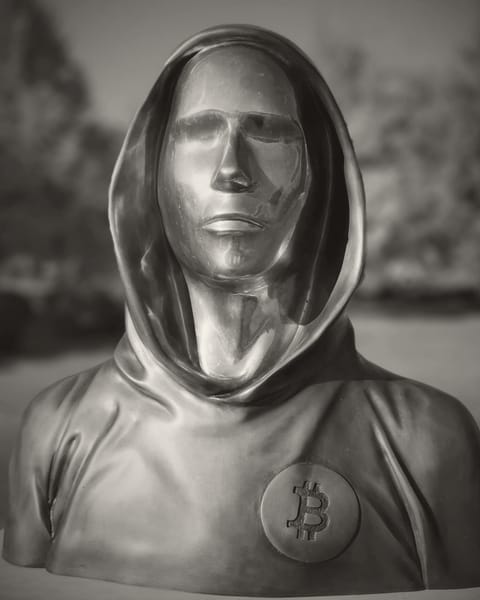 Satoshi NakamotoPseudonymous creator of Bitcoin
 Hal FinneyCryptographer who received the first bitcoin transaction
 Laszlo HanyeczEarly developer who paid 10,000 BTC for two pizzas
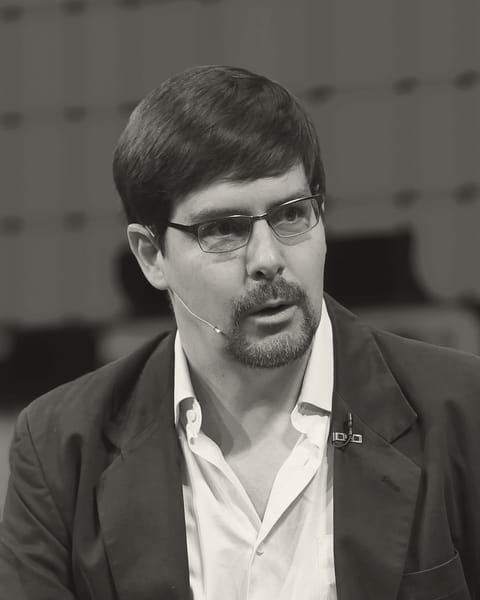 Gavin AndresenLead Bitcoin developer after Satoshi, 2010–2014
 Jed McCalebFounder of Mt. Gox; later co-founded Ripple and Stellar
 Mike HearnEmailed Satoshi, wrote bitcoinj, launched Bitcoin XT
 Charlie ShremCo-founder of BitInstant; Bitcoin Foundation vice chairman
References
- Bitcointalk (archived), “Cooperative mining, later “Slush Pool … World First Mining Pool””, 27 November 2010.
- Satoshi Nakamoto Institute, “Re: Cooperative mining”, 28 November 2010.
- Bitcointalk (archived), “Re: Cooperative mining (page 2)”, 28 November 2010.
- Bitcointalk (archived), “Re: Cooperative mining (page 3, the pool opens)”, 16 December 2010.
- Bitcointalk (archived), “Re: Cooperative mining (page 4, the first blocks)”, 16 December 2010.
- Bitcointalk (archived), “Re: Cooperative mining (page 5)”, 16 December 2010.
- mempool.space, “Block 97,834”, 16 December 2010.
- Meni Rosenfeld (arXiv), “Analysis of Bitcoin Pooled Mining Reward Systems”, 21 December 2011.
- Braiins, “Hashing History: The Story of Braiins”, 22 July 2020.
- Bitcoin Wiki, “Slush Pool”.
- Bitcointalk (archived), “Pooled/Remote Mining - Open Source (puddinpop)”, 13 October 2010.
- Bitcointalk (archived), “Re: Pooled/Remote Mining (Chris Double)”, 29 November 2010.
- Chris Double, Bluish Coder, “Bitcoin Pooled Mining”, December 2010.
- mempool.space, “Block 95,420”, 4 December 2010.
- Bitcointalk (archived), “[ANN] Stratum mining protocol - ASIC ready”, 11 September 2012.
- Braiins, “Past and future of bitcoin mining protocols: Stratum V2 overview”, 10 April 2024.
- Bitcoin Improvement Proposals, “BIP-22: getblocktemplate - Fundamentals”, 28 February 2012.
- Bitcointalk (archived), “Hacked Linode & coins stolen to 1NRy8GbX56MymBhDYM...”, 1 March 2012.
- mempool.space, “Transaction 34b8…1acb, in block 169,187”, 1 March 2012.
- The Register (John Leyden), “Linode hackers escape with $70K in daring bitcoin heist”, 2 March 2012.
- Braiins, “Braiins Acquired Remaining Stake in Braiins Pool, Slush Focusing on SatoshiLabs”, 29 December 2021.
- Forbes Česko (Andrea Votrubová), “Naučil lidi těžit a chránit si bohatství: Průlom ve světě bitcoinu udělal český programátor”, 7 December 2015.
- Cointelegraph, “World’s first mining pool ‘Slushpool’ targets Chinese market”, 25 April 2015.
- Bitcointalk (archived), “[ANN] Hardware wallet project, later “Trezor: Bitcoin hardware wallet””, 5 November 2012.
- SatoshiLabs, “Our Story”.
- Trezor, “A decade of pioneering: 10 years since Trezor’s first hardware wallet revolution”, 29 July 2024.
- Trezor Blog (SatoshiLabs; archived), “7 Years of Hardware Wallets: The Success Story of Czech Crypto Enthusiasts Creating a Brand New Industry”, 6 December 2018.
- Bitcoin Improvement Proposals, “BIP-39: Mnemonic code for generating deterministic keys”, 10 September 2013.
- Bitcoin Improvement Proposals, “BIP-32: Hierarchical Deterministic Wallets”, 11 February 2012.
- Bitcoin Improvement Proposals, “BIP-44: Multi-Account Hierarchy for Deterministic Wallets”, 24 April 2014.
- Electrum, “About Electrum”.
- Electrum documentation, “Electrum Seed Version System”.
- Forbes Česko (Karel Wolf), “Nebýt jen hardcore. Chceme odstranit uživatelské bariéry, říká nový šéf Trezoru”, 24 January 2023.
- Bitcoin Improvement Proposals on GitHub (Thomas Voegtlin’s commit), “removing myself from bip39 authors”, 15 October 2014.
- Bitcoin Improvement Proposals wiki, “Comments:BIP-0039”, 14 March 2017.
- Bitcoin Improvement Proposals on GitHub, “Propagate summary tone of BIP Comments to their applicable BIP preambles”, 14 March 2017.
- Bitcoin Development Mailing List (Pavol Rusnák), “Re: Introducing a version field to BIP39 mnemonic phrases”, 13 January 2024.
- SatoshiLabs Improvement Proposals, “SLIP-0039: Shamir’s Secret-Sharing for Mnemonic Codes”, 18 December 2017.
- Bitcoin Improvement Proposals on GitHub, “BIP-39: Add shortcomings and related work section, drop comments headers”, written 31 May 2026, merged 24 July 2026.