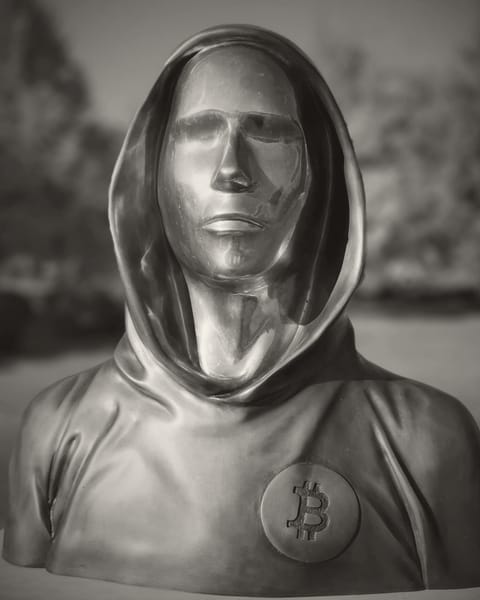
Satoshi Nakamoto.
Pseudonymous creator of Bitcoin
Satoshi Nakamoto is the name used by Bitcoin’s creator, who published the white paper in 2008, launched the network in 2009 and stepped away in 2011. Nobody knows who Satoshi is.
The white paper
Satoshi’s first known step was to register the website address bitcoin.orgbitcoin.orgThe website Satoshi Nakamoto registered in August 2008. It published the Bitcoin white paper and still hosts it. Volunteers run it today., on 18 August 2008. Within days Satoshi wrote to two cryptographers whose work the design built on: Adam Back, who had invented hashcash, a kind of proof of work, and Wei Dai, who had proposed a digital currency called b-money. Satoshi told Dai of a paper “that expands on your ideas into a complete working system”.[7][8]
On 31 October 2008 Satoshi announced the paper, “Bitcoin: A Peer-to-Peer Electronic Cash System”, on a cryptography mailing list: “I’ve been working on a new electronic cash system that’s fully peer-to-peer, with no trusted third party.” Its nine pages described how people could pay each other online without a bank, with a shared record that computing power keeps honest.[1][2]
What was the Bitcoin whitepaper?Most of the first replies were objections. James A. Donald wrote that the system “does not seem to scale to the required size”. When John Levine pointed out that criminals control networks of 100,000 hijacked computers, Satoshi answered that “the good guys collectively have more CPU power than any single attacker”. Hal Finney, a cryptographer who would soon receive the first bitcoin payment, called it “a very promising idea”.[9][10][11][12]
Launching Bitcoin
Satoshi started the network on 3 January 2009 with its first block, the genesis block. Its only transaction carries a line of text, “The Times 03/Jan/2009 Chancellor on brink of second bailout for banks”, a headline from that day’s edition of The Times, a British newspaper. On 8 January Satoshi announced the first version of the software, “Windows only for now”, and set the total that would ever exist: “Total circulation will be 21,000,000 coins.”[3][47][4]
See the genesis blockOn 12 January 2009, in block 170, Satoshi sent Finney 10 bitcoins that Satoshi had mined, the first payment from one person to another. The security researcher Sergio Demian Lerner later traced a pattern in how the early blocks were mined. He calls the miner behind it Patoshi, believes it was Satoshi, and estimates that it made about 22,000 blocks and collected about 1.1 million bitcoins. By his count “99.9% of all Patoshi blocks are unspent”, and CoinDesk reported in 2025 that the coins still hadn’t moved.[23][24][25][46]
See block 170Building it in the open
In November 2009 Satoshi opened a forum for Bitcoin, which continues today as bitcointalk.orgBitcointalkThe Bitcoin forum Satoshi Nakamoto opened in November 2009. Much of Bitcoin’s early history, from the pizza offer to Satoshi’s last post, happened there., and wrote more than 500 posts there, answering questions, explaining the design and announcing new versions. Writers who studied them found clues but no answers. The New Yorker noted British spellings such as “colour” and the phrase “bloody hard”, and the developer Stefan Thomas, charting the times of Satoshi’s posts for Wired in 2011, found almost none “between the hours of 5 am and 11 am Greenwich Mean Time”.[13][14][15][16]
The forum also recorded Satoshi’s biggest repair. On 15 August 2010 someone exploited a bug to create about 184 billion bitcoins in a single block, number 74,638. Within hours Satoshi had written a fix and released a corrected version: “Version 0.3.10 patches the block 74638 overflow bug.” By the next morning the network had replaced the bad block, and the coins no longer existed.[17][18]
Stepping away
In December 2010 some forum members suggested that WikiLeaks could take donations in bitcoin. Satoshi objected: “I make this appeal to WikiLeaks not to try to use Bitcoin”, because “the heat you would bring would likely destroy us at this stage”. Six days later, in a thread about a PC World article on Bitcoin, Satoshi wrote: “WikiLeaks has kicked the hornet’s nest, and the swarm is headed towards us.”[19][20]
The next day, 12 December 2010, Satoshi posted on the forum for the last time, releasing a version with new defences against attempts to overload the network. By then Gavin Andresen, a developer Satoshi had chosen as a successor, was running the project. On 23 April 2011 Satoshi wrote to the developer Mike Hearn: “I’ve moved on to other things. It’s in good hands with Gavin and everyone.” Three days later Satoshi sent Andresen the key used to broadcast alerts to the network, with a request: “I wish you wouldn’t keep talking about me as a mysterious shadowy figure.” It is the last email widely accepted as Satoshi’s.[21][5][22][7][35][6]
Who is Satoshi?
Nobody knows. Andresen, who worked with Satoshi for months but never met them, told MIT Technology Review in 2014: “Nobody knows who he is, I think.”[5]
The first well-known guesses came in 2013 and 2014. A blogger’s analysis of writing styles, and then a study by linguists at Aston University, pointed to Nick Szabo, a computer scientist who had designed a digital currency called bit gold. Szabo replied on Twitter: “Not Satoshi, but thank you.”[31][32][33]
In March 2014 Newsweek named Dorian Nakamoto, a man in Temple City, California, whose birth name was Satoshi. He told the Associated Press that he was “no longer in engineering”, and: “I got nothing to do with it.” Within a day, Satoshi’s old account on the P2P Foundation website, where Satoshi had posted about Bitcoin in 2009, posted a single line: “I am not Dorian Nakamoto.” The account was taken over by hackers later that year, but researchers at BitMEX found no sign it had been by then. Andreas M. Antonopoulos, a Bitcoin author, started a fundraiser for Dorian Nakamoto, and in April handed him 48 bitcoins from nearly 2,000 donors, the Daily Dot reported. Weeks after Newsweek’s story, Forbes looked at Hal Finney, who had lived a few blocks from Dorian Nakamoto’s family, and Finney denied it too.[26][27][28][29][48][30]
Craig Wright, an Australian computer scientist, went further: named by Gizmodo and Wired in December 2015, he claimed in May 2016 to be Satoshi. In 2024, in a case brought by the Crypto Open Patent Alliance, a US non-profit set up to promote cryptocurrency technology, the High Court in London declared that Wright is not Satoshi and did not write the white paper. The judge found that he had “lied to the Court extensively and repeatedly” and forged documents “on a grand scale”. Wright was refused permission to appeal, and later received a suspended prison sentence for contempt of court.[34][7][35][36][37]
Others have been named since. In October 2024 HBO’s documentary Money Electric: The Bitcoin Mystery, by the director Cullen Hoback, pointed to the Bitcoin developer Peter Todd, who told CNN: “For the record, I’m not Satoshi.” In April 2026 a New York Times investigation by John Carreyrou named Adam Back, who replied: “I’m not satoshi.” Two weeks later the documentary Finding Satoshi argued that Satoshi was two people, Finney and the cryptographer Len Sassaman, who died in 2011.[38][39][40][41][42][43]
The name today
The smallest unit of bitcoin, a hundred-millionth of a coin, is called a satoshi. In Budapest a bronze bust unveiled in 2021 shows a figure in a hooded top whose face is reflective, so that visitors see themselves; the idea, Bitcoin Magazine reported, was that “we are all Satoshi”. A statue in Lugano, Switzerland, unveiled in 2024, shows a seated figure that seems to disappear from some angles. In 2025 vandals threw it into the lake, and divers pulled it out the next day.[44][45]
What is a satoshi?Reviewed . To report a mistake, email hello@utxohub.com.
Picture: The Satoshi Nakamoto bust in Budapest, 2021. Nobody knows what Satoshi looks like. Elekes Andor, CC BY-SA 4.0, toned by UTXOHub.

More people
The first years Hal FinneyCryptographer who received the first bitcoin transaction
 Laszlo HanyeczEarly developer who paid 10,000 BTC for two pizzas
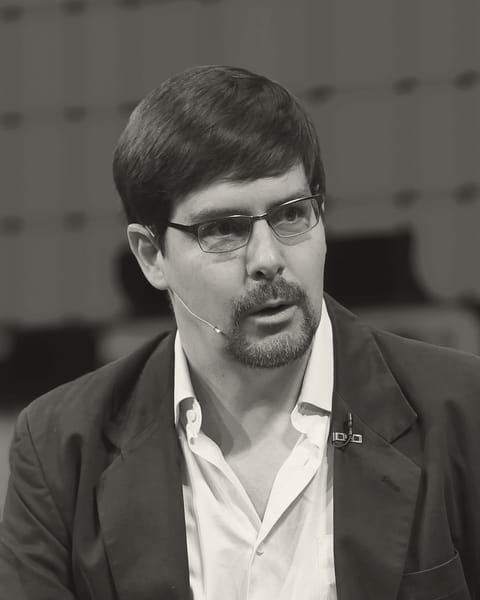 Gavin AndresenLead Bitcoin developer after Satoshi, 2010–2014
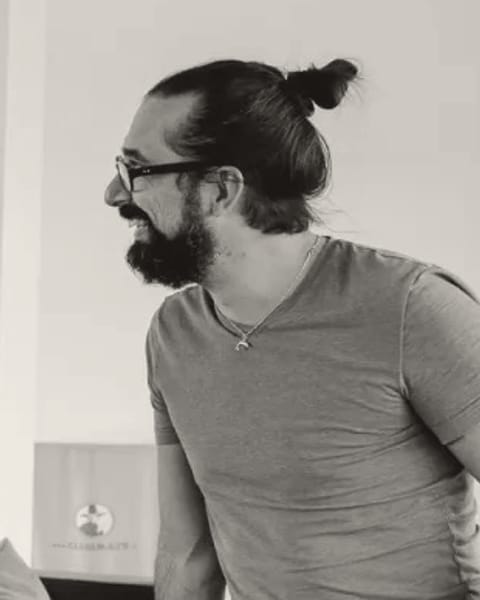 Marek PalatinusFounder of Slush Pool and co-founder of SatoshiLabs
 Jed McCalebFounder of Mt. Gox; later co-founded Ripple and Stellar
 Mike HearnEmailed Satoshi, wrote bitcoinj, launched Bitcoin XT
 Charlie ShremCo-founder of BitInstant; Bitcoin Foundation vice chairman
References
- Cryptography mailing list, “Bitcoin P2P e-cash paper”, 31 October 2008.
- bitcoin.org, “Bitcoin: A Peer-to-Peer Electronic Cash System”.
- Bitcoin Core on GitHub, “src/kernel/chainparams.cpp (genesis block)”.
- Cryptography mailing list, “Bitcoin v0.1 released”, 8 January 2009.
- MIT Technology Review, “The Man Who Really Built Bitcoin”, 15 August 2014.
- Gavin Andresen’s blog (archived), “Eleven years ago today…”, 26 April 2022.
- High Court of England and Wales (The National Archives), “Crypto Open Patent Alliance v Craig Steven Wright [2024] EWHC 1198 (Ch)”, 20 May 2024.
- Gwern Branwen (Satoshi Nakamoto’s emails to Wei Dai), “2008 Nakamoto”, 22 August 2008.
- Cryptography mailing list (James A. Donald), “Bitcoin P2P e-cash paper”, 2 November 2008.
- Cryptography mailing list (John Levine), “Bitcoin P2P e-cash paper”, 3 November 2008.
- Cryptography mailing list (Satoshi Nakamoto), “Bitcoin P2P e-cash paper”, 3 November 2008.
- Cryptography mailing list (Hal Finney), “Bitcoin P2P e-cash paper”, 7 November 2008.
- Satoshi Nakamoto Institute, “Welcome to the new Bitcoin forum!”, 22 November 2009.
- Satoshi Nakamoto Institute, “Satoshi Nakamoto’s forum posts”.
- The New Yorker (Joshua Davis), “The Crypto-Currency”, 10 October 2011.
- Wired (Benjamin Wallace), “The Rise and Fall of Bitcoin”, 23 November 2011.
- Bitcoin Wiki, “Value overflow incident”.
- Satoshi Nakamoto Institute, “Version 0.3.10 - block 74638 overflow PATCH!”, 15 August 2010.
- Satoshi Nakamoto Institute, “Re: Wikileaks contact info?”, 5 December 2010.
- Satoshi Nakamoto Institute, “Re: PC World Article on Bitcoin”, 11 December 2010.
- Satoshi Nakamoto Institute (Satoshi’s last forum post), “Added some DoS limits, removed safe mode (0.3.19)”, 12 December 2010.
- Mike Hearn (his emails with Satoshi Nakamoto), “Holding coins in an unspendable state for a rolling time window”, 23 April 2011.
- Bitslog (Sergio Demian Lerner), “The Well Deserved Fortune of Satoshi Nakamoto, Bitcoin creator, Visionary and Genius”, 17 April 2013.
- Bitslog (Sergio Demian Lerner), “The Return of the Deniers and the Revenge of Patoshi”, 16 April 2019.
- CoinDesk, “Satoshi BTC Holdings Value: Bitcoin Creator Is (Almost) the World’s 10th Richest Person”, 14 July 2025.
- Newsweek (Leah McGrath Goodman), “The Face Behind Bitcoin”, 6 March 2014.
- Associated Press, via Fox News, “‘Face Behind Bitcoin’ Denies He Created The Currency”, 7 March 2014.
- Satoshi Nakamoto Institute (P2P Foundation), “I am not Dorian Nakamoto.”, 7 March 2014.
- BitMEX Research (archived), “Satoshi’s 2014 Email Hack”, 2 April 2024.
- Forbes (Andy Greenberg; archived full text), “Nakamoto's Neighbor: My Hunt For Bitcoin's Creator Led To A Paralyzed Crypto Genius”, 25 March 2014.
- TechCrunch, “Who Is The Real Satoshi Nakamoto? One Researcher May Have Found The Answer”, 5 December 2013.
- ScienceDaily (Aston University), “Likely author of original Bitcoin paper? Researchers uncover linguistic evidence”, 17 April 2014.
- X (Twitter), @NickSzabo4, ““Not Satoshi, but thank you.” (reply to Andrew Miller)”, 7 July 2014.
- Gizmodo, “This Australian Says He and His Dead Friend Invented Bitcoin”, 8 December 2015.
- Crypto Open Patent Alliance, “COPA v Wright: opening skeleton argument of COPA”, 29 January 2024.
- High Court of England and Wales (The National Archives), “Crypto Open Patent Alliance v Wright [2025] EWHC 1139 (Ch)”, 12 May 2025.
- High Court of England and Wales (The National Archives), “Crypto Open Patent Alliance v Wright [2024] EWHC 3316 (Ch), sentence for contempt”, 20 December 2024.
- HBO (Warner Bros. Discovery Pressroom), “HBO Original Documentary MONEY ELECTRIC: THE BITCOIN MYSTERY Debuts October 8”, 3 October 2024.
- CNN, via KTVZ, “‘I am not Satoshi Nakamoto’: Subject of HBO documentary denies he invented bitcoin”, 8 October 2024.
- The Block, “NYT investigation suggests Adam Back may be Satoshi Nakamoto; he denies the claim”, 8 April 2026.
- Bitcoin Magazine, “NYT Names Adam Back as Bitcoin's Creator, but Back Says No”, 8 April 2026.
- Decrypt, “'Finding Satoshi' Makes the Case for Hal Finney, Len Sassaman as Bitcoin Co-Creators”, 22 April 2026.
- The Register, “Cryptographer Len Sassaman, RIP”, 6 July 2011.
- Bitcoin Magazine, “Hungary Debuts Statue In Honor Of Bitcoin Creator Satoshi Nakamoto”, 16 September 2021.
- RSI, “La statua di Satoshi Nakamoto ripescata dal lago”, 3 August 2025.
- mempool.space, “Transaction f418…9e16, in block 170”.
- The Times, “Chancellor Alistair Darling on brink of second bailout for banks”, 3 January 2009.
- The Daily Dot, “Dorian Nakamoto thanks Bitcoin community for $23,000 donation”, 22 April 2014.