
Hal Finney.
Cryptographer who received the first bitcoin transaction · 1956–2014 · Also known as Harold Thomas Finney II
Hal Finney was a cryptographer who ran the Bitcoin software from its first release and received the first bitcoin transaction, 10 bitcoins sent by Satoshi Nakamoto as a test in January 2009. Many people have suggested he was Satoshi himself; he denied it.
Before Bitcoin
Finney studied engineering at Caltech, graduating in 1979, and started out making video games: he was credited as lead developer on several console games, at a company whose titles included Astrosmash and Adventures of Tron. In 1991 he began volunteering on the encryption program PGP. He was one of the first people Phil Zimmermann hired when he started a company around it, and he stayed with PGP until he retired in early 2011.[1][6][20]
He was also one of the cypherpunksCypherpunkSomeone who believes in using strong cryptography to protect people’s privacy. Many ideas behind Bitcoin came from the cypherpunks of the 1990s., programmers and privacy activists who from 1992 argued on an email list for using cryptography to protect people’s privacy. By his own account he ran the first cryptographically based anonymous remailer, a service that passed on email without revealing who had sent it. Among the people he corresponded with at length were Wei Dai and Nick Szabo, who had each proposed a digital currency before Bitcoin: b-money and bit gold. In Finney’s words, they were “generally acknowledged to have created ideas that would be realized with Bitcoin”.[1][26]
In August 2004 Finney launched his own attempt at a currency built on proof of workProof of workA puzzle that takes a computer real effort to solve, so the answer proves the effort was spent. Bitcoin’s miners use it to add each block.: a puzzle that takes a computer real effort to solve, so the answer proves the effort was spent. He called it RPOW, for “reusable proofs of work”. It took in hashcash, the proof-of-work token Adam Back had invented in 1997, and gave back tokens that could be passed from person to person and exchanged again. Four years later Bitcoin’s white paper built on “a proof-of-work system similar to Adam Back’s Hashcash”, and Bitcoin’s miners still use it.[1][4][24][27]
The first payment
When Satoshi Nakamoto announced Bitcoin in 2008, it got “a skeptical reception at best” from other cryptographers, Finney recalled, but he was “more positive”. His first reply on the mailing list called Bitcoin “a very promising idea”, though he admitted he was “having trouble fully understanding the system”. Satoshi released the software on 8 January 2009. Two days later Finney wrote that he was “looking forward to trying it out”, and that evening he posted “Running bitcoin” on Twitter.[1][2][8][9]
On 12 January 2009, in block 170, Satoshi sent Finney 10 bitcoins as a test. It was the first payment from one person to another, and Finney later called himself “the recipient of the first bitcoin transaction”. Over the next few days the two exchanged about fifteen emails, with Finney reporting bugs and Satoshi sending fixes. Finney said at the time that he would pay the ten coins back. He never did, his wife, Fran Finney, later told Forbes. He also mined several blocks before switching his computer off, because it ran hot and the fan noise bothered him.[1][3][5][10]
See the first paymentIllness and his last years
At the start of 2009 Finney had taken up distance running and was, he wrote, “in the best shape of my life”. That August he was diagnosed with ALS, a disease that kills the nerve cells carrying signals from the brain to the muscles. It forced him to retire in early 2011, and by 2013 he described himself as “essentially paralyzed”. He kept writing code all the same, working his computer with an eye-tracking system and speaking through a speech synthesizer. One of his projects, suggested by the Bitcoin developer Mike Hearn, was a way to make Bitcoin wallets more secure.[1]
His last year was made harder by an extortionist, who demanded 1,000 bitcoin from the family, Finance Magnates reported in December 2014. That was more than Finney had left: he had sold most of his coins to pay for his care. One morning, a hoax call to the police from someone claiming to have just murdered two people brought a SWAT team to the house and forced the Finneys out of their home. FBI agents believed the same extortionist had targeted several other people.[10][20][21]
Finney died on 28 August 2014, aged 58. As he had wished, his body was cryopreserved by the Alcor Life Extension Foundation in Scottsdale, Arizona, which announced it the same day. Since 2021 Fran Finney has led the Running Bitcoin Challenge in his memory, an ALS Network fundraiser for research into ALS. Each year it asks people to run, walk, hike or roll 21.1 kilometres, his favourite distance.[6][7][11]
Was he Satoshi?
Because Finney was there from the very start, many people have wondered whether he was Satoshi Nakamoto himself, or one of the people behind the name. They point to several things. Satoshi saw RPOW as a forerunner of Bitcoin, writing that Finney had “carried this torch years ago” with it. For almost a decade Finney had lived in Temple City, California, a few blocks from the family home of Dorian Nakamoto, the man Newsweek named as Satoshi in 2014. A writing-analysis firm consulted by Forbes found Finney “the best Nakamoto candidate whose writing the firm had ever analyzed”. And Satoshi stepped away just as Finney’s illness took hold: his last forum post was in December 2010, and his last known emails to developers date from April 2011.[1][10][12][13][14]
The question came back in April 2026. A New York Times investigation pointed instead to Adam Back, the inventor of hashcash, who denies it. The Times’ own linguist had found Back’s writing the closest match to the white paper’s, but called the result inconclusive: “Mr. Finney was a very close second,” the paper reported. Two weeks later a documentary, Finding Satoshi, went further. It argued that Satoshi was two people: Finney, who wrote Bitcoin’s code, and the cryptographer Len Sassaman, who wrote the white paper.[17][22][24]
Finney denied it. “As for your suspicion that I either am or at least helped Satoshi, I’m flattered but I deny categorically these allegations,” he told Forbes in 2014. He said he didn’t understand “the tricks that Satoshi used” in Bitcoin’s code, and that he had lived in Temple City “more than a decade ago, when Bitcoin hadn’t even been dreamed up”. His son, Jason, told the same reporter: “He would have loved to have been part of creating Bitcoin, and he wouldn’t have hidden it. But he wasn’t involved.” The same writing analysis found that Satoshi’s emails to Finney were closer in style to the Bitcoin white paper than Finney’s own writing was.[10]
Evidence against him also comes from a race. On the morning of 18 April 2009 Finney ran a 10-mile race in Santa Barbara. While he was running, according to a 2023 analysis by Jameson Lopp, a co-founder of the bitcoin custody company Casa, Satoshi sent coins to Mike Hearn and answered one of his emails. The makers of Finding Satoshi read the same timing differently: as a sign that two people shared the name.[15][16][17][25]
Back, the Times’ own candidate, wasn’t persuaded by the film. It was “not very convincing”, he wrote in a post quoted by ForkLog, “to propose that Len and/or Hal were Satoshi yet left their families without bitcoins (and Hal had huge medical bills)”.[23]
Fran Finney has spoken about the question too. In 2024 she said Lopp’s analysis “conclusively establishes that Hal wasn’t Satoshi”. In Finding Satoshi she said: “I didn’t think he wrote the whitepaper. But he could have helped.”[18][19]
Reviewed . To report a mistake, email hello@utxohub.com.
Picture: Hal Finney’s Twitter profile picture. Hal Finney (@halfin), toned by UTXOHub.
More people
The first years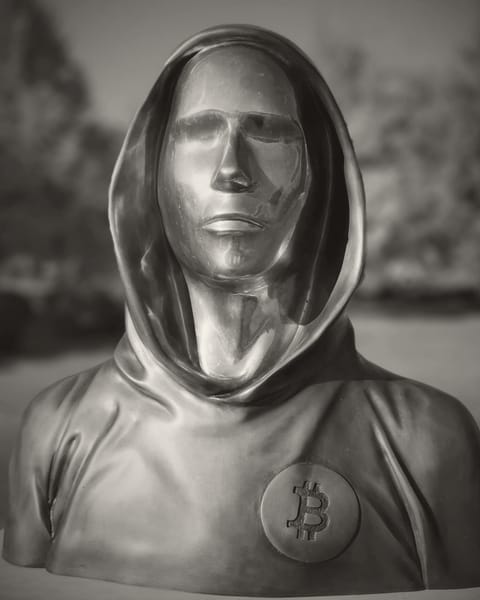 Satoshi NakamotoPseudonymous creator of Bitcoin
 Laszlo HanyeczEarly developer who paid 10,000 BTC for two pizzas
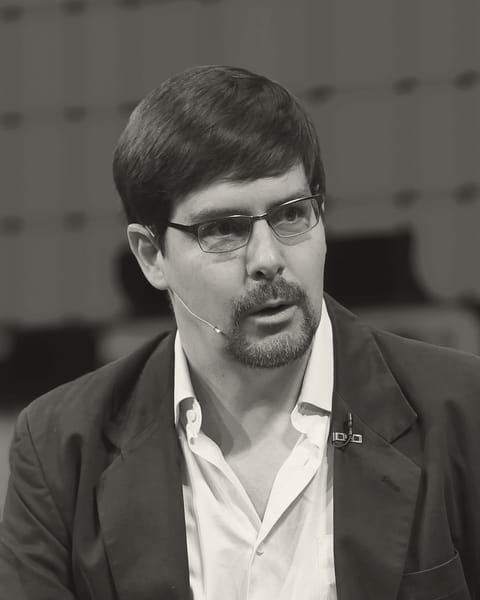 Gavin AndresenLead Bitcoin developer after Satoshi, 2010–2014
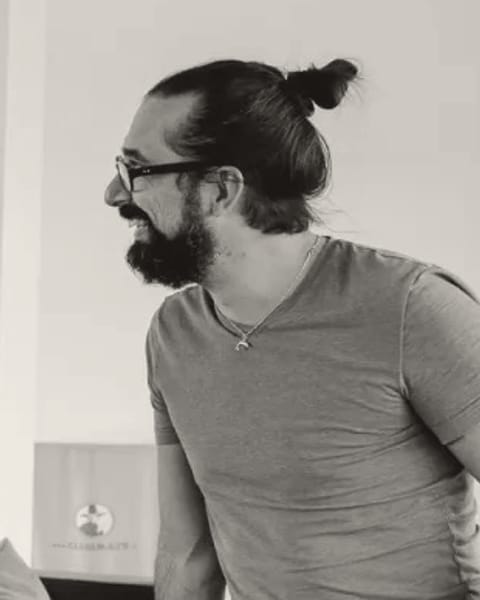 Marek PalatinusFounder of Slush Pool and co-founder of SatoshiLabs
 Jed McCalebFounder of Mt. Gox; later co-founded Ripple and Stellar
 Mike HearnEmailed Satoshi, wrote bitcoinj, launched Bitcoin XT
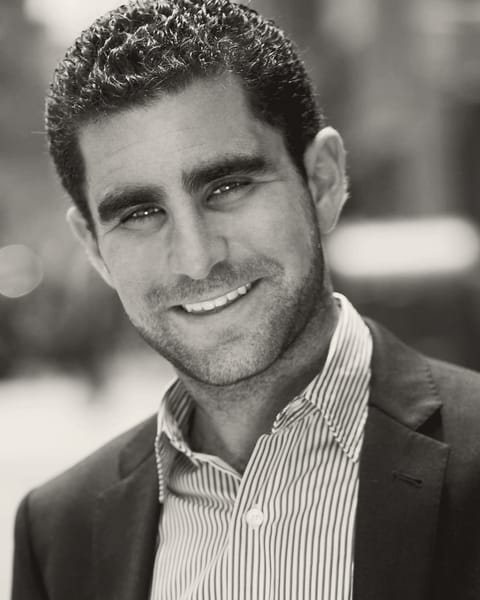 Charlie ShremCo-founder of BitInstant; Bitcoin Foundation vice chairman
References
- Bitcointalk, “Bitcoin and me (Hal Finney)”, 19 March 2013.
- X (Twitter), @halfin, “Running bitcoin”, 11 January 2009.
- Guinness World Records, “First Bitcoin transaction”.
- Cryptography mailing list, “RPOW - Reusable Proofs of Work”, 15 August 2004.
- mempool.space, “Transaction f418…9e16, in block 170”.
- The New York Times, “Hal Finney, Cryptographer and Bitcoin Pioneer, Dies at 58”, 31 August 2014.
- Cryptography mailing list (forwarding Max More, Alcor), “Hal Finney cryopreserved”, 29 August 2014.
- Cryptography mailing list, “Bitcoin P2P e-cash paper”, 7 November 2008.
- Cryptography mailing list, “Bitcoin v0.1 released”, 10 January 2009.
- Forbes (Andy Greenberg; archived full text), “Nakamoto's Neighbor: My Hunt For Bitcoin's Creator Led To A Paralyzed Crypto Genius”, 25 March 2014.
- ALS Network, “2026 Running Bitcoin Challenge”.
- Martti Malmi (Satoshi Nakamoto’s email of 21 July 2009), “Satoshi - Sirius emails 2009-2011”, 21 July 2009.
- Satoshi Nakamoto Institute (Satoshi’s last forum post), “Added some DoS limits, removed safe mode (0.3.19)”, 12 December 2010.
- Mike Hearn (his emails with Satoshi Nakamoto), “Holding coins in an unspendable state for a rolling time window”, 23 April 2011.
- Mike Hearn (his emails with Satoshi Nakamoto), “Questions about BitCoin”, 18 April 2009.
- Jameson Lopp, “Hal Finney Was Not Satoshi Nakamoto”, 21 October 2023.
- Decrypt, “'Finding Satoshi' Makes the Case for Hal Finney, Len Sassaman as Bitcoin Co-Creators”, 22 April 2026.
- Coin Stories with Natalie Brunell, “Fran Finney: The Truth About Hal Finney & Satoshi Nakamoto”, 4 January 2024.
- DL News, “Did we finally find out who Satoshi Nakamoto is? This documentary says yes — and it is more compelling than you think”, 23 April 2026.
- Wikipedia, “Hal Finney (computer scientist)”.
- Finance Magnates, “Reports Emerge of Extortionist's Targeting of Hal Finney”, 30 December 2014.
- The New York Times (John Carreyrou with Dylan Freedman; Internet Archive copy), “My Quest to Solve Bitcoin’s Great Mystery”, 8 April 2026.
- ForkLog, “Documentary names Hal Finney and Len Sassaman as Bitcoin's creators”, 23 April 2026.
- hashcash.org, “Hashcash”.
- Jameson Lopp, “Jameson Lopp: about”.
- Wikipedia, “Cypherpunk”.
- Satoshi Nakamoto, “Bitcoin: A Peer-to-Peer Electronic Cash System”, 31 October 2008.