
Adam Back.
Cryptographer who invented hashcash and co-founded Blockstream
Adam Back invented hashcash, the proof of work Bitcoin’s miners still use, and was one of the first two people Satoshi Nakamoto emailed about Bitcoin. In 2026 The New York Times named him as Satoshi himself; he says he is not.
Hashcash
Back studied computer science at the University of Exeter, finishing a doctorate in December 1995, and spent most of it, he later told The New York Times, “diving down the cryptography rabbit hole”. He joined the cypherpunksCypherpunkSomeone who believes in using strong cryptography to protect people’s privacy. Many ideas behind Bitcoin came from the cypherpunks of the 1990s., programmers and privacy activists who argued on an email list for using cryptography to protect people’s privacy. At the time the United States treated encryption software as a weapon that needed an export licence. Back squeezed the RSA encryption method into three lines of code, short enough to sign off an email, and put it on a T-shirt that “used to be technically illegal to export from the US”.[1][2][3]
On 28 March 1997 he announced hashcash on the list. To make a hashcash stamp, a computer has to keep trying until it solves a puzzle, which takes many tries, yet anyone can check the answer at once: such stamps “can be made arbitrarily expensive to compute… and yet can be verified instantly”, he wrote. The cost would be negligible for someone sending a few emails but “a show-stopper” for spammers, as hashcash’s website puts it, and it would deter abuse of anonymous remailers, services that pass on email without revealing who sent it. Back ran one himself. The spam filter SpamAssassin later added support for hashcash.[4][6][5][7][8]
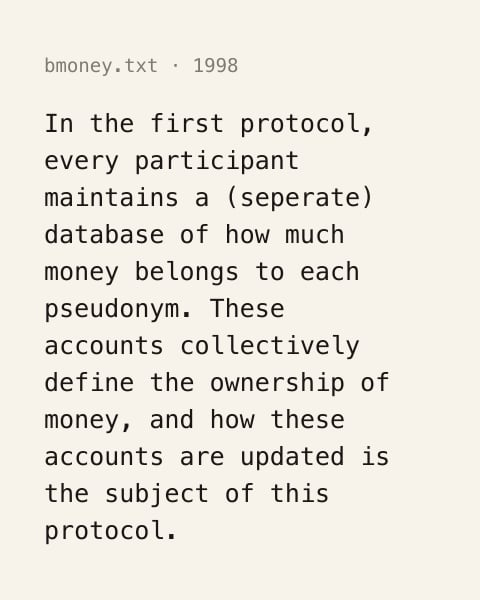
Others built on it. Wei Dai’s b-money and Nick Szabo’s bit gold in 1998, and Hal Finney’s reusable proofs of work in 2004, all used hashcash as a building block, Back told the High Court in 2024. In 1999 he moved to Montreal to work for Zero-Knowledge Systems, a start-up making privacy software, as an architect and cryptographer on its Freedom network, which Blockstream later called “a precursor to Tor”, the anonymous browsing network.[9][2][10]
Emails with Satoshi
On 20 August 2008 Back received an email from Satoshi Nakamoto, who had not yet published anything about Bitcoin. Satoshi was about to release a paper that cited hashcash and wanted to check the reference, adding that the paper “finds a new use for hash-based proof-of-workProof of workA puzzle that takes a computer real effort to solve, so the answer proves the effort was spent. Bitcoin’s miners use it to add each block. as a way to make e-cash work”. Back replied the next day that the citation looked fine, and pointed Satoshi to b-money, a design by Wei Dai “which sounds to be somewhat related to your paper”. Satoshi answered: “Thanks, I wasn’t aware of the b-money page, but my ideas start from exactly that point.”[9]
When the Bitcoin white paper appeared on 31 October, it said Bitcoin would need “a proof-of-work system similar to Adam Back’s Hashcash”. Bitcoin’s miners still do it: they keep changing a block until its fingerprint, or hash, falls below a target the network sets, which takes enormous numbers of tries to find and one to check. On 10 January 2009 Satoshi wrote to Back again, announcing Bitcoin v0.1: “Thanks for the pointers you gave me to Wei Dai’s b-money paper and others.”[11][12][13]
See how hard Bitcoin’s proof of work is todayThat was the whole exchange. “It was not an elaborate conversation and we didn’t get into a great deal of detail,” Back said in a witness statement in 2023. He had downloaded the draft but hadn’t read it straight away, and he wasn’t sure Bitcoin would last: “it was in 2009, there was no exchange, no value.” In 2026 he wrote that he was “kicking myself for not mining in anger in 2009”.[13][14][15]
The emails became public in February 2024, when Back gave evidence at the High Court in London in a case brought by the Crypto Open Patent Alliance, a US non-profit set up to promote cryptocurrency technology, against Craig Wright, who claimed to be Satoshi. Wright had said b-money shaped his thinking for years; Back’s emails showed that Satoshi hadn’t known of it until Back mentioned it. The judge said Back gave his evidence “in a careful and considered manner” and that he was “entirely satisfied he was telling the truth”. The court ruled that Wright is not Satoshi.[13][9]
Blockstream
By his own account Back got involved with Bitcoin in 2013. That October he proposed on the Bitcoin forum a way to hide the amounts in payments while still letting everyone check them; the developer Gregory Maxwell later built it as Confidential Transactions, writing that “This work was originally proposed by Adam Back”. In 2014 Back, Maxwell, Pieter Wuille and eight others founded Blockstream, a company that builds Bitcoin software and services.[16][17][18][19]
Blockstream announced itself with a paper on “pegged sidechainsSidechainA separate blockchain that bitcoin can move to and back from, trading Bitcoin's rules for different features or speed.”, of which Back was the first-named author: a way to move bitcoin onto separate blockchains with other features and back again. Back became chief executive in October 2016, and the company’s own sidechain, Liquid, went live in September 2018, using Confidential Transactions to hide amounts.[20][22][21][14]
Blockstream’s founders called themselves “long-time Bitcoin protocol developers”, and the company was drawn into the dispute over raising the limit on the size of blocks. Back argued for slow, planned increases: in 2015 he proposed raising the limit to 2, then 4, then 8 megabytes over four years, so that it would stay “reasonably convenient to run full nodes”. When Gavin Andresen and Mike Hearn released Bitcoin XT, a version of the software with a much larger limit, he wrote: “Very disappointing Gavin and Mike.” In February 2016 he signed an agreement between developers and miners in Hong Kong that planned SegWitSegWitSegregated Witness: a 2017 upgrade that moved signatures into a separate part of each payment, making room for more payments. first, then a rise to about 2 megabytes.[23][24][25][26]
Supporters of bigger blocks blamed Blockstream for the deadlock. Hearn, leaving Bitcoin in January 2016, wrote that Maxwell had “founded a company that then hired several other developers”, whose views then “started to change to align with that of their new boss”. Back has called that a conspiracy theory: “They wanted big blocks, and some people at Blockstream didn’t, so they constructed a conspiracy about why Blockstream was the evil entity here,” he told Cointelegraph in 2025.[27][18]
In July 2025 Back announced Bitcoin Standard Treasury Company, a company set up to hold bitcoin, with himself as chief executive. It planned to list on the stock market by merging with Cantor Equity Partners I, a listed company formed for such mergers by an affiliate of Cantor Fitzgerald. The plan was put on hold in July 2026, and on 20 August the two sides agreed to call it off.[28][29][30]
Was he Satoshi?
On 8 April 2026 The New York Times published an investigation by the reporter John Carreyrou concluding that Back was Satoshi. Carreyrou began, he wrote, with a scene in HBO’s 2024 documentary Money Electric in which Back “strenuously denied he was Satoshi”. He set out how Back’s posts in the late 1990s had sketched electronic cash with no bank behind it, and how Back, a prolific poster, said almost nothing about Bitcoin while Satoshi was active: his first public comment came in June 2011, “six weeks after Satoshi vanished”.[2]
The heart of the case was writing style. With his colleague Dylan Freedman, Carreyrou built a database of 134,308 posts by 620 people on three mailing lists and compared their habits with Satoshi’s. Back shared 67 of the 325 hyphenation errors they found in Satoshi’s writing; the next person shared 38. When they filtered for other quirks, such as two spaces after a full stop, British spellings and sentences ending in “also”, “The answer was just one: Mr. Back.” Carreyrou told NPR he was “somewhere between 99 and 100% certain”, though he wrote that only Satoshi could give definitive proof, by using a private keyPrivate keyThe secret number that lets you spend your bitcoin. Whoever knows it controls the coins, so it must never be shared. from one of Bitcoin’s first blocks.[2][31]
Others weren’t persuaded. The Times’ own expert in stylometry, the computational linguist Florian Cafiero, found Back the closest match, but, the paper reported, “said it wasn’t a snug fit and that Mr. Finney was a very close second”, and considered the result inconclusive. Jameson Lopp, a co-founder of the bitcoin custody company Casa, wrote that Satoshi “can’t be caught with stylometric analysis”. Carreyrou also addressed the emails Satoshi sent Back in 2008, which might seem to rule Back out: Back “could just as well have sent those emails to himself as a cover story”, he wrote.[2][32]
Earlier suggestions had drawn the same reply. After a YouTube video named him in May 2020, Back told Decrypt: “Just that people speculate, but I’m not Satoshi.” Before Money Electric came out in 2024, he wrote that it “will presumably be wrong, as no one knows who Satoshi is”; the film named the developer Peter Todd instead.[33][34][41]
Back answered the Times on X: “i’m not satoshi, but I was early in laser focus on the positive societal implications of cryptography, online privacy and electronic cash.” The rest, he wrote, was “a combination of coincidence and similar phrases from people with similar experience and interests”, and he told Yahoo Finance there was “an element of confirmation bias” in picking people with the same interests. “I also don’t know who satoshi is, and i think it is good for bitcoin that this is the case,” he added. His company’s prospectus, filed with the US Securities and Exchange Commission that June, says: “Dr. Back has confirmed that he is not Satoshi Nakamoto.”[35][36][37][38][39]
Reviewed . To report a mistake, email hello@utxohub.com.
Picture: Adam Back in 2025. Alexandre Sitter, CC BY-SA 4.0, toned by UTXOHub.
More people
Before Bitcoin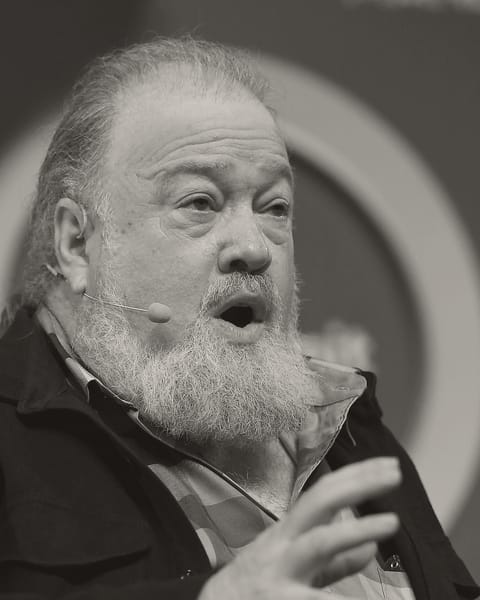


References
- Adam Back’s website, “Adam Back: home page, with his 1995 Exeter PhD thesis”.
- The New York Times (John Carreyrou with Dylan Freedman; Internet Archive copy), “My Quest to Solve Bitcoin’s Great Mystery”, 8 April 2026.
- Adam Back’s website, “RSA in 3 lines of perl”.
- Cypherpunks mailing list (Internet Archive copy), “[ANNOUNCE] hash cash postage implementation”, 28 March 1997.
- hashcash.org, “Hashcash – A Denial of Service Counter-Measure”, 1 August 2002.
- hashcash.org, “Hashcash FAQ”.
- X (Twitter), @adam3us, ““did use remailers: operated remailer.ch””, 11 May 2020.
- Apache SpamAssassin, “Mail::SpamAssassin::Plugin::Hashcash”.
- Courts and Tribunals Judiciary, “COPA v Wright [2024] EWHC 1198 (Ch), approved judgment”, 20 May 2024.
- Blockstream (Internet Archive copy), “Founders”, October 2014.
- bitcoin.org, “Bitcoin: A Peer-to-Peer Electronic Cash System”, 31 October 2008.
- hashcash.org, “Bitcoin”.
- Crypto Open Patent Alliance (with links to the trial documents, including Back’s witness statements and Exhibit AB1), “Witnesses speak out against Craig Wright in COPA vs Craig Wright trial”, 22 February 2024.
- CoinShares, “Interview: Adam Back”, May 2025.
- X (Twitter), @adam3us, ““not mining in anger in 2009””, 8 April 2026.
- Bitcointalk (Internet Archive copy), “bitcoins with homomorphic value (validatable but encrypted)”, 1 October 2013.
- Gregory Maxwell (Internet Archive copy), “Confidential Transactions”.
- Cointelegraph Magazine, “Adam Back: Blockstream, Bitcoin ETFs, the white paper and Satoshi”, 7 May 2025.
- Blockstream, “Blockstream closes $21M seed round”, 17 November 2014.
- Blockstream, “Enabling Blockchain Innovations with Pegged Sidechains”, 22 October 2014.
- Blockstream, “Liquid launch”, 10 October 2018.
- Blockstream, “Blockstream Appoints Hashcash Inventor Dr. Adam Back as CEO”, 3 October 2016.
- Blockstream (Internet Archive copy), “Why we co-founded Blockstream”, 23 October 2014.
- bitcoin-dev mailing list (Adam Back), “Yet another blocklimit proposal / compromise”, 11 September 2015.
- bitcoin-dev mailing list (Adam Back), “Bitcoin XT Fork”, 19 August 2015.
- Bitcoin Roundtable (Internet Archive copy), “Bitcoin Roundtable Consensus”, February 2016.
- Mike Hearn (Internet Archive copy), “The resolution of the Bitcoin experiment”, 14 January 2016.
- US Securities and Exchange Commission (Cantor Equity Partners I, Form 8-K, exhibit 99.1), “Bitcoin Standard Treasury Company to go Public Through Business Combination with Cantor Equity Partners I, Inc.”, 17 July 2025.
- US Securities and Exchange Commission (Cantor Equity Partners I, Form 8-K), “Postponement of the business combination”, 8 July 2026.
- US Securities and Exchange Commission (Cantor Equity Partners I, Form 8-K), “Termination and Release Agreement”, 20 August 2026.
- NPR (Mary Louise Kelly), “After years of speculation, a reporter claims to have uncovered the founder of bitcoin”, 13 April 2026.
- X (Twitter), @lopp, ““Satoshi Nakamoto can’t be caught with stylometric analysis””, 8 April 2026.
- Decrypt, “New theory claims Adam Back is Satoshi Nakamoto”, 12 May 2020.
- X (Twitter), @adam3us, ““I’m not. But also the documentary will presumably be wrong””, 5 October 2024.
- X (Twitter), @adam3us, ““i’m not satoshi””, 8 April 2026.
- X (Twitter), @adam3us, ““a combination of coincidence and similar phrases””, 8 April 2026.
- Yahoo Finance, “Adam Back explains why he’s not bitcoin creator Satoshi Nakamoto”, 9 April 2026.
- X (Twitter), @adam3us, ““I also don’t know who satoshi is””, 8 April 2026.
- US Securities and Exchange Commission (BSTR Holdings, prospectus, Form 424B3), “Proxy statement/prospectus, risk factors”, 5 June 2026.
- Protos, “Craig Wright hits COPA trial with 164,000 pages of evidence”, 22 February 2024.
- CNN, via KTVZ, “‘I am not Satoshi Nakamoto’: Subject of HBO documentary denies he invented bitcoin”, 8 October 2024.