
Peter Todd.
Bitcoin developer behind replace-by-fee and OpenTimestamps
Peter Todd wrote some of Bitcoin’s rules for replacing a stuck payment with a higher-fee one and for locking coins until a set time. In 2024 an HBO documentary named him as Satoshi Nakamoto; he denies it.
Getting into Bitcoin
Peter Todd learned to program young. He has said he could code before he could read, The New Yorker reported, and in 2001, while still at high school, he emailed the English cryptographer Adam Back with questions about hashcash, Back’s invention and one of Bitcoin’s forerunners. When Satoshi Nakamoto launched Bitcoin, Todd was a Canadian college student. His first Bitcoin project, by his own account, was OpenTimestamps, which he started in June 2012. About a year and a half later he quit his job to work on Bitcoin full time.[1][2]
Since then he has often worked for clients and sponsors. One client, Verisart, which records the ownership history of artworks, funded an early version of OpenTimestamps, and in 2016 a sponsor, BTCC, was paying for his Bitcoin development, he wrote. His replace-by-feeReplace-by-fee (RBF)A way to replace an unconfirmed payment with a conflicting version that pays a higher fee. Only one can remain in the same valid chain. work began as a paid job too.[2][3]
Replace-by-fee
Replace-by-fee lets someone whose payment is stuck send a new version of it with a higher fee. Satoshi Nakamoto sketched the idea on BitcointalkBitcointalkThe Bitcoin forum Satoshi Nakamoto opened in November 2009. Much of Bitcoin’s early history, from the pizza offer to Satoshi’s last post, happened there., the Bitcoin forum, in December 2010. The sender would deliberately spend the same coins a second time, “with the same inputs and outputs, but this time with a fee”: the same coins in, the same amounts out. Once the new version was in a block, the first would become invalid. It was “easier said than implemented”, Satoshi added, partly because nodes, the computers that relay payments, refused any second version of a payment.[4]
Speeding up a stuck paymentAn hour and a half later a new forum user called retep, Todd’s account at the time, posted a correction: “Of course, to be specific, the inputs and outputs can’t match *exactly* if the second transaction has a transaction fee.” Fourteen years later that reply became a key piece of evidence in a film that named Todd as Satoshi.[4][1][5]
By 2013 Todd was building replace-by-fee, paid by a forum user called John Dillon. Asked on the developers’ mailing list that July whether he would take on another project, he joked that he would accept bribes, then added: “But in all seriousness I also accepted funds from John Dillon to implement replace-by-fee.” The job had turned out bigger than expected, he wrote, and he advised anyone thinking of paying him to look at his record first: “I’ve been much more of an academic than a programmer.”[3][1]
A replacement could also be used to cheat someone who treats a payment as received before it is confirmed. So when Todd and David A. Harding, who later contributed to the Bitcoin Optech newsletter, wrote the rules up as BIP-125, a Bitcoin Improvement ProposalBIPA public document describing a proposed change to Bitcoin, or a standard that wallets can follow., they made replacement opt-in. A payment signals that it may be replaced, and whoever receives it can wait for a confirmation, “eliminating the risk that the spender will use allowed replacements to defraud them”. Bitcoin Core, the software that grew from Satoshi’s first release, shipped Todd’s code for it in version 0.12.0 on 23 February 2016.[6][18][7][8]
Read BIP-125Todd wanted every unconfirmed payment to be replaceable, whether it signalled or not, an approach called full RBF. In his account, the opt-in had been a compromise with a few paid services that claimed to make unconfirmed payments safe, most of which had since died off. In February 2023 he urged people running Bitcoin Core nodes and mining poolsMining poolA group of miners who share the work of finding blocks and split the rewards, so each gets paid steadily instead of rarely. to switch on a full-RBF setting added in version 24, and set out why, in his words, “a small minority of people hate it with a passion”. In October 2024 Bitcoin Core 28.0 made full RBF the default.[8][9]
Timelocks, timestamps and Zcash
In 2014 Todd wrote BIP-65, which adds an instruction called OP_CHECKLOCKTIMEVERIFY to Bitcoin’s scripting system. It creates a timelockTimelockA rule inside a payment that stops coins being spent until a certain block height or time has passed.: coins locked with it can’t be spent by anyone until a set time or block. The proposal’s own example is a business whose two owners give their lawyer a backup key that can only be used after three months. BIP-65 became part of Bitcoin’s rules through a soft forkSoft forkA change that tightens Bitcoin's rules, so nodes that haven't upgraded still accept the new blocks., a change that tightens the rules so that older software still accepts the new blocks, and Bitcoin Core’s release notes credit Todd with the code.[10][7]
Read BIP-65OpenTimestamps, which Todd released for public testing in September 2016, uses Bitcoin as a notary. A timestamp “proves that a message existed prior to some point in time”, he wrote. The software takes a fingerprint of a file, a short code that changes completely if a single byte changes, and records it in a Bitcoin transaction. Changing the file would change the fingerprint, and with it the block, so the file must have existed when the block was made. One transaction can carry the fingerprints of any number of files, which makes the timestamps free. A timestamp doesn’t prove that a record is genuine, he cautioned, but it limits who could have tampered with it.[2]
His security work has gone beyond Bitcoin. In October 2016 he was one of six people who took part in the setup ceremony for Zcash, another cryptocurrency. The ceremony produced a secret key, “cryptographic toxic waste” in his words, that could have been used to create counterfeit coins, and it could leak only if all six participants colluded or were compromised. Todd ran his part of the computation in a rented car, “spending as much time as (safely) possible driving” across British Columbia, so that anyone trying to tamper with it would have to follow him. Afterwards he heated the laptop’s parts with a propane torch until, he wrote, all information on them “would be unrecoverable”. He took part unpaid, with the company behind Zcash covering his expenses.[11]
The argument over data
In 2025 Todd took a side in an argument over how much data Bitcoin transactions should carry. By default, Bitcoin Core would pass on or mine an OP_RETURNOP_RETURNA payment output that stores data instead of paying someone. It can never be spent, so nodes don't track it as spendable. output, the part of a transaction made for carrying a little data, only if it held no more than 83 bytes. On 27 April Todd opened a pull request, a proposed change to Bitcoin Core’s code, to remove that limit and the settings behind it. The limits were “easily bypassed”, he wrote, and he repeated his case for full RBF: “the policies of individual nodes are unable to prevent profitable transactions from being broadcast and mined.”[13][14]
His pull request was closed unmerged on 12 May, in favour of a similar change that kept the settings, so that anyone could restore the old limit. That change shipped in Bitcoin Core 30.0 on 10 October 2025. It raised the default limit to 100,000 bytes, which “effectively uncaps the limit”, the release notes say.[13][14]
A proposal called BIP-110, whose original draft is credited to Luke Dashjr, set out to restore the 83-byte limit, along with other limits on data, as part of Bitcoin’s rules. From block 961,632, nodes enforcing it would reject blocks that didn’t signal support. On 7 August 2026, the day before that block was mined, Todd published a review of its code for people staying on the existing chain. For them, he concluded, it did nothing “particularly interesting”. Given the mining power behind it, he wrote, its supporters “will most likely fork off into a separate coin with minority hash power”. The next day they did: the nodes enforcing BIP-110 broke away onto a chain of their own, which had stalled after two blocks when Bitcoin Magazine reported on 11 August.[16][15][17]
See block 961,632, where the chains splitThe HBO film
On 8 October 2024 HBO aired Money Electric: The Bitcoin Mystery, a documentary by Cullen Hoback, whose earlier HBO series Q: Into the Storm had tried to identify the person behind QAnon. It named Todd as Satoshi Nakamoto. The film presented “a hell of a case”, Hoback told CNN, though not proof: “It’s not like we have Satoshi literally sending a transaction on camera.”[12]
Its two main pieces of evidence, The Register reported, concerned replace-by-fee. The first was Todd’s 2010 forum reply, which Hoback read as Satoshi carrying on a thought after logging in to the wrong account: “Someone who had just created this account, and never posted about Bitcoin before, was finishing Satoshi’s sentences?” he asks in the film. The second was John Dillon, the forum user who had paid Todd to build replace-by-fee and who, in emails said to have been leaked, claimed to work in intelligence. Hoback suspected Todd had invented him.[5][1]
Other clues, as The New Yorker described them, included British-style spellings in Satoshi’s writing that would suit a Canadian; Todd’s youth, which might explain why Satoshi stayed anonymous; and the timing: Satoshi left the forum for good within days of the exchange, and Todd didn’t post there again for two years.[1]
Hoback also leaned on how Todd behaved on camera. Early in the film, when Hoback checked that he wasn’t Satoshi, Todd replied: “Oh, no, I am Satoshi. I’m Satoshi Nakamoto.” Claiming to be Satoshi is a running joke among Bitcoin insiders, The Register noted, and Todd told the site the joke is partly meant to water down the risk to others. When Hoback finally put his theory to him, Todd said: “It’s ludicrous, but it is the sort of theory someone who spends their time as a documentary journalist would come up with.” Hoback told CNN that Todd’s reaction was “in some ways more telling than even the evidence itself”.[1][5][12]
Todd denies being Satoshi. “For the record, I’m not Satoshi,” he told CNN, calling the film “irresponsible”. “Cullen is grasping for straws here,” he said. “He is playing up a few coincidences into something much more.” The 2010 reply, he said, was “simply pointing out a minor correction to what Satoshi wrote”, and since the forum let users edit their posts, Satoshi would more likely have fixed the original. Gregory Maxwell, another early Bitcoin developer, noted that Todd’s account was still called retep at the time and took his real name only later. “If Satoshi had actually made that mistake, the obvious thing to do would be to just abandon the account,” Todd told The Register. He called the claims about Dillon “an attempt to smear me”.[12][5][1]
Adam Back, the inventor of hashcash, appears in the film too. He advised people betting on its conclusion that it was “probably not going to be true, because no one knows who satoshi is”. Hoback stood by his film. “He’s had over a year to prepare for this moment,” he told CNN after Todd’s denial. “Peter’s got next-level game theory.”[1][5][12]
For Todd, the hunt itself is the problem. “Falsely accusing an ordinary person of ordinary wealth of having tens of billions of dollars puts them at risk for obvious reasons,” he told The Register, adding that he had had to do “some emergency travel to reduce the risks to myself”. To The New Yorker he wrote: “Satoshi obviously didn’t want to be found, for good reasons, and no-one should help people trying to find Satoshi.” And in any case, “It’s a useless question, because Satoshi would simply deny it.”[5][1]
Another Satoshi claim had already reached Todd in court. Craig Wright, who said he was Satoshi, named him a defendant in two lawsuits in England; in one, Wright’s company Tulip Trading wanted developers to change Bitcoin’s code to recover coins it said hackers had taken. Wright abandoned both in 2024 after the High Court ruled he was not Satoshi, and the judge certified them “totally without merit”.[19]
Reviewed . To report a mistake, email hello@utxohub.com.
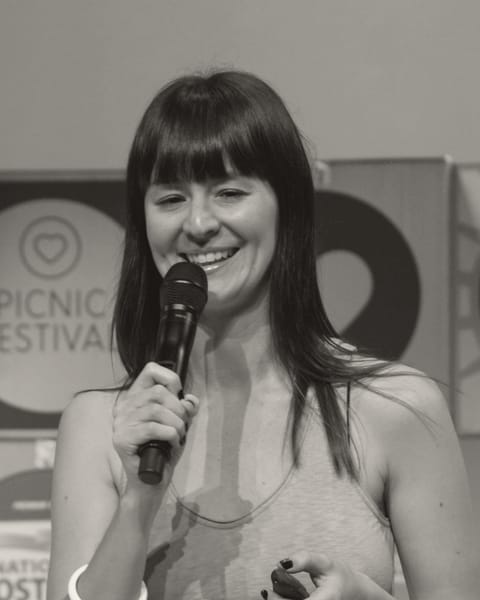
Picture: Peter Todd’s GitHub profile picture. Peter Todd (@petertodd), toned by UTXOHub.
BIPs by Peter Todd
4 proposalsMore people
Building Bitcoin Pieter WuilleBitcoin Core developer, co-author of SegWit and Taproot
 Mara van der LaanLead maintainer of Bitcoin Core, 2014–2022
 Gregory MaxwellBitcoin developer, co-founder of Blockstream
 Andreas M. AntonopoulosAuthor of Mastering Bitcoin
 Elizabeth StarkCo-founder and CEO of Lightning Labs
 Luke DashjrMaintainer of Bitcoin Knots, BIP editor 2016–2026
References
- The New Yorker (Gideon Lewis-Kraus), “Has Bitcoin’s Elusive Creator Finally Been Unmasked?”, 8 October 2024.
- Peter Todd’s blog, “OpenTimestamps: Scalable, Trust-Minimized, Distributed Timestamping with Bitcoin”, 15 September 2016.
- Bitcoin development mailing list, “Re: [Bitcoin-development] SPV bitcoind? (was: Introducing BitcoinKit.framework)”, 18 July 2013.
- Bitcointalk (archived copy), “Fees in BitDNS confusion”, 9–10 December 2010.
- The Register (Brandon Vigliarolo), “HBO doc names Bitcoin creator suspect - who says ‘not me’”, 9 October 2024.
- GitHub (bitcoin/bips), “BIP 125: Opt-in Full Replace-by-Fee Signaling”.
- Bitcoin Core, “Bitcoin Core 0.12.0”, 23 February 2016.
- Peter Todd’s blog, “Why You Should Run Full-RBF On Your Node”, 2 February 2023.
- Bitcoin Core, “Bitcoin Core 28.0”, 2 October 2024.
- GitHub (bitcoin/bips), “BIP 65: OP_CHECKLOCKTIMEVERIFY”.
- Peter Todd’s blog, “Cypherpunk Desert Bus: My Role In The 2016 Zcash Trusted Setup Ceremony”, 14 November 2016.
- CNN (Jon Sarlin), “‘I am not Satoshi Nakamoto’: Subject of HBO documentary denies he invented bitcoin”, 8 October 2024.
- GitHub (bitcoin/bitcoin), “Remove arbitrary limits on OP_Return (datacarrier) outputs (pull request #32359)”, 27 April – 12 May 2025.
- Bitcoin Core, “Bitcoin Core 30.0”, 10 October 2025.
- Peter Todd’s blog, “BIP-110 Code Review”, 7 August 2026.
- GitHub (bitcoin/bips), “BIP 110: Reduced Data Temporary Softfork”.
- Bitcoin Magazine (Mathew Di Salvo), “Luke Dashjr Removed as Bitcoin BIP Editor Following (BIP)-110 Fork Failure”, 11 August 2026.
- Bitcoin Optech, “About”.
- High Court of England and Wales, “COPA v Wright and others (form of order) [2024] EWHC 1809 (Ch), parties and paras 3, 202–204”, 16 July 2024.