
John McAfee.
McAfee antivirus founder who promoted cryptocurrencies · 1945–2021 · Also known as John David McAfee
John McAfee bet publicly in 2017 that bitcoin would pass $500,000 within three years, and later called the bet “a ruse to onboard new users”. Charged in the US over taxes and paid crypto promotions, he died in a Spanish prison in 2021 before any trial.
Before Bitcoin
McAfee was born in Gloucestershire, England, in 1945 and moved to Virginia as a child. In 1987, a year after a computer virus called Brain began spreading, he founded McAfee Associates to sell a program he called VirusScan. Vesselin Bontchev, an early antivirus researcher, told the Associated Press that it was the first all-in-one virus scanner: before it, researchers scanned for one virus at a time. “Technologically, as a scanner, it wasn’t anything outstanding,” Bontchev added. “It was just the general idea that was good.” The company came to dominate antivirus software for personal computers, Bloomberg reported, and half of the Fortune 100 companies used it.[1][2]
McAfee resigned in 1994. Decades later he told the South China Morning Post that running the company had stopped being fun once it grew into a huge corporation with thousands of employees. The chipmaker Intel went on to buy the business for $7.68 billion, and for a time sold its products as Intel Security. When Intel dropped his name, McAfee told the BBC: “I am now everlastingly grateful to Intel for freeing me from this terrible association with the worst software on the planet.”[1][2]
From 2008 he lived in Belize, where in 2012 police sought to question him about the killing of a neighbour. He left the country and was never charged. In 2016 he sought the Libertarian Party’s nomination for US president, campaigning on privacy.[1][2]
Bitcoin mining and the bet
By 2017 McAfee was chief executive of MGT Capital Investments, a former video-game company that he promised to turn into a profitable cybersecurity firm by expanding its bitcoin mining, Bloomberg reported. Miners run computers that compete to add the next block of transactions to Bitcoin’s shared record, and are paid in new bitcoin for each block they add.[2][4]
What a miner doesIn September 2017 Jamie Dimon, the chief executive of the bank JPMorgan, called bitcoin a “fraud”. McAfee answered him on CNBC the next day. “I’m a bitcoin miner. We create bitcoins,” he said. Making a coin cost miners more than $1,000, he argued, while a dollar cost “whatever the paper costs”. “Which one is the fraud?” he asked. “It’s called proof of workProof of workA puzzle that takes a computer real effort to solve, so the answer proves the effort was spent. Bitcoin’s miners use it to add each block.”: a puzzle that takes a computer real effort to solve, so the answer proves the effort was spent. Bitcoin would “rise and fall as all new technologies are”, McAfee said, but “it is certainly not a fraud”.[4]
He had already made a public prediction. On 17 July 2017 he wrote on Twitter: “In the long term Bitcoin moves above $500,000 within three years. Bets?” When a follower took him up, he made it a bet, promising a forfeit on national television if he was wrong. That November he raised his prediction to $1 million by the end of 2020, double his earlier forecast, CNBC reported. In January 2020 he wrote that the bet had been “a ruse to onboard new users. It worked.” In the same post he called bitcoin “an ancient technology” and pointed to newer blockchains with “privacy, smart contractsSmart contractA program that carries out an agreement by itself, such as releasing money once set conditions are met. Nick Szabo coined the term in 1994., distributed apps and more”.[3][5][7]
The charges
Bitcoin was not the only thing McAfee promoted. Between December 2017 and February 2018 he also used Twitter to tout initial coin offerings, or ICOs: sales of new digital tokens that startups used to raise money. On 5 October 2020 the US Securities and Exchange Commission (SEC) sued him. It alleged that he had been paid more than $23 million in digital assets for those promotions while presenting himself as impartial, and that he denied being paid when some investors asked. It also alleged a second scheme: quietly building up a large holding in a token, praising it on Twitter, then selling as the price rose.[8][10]
The same day, the Justice Department unsealed a June 2020 indictment from federal prosecutors in Tennessee, following McAfee’s arrest at Barcelona’s airport. It charged him with tax evasion and wilful failure to file tax returns. It alleged that he had earned millions from promoting cryptocurrencies, consulting, speaking and selling the rights to his life story for a documentary, but filed no returns for 2014 to 2018, and that he had hidden a yacht and other assets in other people’s names. In January 2019 he had written on Twitter: “I have not filed a tax return for 8 years. Why? 1: taxation is illegal.”[1][6][8][9]
In March 2021 federal prosecutors in Manhattan unsealed a second indictment, charging McAfee and his bodyguard, who also advised his cryptocurrency team, with fraud and money laundering conspiracy. They alleged two schemes. In the first, a “pump and dump”, the team bought cheap altcoins (cryptocurrencies other than bitcoin) knowing McAfee would recommend them on Twitter, then sold once his tweets pushed the price up. In the second, the companies behind ICOs secretly paid the team for his promotions. Prosecutors alleged that the team took in more than $13 million, while noting that the allegations were “merely accusations”. Another regulator, the Commodity Futures Trading Commission, brought a civil case alongside the SEC’s.[8][10]
McAfee was held in a prison near Barcelona while Spain considered the US request to extradite him. He kept posting on Twitter, and in April 2021 wrote that “this has been the most trying period in my life”. At a hearing in June he argued that the Tennessee charges were politically motivated and that he would spend the rest of his life in prison if he were sent back.[1][2]
His death
On 23 June 2021 Spain’s National Court announced that it had approved his extradition to face the tax charges. The ruling could still be appealed, and a final order needed the Spanish cabinet’s approval. Hours later McAfee, aged 75, was found dead in his cell at Brians 2 prison near Barcelona. He never stood trial.[1][2]
In the United States his death ended the cases against him. In February 2022 prosecutors in Tennessee asked the court to dismiss the tax indictment “because of Defendant’s Death”, and on 23 February it did. On 28 March Judge Lorna G. Schofield approved a nolle prosequi, the prosecutors’ formal notice that they were dropping the Manhattan charges. Because McAfee had died before a final judgment, they wrote, the charges “must be dismissed under the rule of abatement”. In July 2022 the SEC said its claims against him were dismissed after it filed notice of his death.[11][13][14]
An autopsy found that he had died by suicide, but his family appealed for a fuller investigation. In a ruling dated 24 July 2023 and made public that September, a Spanish court confirmed the finding and closed its inquiry. There was “not a single element of suspicion, of a charge against a third party, of criminal behaviour”, the ruling said, according to Reuters.[12]
Reviewed . To report a mistake, email hello@utxohub.com.
Picture: John McAfee in 2016. Gage Skidmore, CC BY-SA 3.0, toned by UTXOHub.

More people
Bitcoin in public life Michael SaylorFounder and executive chairman of Strategy (MicroStrategy)
 Nayib BukeleProposed El Salvador’s 2021 Bitcoin Law as president
 Ross UlbrichtCreator of Silk Road, convicted in 2015, pardoned in 2025
 Mark KarpelèsHead of Mt. Gox, the exchange that collapsed in 2014
 Roger VerEarly bitcoin investor and promoter, later of Bitcoin Cash
 Jihan WuBitmain co-founder; chairman and chief executive of Bitdeer
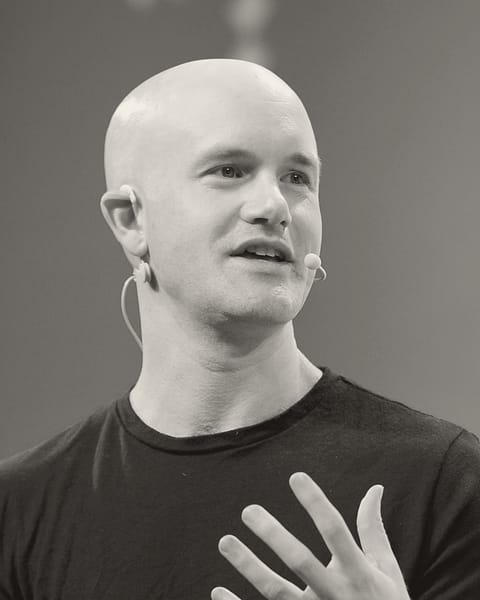 Brian ArmstrongCo-founder and chief executive of Coinbase
 Jack DorseyCo-founder of Twitter and of Block, formerly Square
 Changpeng ZhaoFounder and former chief executive of Binance
References
- Fortune (The Associated Press), “Software pioneer John McAfee, 75, found dead in jail cell after Spain approves extradition to U.S.”, 24 June 2021.
- Stars and Stripes (Bloomberg), “John McAfee, antivirus software pioneer, found dead in prison”, 24 June 2021.
- X (Twitter), @officialmcafee, ““In the long term Bitcoin moves above $500,000 within three years. Bets?””, 17 July 2017.
- CNBC, “John McAfee challenges Jamie Dimon’s bitcoin skepticism”, 13 September 2017.
- CNBC, “James Altucher predicts bitcoin will reach $1 million by 2020”, 29 November 2017.
- X (Twitter), @officialmcafee, ““I have not filed a tax return for 8 years.””, 3 January 2019.
- X (Twitter), @officialmcafee, ““A ruse to onboard new users. It worked.””, 5 January 2020.
- US Securities and Exchange Commission, “SEC Charges John McAfee With Fraudulently Touting ICOs”, 5 October 2020.
- US Department of Justice, Office of Public Affairs (archived), “John McAfee Indicted for Tax Evasion”, 5 October 2020.
- US Department of Justice (US Attorney’s Office, Southern District of New York), “John David McAfee And Executive Adviser Of His Cryptocurrency Team Indicted In Manhattan Federal Court For Fraud And Money Laundering Conspiracy Crimes”, 5 March 2021.
- US Securities and Exchange Commission, “SEC Obtains Final Judgment Against Individual in ICO Promotion Scheme; Files Notice of Death as to John McAfee, Resulting in Dismissal of Claims (Litigation Release No. 25445)”, 15 July 2022.
- The Globe and Mail (Reuters), “Spanish court rules software mogul John McAfee died from suicide”, 29 September 2023.
- CourtListener (US District Court docket), “United States v. McAfee, 1:20-cr-10029 (W.D. Tenn.)”.
- US District Court, Southern District of New York (via CourtListener), “Nolle Prosequi, United States v. John David McAfee, 21 Cr. 138 (LGS) (Doc. 47)”, 28 March 2022.