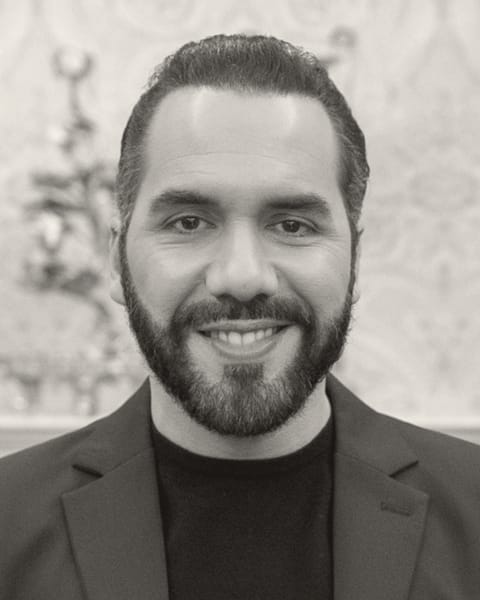
Nayib Bukele.
Proposed El Salvador’s 2021 Bitcoin Law as president
Nayib Bukele made El Salvador the first country to adopt bitcoin as legal tender, in 2021, three days after announcing it by video to a bitcoin conference in Miami. In 2025, under a loan deal with the IMF, lawmakers made accepting it voluntary.
Before the Bitcoin Law
Nayib Bukele ran an advertising company in San Salvador before he went into politics, according to a profile by CIDOB, a research centre in Barcelona. He was elected mayor of the small town of Nuevo Cuscatlán in 2012, and of the capital, San Salvador, in 2015, for the left-wing FMLN party, which expelled him in 2017. Standing for another party, he won El Salvador’s presidential election in February 2019 with nearly 54% of the vote, the Associated Press reported, and took office on 1 June.[1][2]
El Salvador had used the US dollar as its currency since 2001. Money sent home by Salvadorans working abroad, known as remittances, came to nearly a quarter of the economy, and about 70% of people had no bank account, Bukele said. On the Pacific coast, the village of El Zonte had been using bitcoin widely since about 2019, helped by a large donation from an anonymous investor. Bukele cited this “Bitcoin Beach” as proof that the idea could work for the whole country, Al Jazeera reported.[11][3]
The Bitcoin Law
On 5 June 2021 a video of Bukele was shown at the Bitcoin 2021 conference in Miami. He said he would send Congress a bill the next week to make bitcoin legal tender: money that must be accepted to settle a debt. “In the short term this will generate jobs and help provide financial inclusion to thousands outside the formal economy,” he said. Late on 8 June the Legislative Assembly passed it by 62 votes of 84. “62 out of 84 votes! History!” Bukele posted.[3][5][6]
The law made bitcoin legal tender alongside the dollar, with no limit on the debts it could settle. Its Article 7 required every business to accept bitcoin when a customer offered it, unless, under Article 12, it plainly had no access to the technology. Taxes could be paid in bitcoin, and the state promised to swap bitcoin for dollars instantly through a trust at a state development bank, backed by $150 million. Bukele presented it as a choice for ordinary people, because payments could be turned into dollars automatically: “The use of bitcoin will be optional, nobody will receive bitcoin if they don’t want it,” he said.[7][14][8]
His main argument was remittances. Salvadorans paid $400 million a year in fees on the money sent home, he said, and bitcoin would save them that, while giving people without bank accounts access to financial services. The day after the vote he told LaGeo, the state geothermal power company, to plan bitcoin mining powered by “very cheap, 100% clean, 100% renewable, 0 emissions energy from our volcanos”.[10][9]
Chivo, purchases and Bitcoin City
The law took effect on 7 September 2021. The government’s Chivo wallet app gave $30 in bitcoin to everyone who signed up, and Chivo cash machines let people turn bitcoin into dollars without fees. On the first day the app disappeared from app stores, then was taken offline while servers were added; Bukele asked people on Twitter to report any errors. “Not everything will be achieved in a day, or in a month,” he wrote. More than 1,000 people marched against the law in San Salvador, Reuters reported. One student’s sign read “No to Bitcoin, No to Dictatorship”.[10][11][17]
What a wallet isThe state also bought bitcoin, and Bukele announced the purchases himself. “We now hold 400 #bitcoin,” he posted on the eve of the launch. In November 2022 he wrote: “We are buying one #Bitcoin every day starting tomorrow.”[12][13]
In November 2021, at a bitcoin conference on the Salvadoran coast, he announced plans for a “Bitcoin City” at the foot of the Conchagua volcano, powered by geothermal energy and free of income and property taxes. It would be paid for with a $1 billion “volcano bond”, half of it spent on bitcoin, Samson Mow of the bitcoin company Blockstream said on stage. The government postponed the bond several times. In January 2023 lawmakers passed a Digital Assets Issuance Law to allow it, but the IMF loan agreed in 2025 barred the state from issuing any debt tied to bitcoin.[14][15][16][24]
The IMF deal
The International Monetary Fund (IMF), which lends to governments in financial difficulty, warned against the law from the start. In January 2022 its board said making a cryptocurrency legal tender “entails large risks for financial and market integrity, financial stability, and consumer protection”, and urged El Salvador to remove bitcoin’s legal tender status. Bukele went on to win a second term in February 2024 with about 83% of the vote in early results, after a 2021 ruling by the constitutional court, “dominated by his supporters” in the BBC’s words, allowed a president to stand again.[20][30][29]
In December 2024 El Salvador reached a staff-level agreement with the IMF on a 40-month loan of about $1.4 billion. Under it, “acceptance of Bitcoin by the private sector will be voluntary and public sector’s participation in Bitcoin-related activities will be confined.” On 29 January 2025 lawmakers changed the Bitcoin Law at Bukele’s request. Only people and private businesses may now accept bitcoin, and they no longer have to; taxes can no longer be paid in it; and the state’s duty to convert bitcoin to dollars is gone. The law still calls bitcoin “curso legal”, legal tender, but no longer “moneda”, currency. The IMF board approved the loan on 26 February 2025.[21][22][24]
Sources disagree on what is left. EFE, the Spanish news agency, reported that the reform erased references to bitcoin as legal-tender currency, and the IMF said it removed “the essential features of legal tender”. Stacy Herbert, the American director of El Salvador’s National Bitcoin Office, said bitcoin remained legal tender.[23][24]
The loan terms set a ceiling of zero on any voluntary addition to the state’s bitcoin. Bukele said the buying would go on: “No, it’s not stopping. If it didn’t stop when the world ostracized us and most ‘bitcoiners’ abandoned us, it won’t stop now.” Michael Saylor, the chairman of Strategy, a company that also buys bitcoin, replied on X: “Bitcoin adoption is unstoppable.” In its first review that June the IMF said increases in the state’s holdings reflected “the consolidation of Bitcoin across various government-owned wallets”.[24][25][26][31]
In October 2026 the IMF granted waivers after El Salvador missed targets “on the Bitcoin accumulation front”. It said majority ownership and control of Chivo had passed to a private operator, and that no further accumulation was envisaged “beyond the documented donations”. On 18 October 2026 the addresses listed on the National Bitcoin Office’s public tracker held about 7,808 bitcoins, and one of them had received a deposit of exactly one bitcoin on most days since March 2026.[27][28]
An address in El Salvador’s reserveDid it work?
Few Salvadorans took to bitcoin. In a survey of 1,800 households in February 2022, the economists Fernando Alvarez, David Argente and Diana Van Patten found that “only 20% of all respondents continued using Chivo after spending their bonus”, and that 20% of firms accepted bitcoin. In a poll by the Central American University at the end of 2024, 91.8% of people said they had not used it that year. Less than 2% of remittances went through bitcoin providers, the IMF found, and it said in 2023 that bitcoin had had “a minimal impact on financial inclusion”.[18][19][32]
Critics also objected to how it was done. “The law was adopted extremely quickly, without a technical study or a public debate,” the Salvadoran economist Ricardo Castaneda told The Guardian in 2021. The World Bank turned down a request to help, citing “environmental and transparency shortcomings”, and the ratings agency Moody’s downgraded El Salvador’s debt. An August 2021 poll by the Central American University found 65% of people opposed the law, though it gave Bukele an approval rating of 76%.[33][34][10][11]
Supporters made the opposite case. Jack Mallers, the founder of the bitcoin payments app Strike, who introduced Bukele’s video in Miami, called the plan “the shot heard ’round the world for Bitcoin”. In January 2022 Bukele said 4 million people, in a population of 6.5 million, were using Chivo. And in El Zonte, an Uber driver who had learned about bitcoin there told Al Jazeera on the day the law took effect: “The price might go up or down, but Bitcoin gives me more power. We don’t need permission to send money anymore.”[4][35][11]
Reviewed . To report a mistake, email hello@utxohub.com.
Picture: Nayib Bukele at the White House, April 2025. Daniel Torok, The White House, Public domain, toned by UTXOHub.

More people
Bitcoin in public life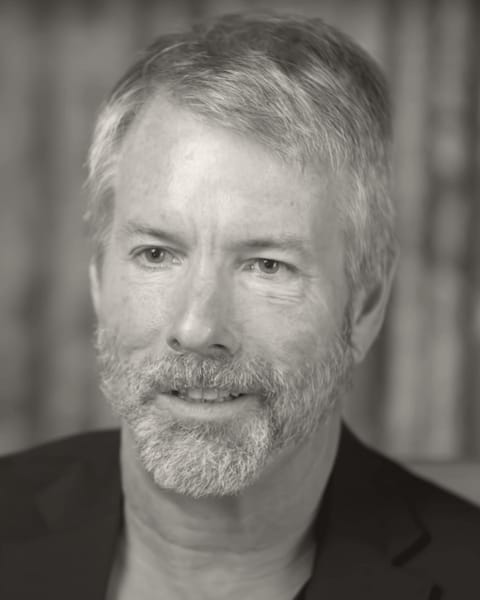 Michael SaylorFounder and executive chairman of Strategy (MicroStrategy)
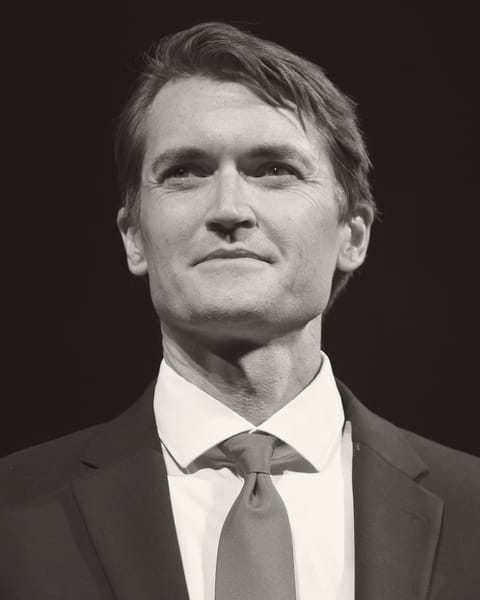 Ross UlbrichtCreator of Silk Road, convicted in 2015, pardoned in 2025
 Mark KarpelèsHead of Mt. Gox, the exchange that collapsed in 2014
 Roger VerEarly bitcoin investor and promoter, later of Bitcoin Cash
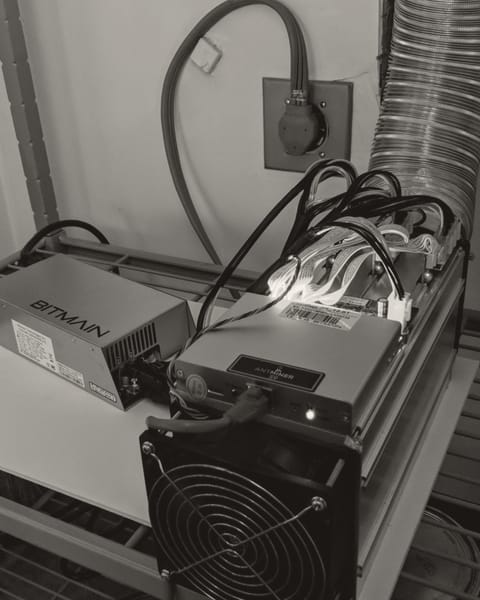 Jihan WuBitmain co-founder; chairman and chief executive of Bitdeer
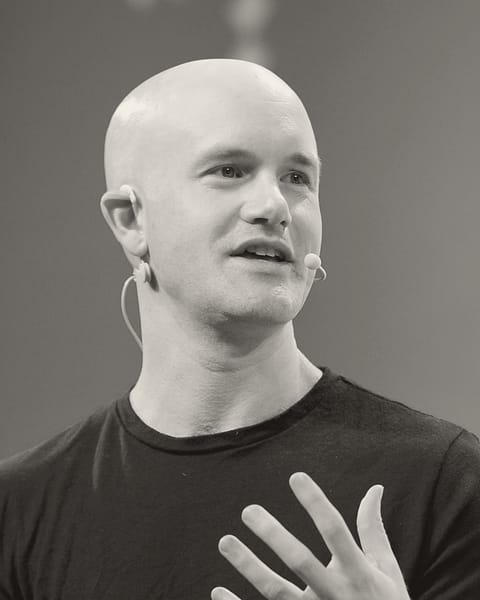 Brian ArmstrongCo-founder and chief executive of Coinbase
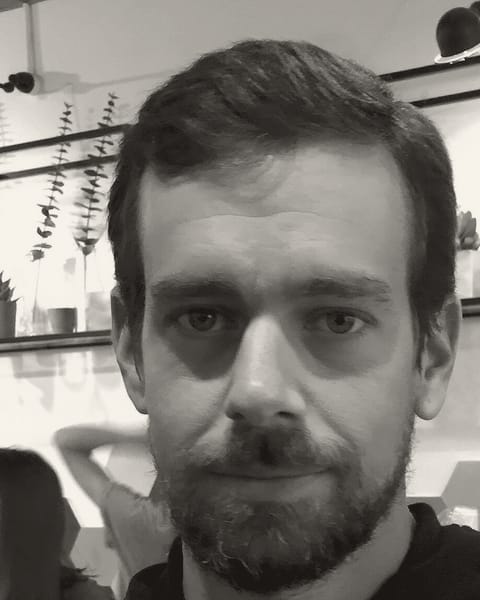 Jack DorseyCo-founder of Twitter and of Block, formerly Square
 John McAfeeMcAfee antivirus founder who promoted cryptocurrencies
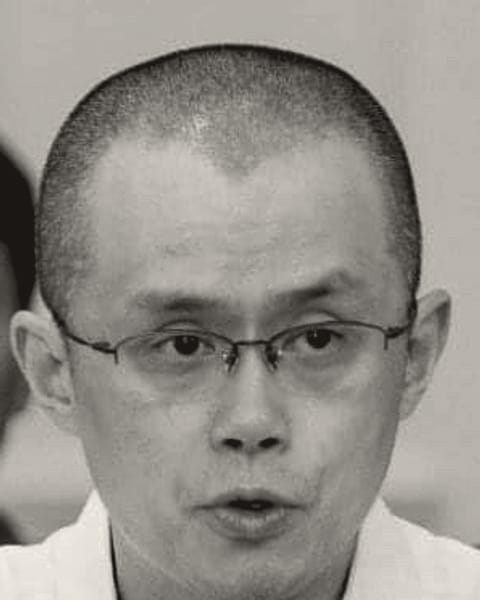 Changpeng ZhaoFounder and former chief executive of Binance
References
- CIDOB (Barcelona Centre for International Affairs; archived copy, in Spanish), “Nayib Bukele Ortez”, 2019.
- The Guardian (Associated Press; archived copy), “El Salvador: anti-corruption candidate Nayib Bukele wins presidential election”, 4 February 2019.
- Reuters (Anthony Esposito; archived copy), “El Salvador’s president says will send bill to make bitcoin legal tender”, 5 June 2021.
- Al Jazeera, “El Salvador President Bukele wants Bitcoin as legal tender”, 6 June 2021.
- Al Jazeera, “El Salvador approves Bitcoin as legal tender”, 9 June 2021.
- X (Twitter), @nayibbukele, ““The #BitcoinLaw has been approved by a supermajority in the Salvadoran Congress.””, 9 June 2021.
- Legislative Assembly of El Salvador (Supreme Court legal database; archived copy, in Spanish), “Ley Bitcoin, Decreto Legislativo No. 57”, 8 June 2021.
- Reuters (archived copy), “Bitcoin to become legal tender in El Salvador on Sept 7”, 25 June 2021.
- X (Twitter), @nayibbukele, ““I’ve just instructed the president of @LaGeoSV…””, 9 June 2021.
- Reuters (Anthony Esposito and Nelson Renteria, via Business Standard), “El Salvador becomes first nation to adopt bitcoin as legal currency”, 7 September 2021.
- Al Jazeera, “Glitches, protests as Bitcoin becomes legal tender in El Salvador”, 7 September 2021.
- X (Twitter), @nayibbukele, ““El Salvador just bought 200 new coins. We now hold 400 #bitcoin””, 6 September 2021.
- X (Twitter), @nayibbukele, ““We are buying one #Bitcoin every day starting tomorrow.””, 17 November 2022.
- Associated Press (via NBC News), “A Bitcoin city? That’s the plan in El Salvador”, 22 November 2021.
- Bloomberg (via Business Standard), “El Salvador plans to build world’s first Bitcoin City: Nayib Bukele”, 22 November 2021.
- Bloomberg Línea (Michael McDonald; in Spanish), “El Salvador aprueba ley que permitiría emisión de bonos bitcoin”, 11 January 2023.
- Reuters (Nelson Renteria and Anthony Esposito; archived copy), “El Salvador’s world-first adoption of bitcoin endures bumpy first day”, 8 September 2021.
- National Bureau of Economic Research (Fernando E. Alvarez, David Argente and Diana Van Patten), “Are Cryptocurrencies Currencies? Bitcoin as Legal Tender in El Salvador (Working Paper 29968)”, April 2022, revised February 2023.
- EFE (via Swissinfo; in Spanish), “El Salvador registró en 2024 el menor uso del bitcóin desde su adopción en 2021”, 16 January 2025.
- International Monetary Fund (archived copy), “IMF Executive Board Concludes 2021 Article IV Consultation with El Salvador (Press Release No. 22/13)”, 25 January 2022.
- International Monetary Fund (archived copy), “IMF Reaches Staff-Level Agreement with El Salvador on an Extended Fund Facility Arrangement”, 18 December 2024.
- Legislative Assembly of El Salvador (Supreme Court legal database; in Spanish), “Decreto Legislativo No. 199: reformas a la Ley Bitcoin”, 29 January 2025.
- EFE (via Swissinfo; in Spanish), “El Salvador aprueba reforma a la ley Bitcoin que pone fin a la obligatoriedad de su uso”, 30 January 2025.
- International Monetary Fund (archived copy), “El Salvador: Request for Extended Arrangement Under the Extended Fund Facility (IMF Country Report No. 25/58)”, March 2025.
- X (Twitter), @nayibbukele, ““No, it’s not stopping.””, 4 March 2025.
- International Monetary Fund (archived copy), “El Salvador: 2025 Article IV Consultation and First Review Under the Extended Fund Facility (IMF Country Report No. 25/190)”, July 2025.
- International Monetary Fund (archived copy), “IMF Executive Board Concludes the Second and Third Reviews Under the Extended Fund Facility for El Salvador (Press Release No. 26/316)”, 1 October 2026.
- National Bitcoin Office of El Salvador, “Bitcoin treasury tracker (bitcoin.gob.sv), read on 18 October 2026”.
- Reuters (Nelson Renteria; archived copy), “El Salvador top court rules presidents can serve two consecutive terms”, 4 September 2021.
- BBC News, “El Salvador’s President Bukele wins re-election by huge margin”, 5 February 2024.
- Decrypt, “Bukele Dismisses IMF Terms, Vows El Salvador’s Bitcoin Strategy ‘Won’t Stop’”, 4 March 2025.
- International Monetary Fund (archived copy), “El Salvador: 2023 Article IV Consultation (IMF Country Report No. 25/67)”, March 2025.
- The Guardian (Mat Youkee), “Scepticism grows in El Salvador over pioneering Bitcoin gamble”, 30 August 2021.
- BBC News (archived copy), “World Bank rejects El Salvador request for Bitcoin help”, 17 June 2021.
- X (Twitter), @nayibbukele, ““4 million users!””, 19 January 2022.