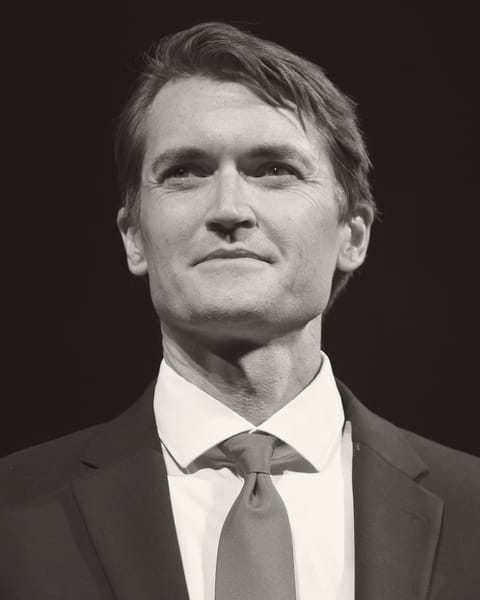
Ross Ulbricht.
Creator of Silk Road, convicted in 2015, pardoned in 2025 · Also known as Ross William Ulbricht, Dread Pirate Roberts
Ross Ulbricht built Silk Road, the hidden online drug market where every purchase was paid in bitcoin, and ran it as “Dread Pirate Roberts” until his arrest in 2013. Sentenced to life in prison, he was pardoned by President Donald Trump in 2025.
Before Silk Road
Ross Ulbricht, a Texan, studied physics at the University of Texas at Dallas and then spent four years at Pennsylvania State University, according to his LinkedIn profile. By 2013 the profile set out a different ambition: to use economic theory to end the use of force by one person over another. “The most widespread and systemic use of force is amongst institutions and governments,” he wrote, “so this is my current point of effort.”[6][11]
In a 2009 email he described the idea that became Silk Road: “an online storefront that couldn’t be traced back to [him]”, where customers could pay “anonymously and securely”. In 2010, his journal said, he began growing hallucinogenic mushrooms to sell on the site “for cheap to get people interested”. As interest grew in 2011, he wrote: “Silk Road is going to become a phenomenon and at least one person will tell me about it, unknowing that I was its creator.”[3]
A market that took only bitcoin
Silk Road opened in about January 2011. It ran on Tor, a network that hides where internet traffic comes from, so the site and its users were hard to find, and the only money it accepted was bitcoin. Silk Road held each payment until the order arrived, kept a commission of 8 to 15 percent, and mixed payments through a “tumbler” that, it promised, made it “nearly impossible to link your payment with any coins leaving the site”.[1]
Most of what it sold was illegal drugs. In June 2011 the website Gawker described buying them there with bitcoins, which it called untraceable. Two US senators, Charles Schumer and Joe Manchin, read the story and wrote to the attorney general, calling bitcoin “an untraceable peer-to-peer currency” and urging him to “shut down the Silk Road network”. Jeff Garzik, one of Bitcoin’s developers, saw it differently. Every bitcoin payment is recorded in a public log, he told Gawker, so “attempting major illicit transactions with bitcoin … is pretty damned dumb”.[7][8]
Around January 2012 the site’s leader took the name “Dread Pirate Roberts”, after a pirate in The Princess Bride whose name passes from one person to the next. Buyers needed bitcoins first, and some bought them on the site from a reseller, “BTCKing”, who got them through BitInstant, an exchange run by Charlie Shrem; Shrem later pleaded guilty and was sentenced to two years in prison. By the time Silk Road closed, prosecutors said, its sales had come to more than 9.5 million bitcoins, and it had kept more than 600,000 in commissions.[3][9][1]
Arrest, trial and sentence
From 2011 investigators in Baltimore and New York hunted Silk Road’s anonymous leader, and at times suspected other people, among them Mark Karpelès, head of the bitcoin exchange Mt. Gox; the Baltimore office later dropped that theory, the appeals court said. On 1 October 2013 federal agents arrested Ulbricht in a public library in San Francisco. An undercover agent had drawn Dread Pirate Roberts into a chat on Silk Road’s staff pages minutes earlier, and when agents seized Ulbricht’s laptop, that chat was open on its screen. Silk Road was shut down.[3]
Silk Road’s shutdown on the calendarOn his computers agents found a bitcoin wallet holding about 144,336 bitcoins. With about 29,655 taken from Silk Road’s servers, prosecutors called it the largest bitcoin seizure ever. The US Marshals Service sold them at auction between June 2014 and November 2015. The appeals court later described bitcoin as “an anonymous but traceable digital currency”: its addresses carry no names, but every payment is logged in the blockchainBlockchainBitcoin's shared record of every payment since 2009, stored in blocks that each link to the one before — which is what makes it a chain., the record all bitcoin users share.[1][3][12][13]
What a bitcoin address isOther coins taken from Silk Road were traced years later. In 2020 prosecutors seized about 69,370 bitcoins from a hacker known in court papers as “Individual X”, who, they said, had stolen them from the site and never spent them, despite Ulbricht’s threats. In 2021 agents found about 50,000 more at the home of James Zhong, some on a small computer hidden in a popcorn tin. Zhong pleaded guilty to wire fraud for tricking Silk Road into releasing them in 2012, and was sentenced to a year and a day in prison.[14][15][16]
Ulbricht’s trial in Manhattan began on 13 January 2015. His lawyers accepted that he had created Silk Road, but argued that he had handed it to others after a few months and had been lured back to take the blame as investigators closed in. Two federal agents from the Baltimore investigation had stolen bitcoins while working on the case, one of them by selling Dread Pirate Roberts fake inside information. The judge kept evidence of his conduct out of the trial; both agents later pleaded guilty to money laundering and obstruction of justice.[3][5]
On 4 February 2015 the jury found Ulbricht guilty on all seven counts, among them distributing narcotics, engaging in a continuing criminal enterprise, conspiring to commit computer hacking and conspiring to launder money. Before sentencing he wrote to the judge, Katherine B. Forrest, calling Silk Road a “terrible mistake”. “I’ve had my youth, and I know you must take away my middle years, but please leave me my old age,” he wrote. In court he told her: “I’m not the man I was when I created Silk Road.”[2][3][11]
On 29 May 2015 Forrest sentenced him to life in prison without the possibility of parole and ordered him to forfeit $183,961,921. Parents of two people who had died after taking drugs bought on Silk Road spoke at the hearing. She told him: “It was a carefully planned life’s work. It was your opus.”[10][11]
The murder-for-hire allegations
Some of the evidence at the trial concerned crimes Ulbricht was not charged with. Prosecutors presented evidence that Dread Pirate Roberts had paid to have five people killed to protect Silk Road: a vendor who threatened to publish users’ names and addresses, and four others. The appeals court wrote that “while the evidence demonstrates that Ulbricht ordered and paid substantial sums for the murders, there is no evidence that the killings actually took place”. Prosecutors believed the man he paid, a Silk Road user called Redandwhite, had tricked him.[3]
The judge weighed that evidence at sentencing. Ulbricht said he had only fantasised about the murders; Forrest found the evidence that he had commissioned them “ample and unambiguous”. A separate indictment in Maryland, filed in 2013, did charge him with attempted witness murder, over a plot against a former Silk Road worker whose “killing” had been faked by one of the two agents. In July 2018, with his New York conviction final, the US Attorney for Maryland, Robert Hur, said: “We have dismissed the federal charges based on the same conduct pending against Mr. Ulbricht in Maryland.” Ulbricht was never tried on any murder-for-hire charge.[3][17][18]
The debate over his sentence
On 31 May 2017 the US Court of Appeals for the Second Circuit upheld the conviction and the life sentence. “Reasonable people may and do disagree about the social utility of harsh sentences” for drug crimes, the judges wrote, but “under the law, we cannot say that its decision was substantively unreasonable.” On 28 June 2018 the US Supreme Court declined to hear his case.[3][4]
Libertarians and cryptocurrency supporters held up his case as an example of government overreach, Al Jazeera reported: he had been punished for other people’s transactions, they argued, and the punishment did not fit the crime. His lawyers had argued that Silk Road made the drug trade safer, with seller ratings and no street deals. His appeal against the life sentence was backed by groups including the Drug Policy Alliance and by a retired federal judge, Nancy Gertner.[23][11][3]
Prosecutors saw “a drug dealer and criminal profiteer”, in the words of the US Attorney in Manhattan, Preet Bharara, who linked six deaths to drugs bought on the site, and Forrest called the safety argument “so very narrow”: Silk Road, she said, had been about “creating demand”.[10][11]
Libertarian activists campaigned for his release, many of them holding “Free Ross” signs. On 25 May 2024, speaking to the Libertarian Party’s national convention, Donald Trump promised: “If you vote for me, on day one I will commute the sentence of Ross Ulbricht to a sentence of time served.” On 21 January 2025, his first full day back in office, Trump posted that he had called Ulbricht’s mother to tell her he had signed “a full and unconditional pardon”. Ulbricht was freed that month, after more than 11 years in prison.[22][19][20][21][23]
The pardon on the calendarThe pardon revived the argument. Senator Catherine Cortez Masto, a Democrat, called it “a slap in the face to the families who’ve lost loved ones to his crimes”. Jeffrey Singer, a drug-policy analyst at the libertarian Cato Institute, told NPR that Trump’s pardons often appeared “transactional”: “That was a promise he made hoping to get support from Libertarians.”[23][24]
Ulbricht thanked Trump in a video soon after his release: “I’m a free man now. So let it be known that Donald Trump is a man of his word.” At the end of May 2025, ten years after he was sentenced, he gave his first public speech, at the Bitcoin 2025 conference in Las Vegas. “Bitcoin’s power comes from the fact that any one of us can mine if we choose to, and any one of us can generate addresses if we choose to,” he said.[23][25]
Reviewed . To report a mistake, email hello@utxohub.com.
Picture: Ross Ulbricht speaking in Las Vegas, 2025. Gage Skidmore, CC BY-SA 3.0, toned by UTXOHub.

More people
Bitcoin in public life Michael SaylorFounder and executive chairman of Strategy (MicroStrategy)
 Nayib BukeleProposed El Salvador’s 2021 Bitcoin Law as president
 Mark KarpelèsHead of Mt. Gox, the exchange that collapsed in 2014
 Roger VerEarly bitcoin investor and promoter, later of Bitcoin Cash
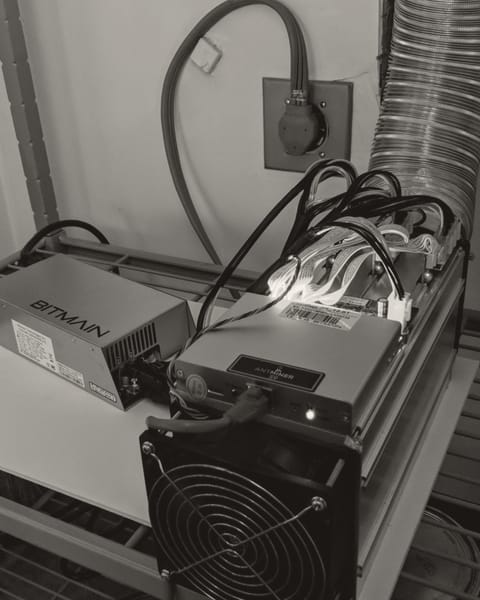 Jihan WuBitmain co-founder; chairman and chief executive of Bitdeer
 Brian ArmstrongCo-founder and chief executive of Coinbase
 Jack DorseyCo-founder of Twitter and of Block, formerly Square
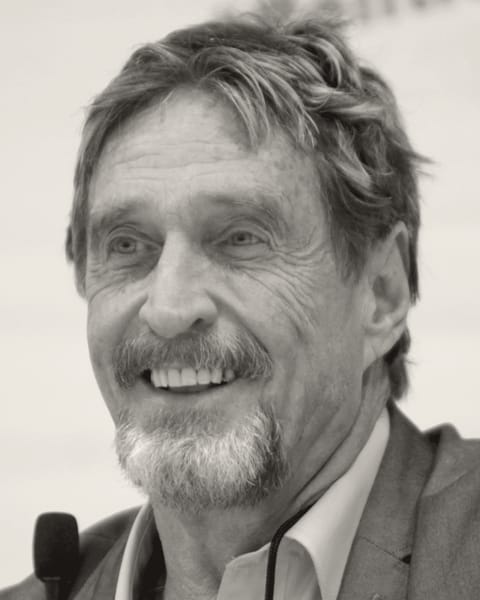 John McAfeeMcAfee antivirus founder who promoted cryptocurrencies
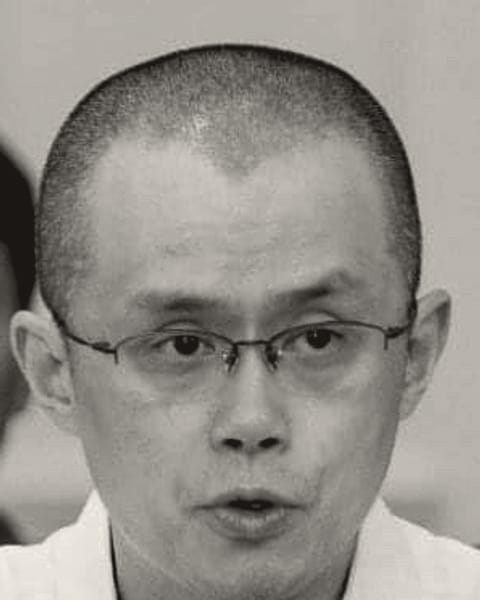 Changpeng ZhaoFounder and former chief executive of Binance
References
- US Department of Justice (US Attorney’s Office, Southern District of New York), “Manhattan U.S. Attorney Announces Seizure Of Additional $28 Million Worth Of Bitcoins Belonging To Ross William Ulbricht, Alleged Owner And Operator Of “Silk Road” Website”, 25 October 2013.
- US Department of Justice (US Attorney’s Office, Southern District of New York), “Ross Ulbricht, The Creator And Owner Of The “Silk Road” Website, Found Guilty In Manhattan Federal Court On All Counts”, 5 February 2015.
- US Court of Appeals for the Second Circuit (copy filed with the US Supreme Court), “United States v. Ulbricht, No. 15-1815, opinion”, 31 May 2017.
- Supreme Court of the United States, “Docket No. 17-950: Ross William Ulbricht, Petitioner v. United States”.
- Al Jazeera, “Trump pardons Ross Ulbricht, creator of dark web marketplace Silk Road”, 22 January 2025.
- CultureMap Dallas, “UT Dallas grad Ross Ulbricht arrested for running “black market Amazon” for drugs, guns and hitmen”, 2 October 2013.
- Gawker (Adrian Chen; archived copy), “The Underground Website Where You Can Buy Any Drug Imaginable”, 1 June 2011.
- PCWorld (citing Reuters), “U.S. Senators Want to Shut Down Bitcoins, Currency of Internet Drug Trade”, 10 June 2011.
- US Department of Justice (US Attorney’s Office, Southern District of New York; archived copy), “Former CEO Of Bitcoin Exchange Company Sentenced In Manhattan Federal Court To Two Years In Prison For Helping To Sell Nearly $1 Million In Bitcoins For Drug Buys On Silk Road”, 19 December 2014.
- US Department of Justice (US Attorney’s Office, Southern District of New York; archived copy), “Ross Ulbricht, A/K/A “Dread Pirate Roberts,” Sentenced In Manhattan Federal Court To Life In Prison”, 29 May 2015.
- Wired (Andy Greenberg; archived copy), “Silk Road Creator Ross Ulbricht Sentenced to Life in Prison”, 29 May 2015.
- Fortune, “Venture capitalist Tim Draper wins government bitcoin auction”, 2 July 2014.
- Finance Magnates, “US Marshals: 4 Bidders Won Bitcoins in Final Auction”, 15 November 2015.
- US Department of Justice (US Attorney’s Office, Northern District of California; archived copy), “United States Files A Civil Action To Forfeit Cryptocurrency Valued At Over One Billion U.S. Dollars”, 5 November 2020.
- BankInfoSecurity (Scott Ferguson), “DOJ Seizes $1 Billion Worth of Bitcoin Linked to Silk Road”, 5 November 2020.
- Internal Revenue Service, Criminal Investigation, “Silk Road dark web fraud defendant sentenced following seizure and forfeiture of over $3.4 billion in cryptocurrency”, 14 April 2023.
- US District Court, District of Maryland (published by US Immigration and Customs Enforcement), “Superseding Indictment, United States v. Ross William Ulbricht, Criminal No. CCB-13-0222”, 1 October 2013.
- Reason (Brian Doherty), “Ross Ulbricht’s Murder-for-Hire Charges Dropped by U.S. Attorney”, 25 July 2018.
- Fox News, “Trump vows to commute prison sentence of Silk Road founder Ross Ulbricht”, 25 May 2024.
- The American Presidency Project (Donald Trump’s Truth Social posts), “Truth Social Posts of January 21, 2025”, 21 January 2025.
- US Department of Justice, Office of the Pardon Attorney (archived copy), “Clemency Grants by President Donald J. Trump (2025–Present)”.
- Associated Press (via National Newswatch), “Trump pardons founder of Silk Road website”, 21 January 2025.
- Al Jazeera, “Drug marketplace founder Ross Ulbricht speaks out after Trump pardon”, 24 January 2025.
- NPR (Brian Mann), “Trump pardons drug kingpins even as he escalates U.S. drug war rhetoric”, 31 May 2025.
- Bitcoin Magazine (Oscar Zarraga Perez), “Freedom, Decentralization and Unity: Stay True to These Principles and the Future Is Ours, Says Ross Ulbricht”, 2 June 2025.