
Roger Ver.
Early bitcoin investor and promoter, later of Bitcoin Cash · Also known as Roger Keith Ver, Bitcoin Jesus
Roger Ver promoted Bitcoin so actively from 2011 that he became known as “Bitcoin Jesus”, and from 2017 he was an outspoken backer of Bitcoin Cash. In 2025 he admitted a “willful” tax understatement and paid nearly $50 million; US charges were dismissed.
Before Bitcoin
Ver grew up in Silicon Valley, where he owned MemoryDealers, a website that sold computer parts. He was also a libertarian activist: in 2000 he stood for the California State Assembly as a Libertarian candidate, and lost.[2][3]
In 2001 federal prosecutors charged him with selling explosives on eBay. According to his plea agreement, from January 1999 to August 2000 he had sold devices described as “Pest Control Report 2000” to bidders on the site, stored them in a residential apartment building and sent them by post in breach of Postal Service regulations. He pleaded guilty to dealing in explosives without a licence, storing explosives illegally and mailing injurious articles, and in May 2002 a federal judge, Jeremy Fogel, sentenced him to 10 months in prison. Ver has described the product, CNBC reported, as a firecracker that farmers used to keep animals away from their cornfields, and ProPublica reported that he has often called the case political persecution. After his release he left the United States for Japan.[1][2][3]
Early investor and promoter
Ver began buying bitcoins in early 2011. His company MemoryDealers accepted them as payment, the first mainstream business to do so according to CNBC, and he used them to pay the factories in China that made its electronic parts. By the end of 2013 he had helped fund about a dozen bitcoin businesses. In Bitcoin’s early days, ProPublica reported, he controlled about 1% of all the bitcoin in existence.[2][3][10]
He promoted it so actively that he became known as “Bitcoin Jesus”. Ver told CNBC in 2013 that the name came from Peter Vessenes, chairman of the Bitcoin Foundation, at a barbecue where Ver was explaining bitcoin to about two dozen high-school students: “Peter then commented that ‘it’s like you are a Bitcoin Jesus, and you have all your disciples around you’.” That year he gave 1,000 bitcoins to the Foundation for Economic Education, a US group that promotes free markets and limited government, in what CNBC called the largest bitcoin donation to charity yet.[2]
Why he backed Bitcoin Cash
Ver’s support for Bitcoin Cash grew out of a dispute among Bitcoin’s developers over how it should handle more payments. By 2015 it centred on a single line in the Bitcoin Core software, which limited each block, the batch of payments added to Bitcoin’s shared record, to 1 MB. Raising it would take a hard forkHard forkA change that loosens Bitcoin's rules, so nodes running old software reject the new blocks. Without near-universal agreement it splits the chain.: a change of rules that every node, the computers that check each payment, would have to adopt. One side wanted to raise the limit so that more payments could fit in each block. The other wanted to keep blocks small and find room in other ways.[4][5][6]
What a block isGregory Maxwell, a Bitcoin Core developer, set out the case for small blocks on the developers’ mailing list in December 2015: “With the available technology, there are fundamental trade-offs between scale and decentralization. If the system is too costly people will be forced to trust third parties rather than independently enforcing the system’s rules.” Bigger blocks, on this view, would make it harder for ordinary people to run a node and check payments for themselves. Maxwell’s plan started with SegWitSegWitSegregated Witness: a 2017 upgrade that moved signatures into a separate part of each payment, making room for more payments., an upgrade that made room for more payments without a hard fork, and looked to payment channelsPayment channelA shared pot of bitcoin between two parties on the blockchain, which they can pay each other from, off-chain, as often as they like. such as the Lightning Network, which add capacity without needing bigger blocks. Developers who had made more than 90% of that year’s changes to Bitcoin Core, by GitHub’s count, signed a statement supporting it.[4][5]
What SegWit isThe side that wanted bigger blocks went its own way. On 1 August 2017 Bitcoin Cash split off from bitcoin as a separate coin. It followed a contingency plan published that June by Bitmain, the mining-machine maker co-founded by Jihan Wu: the first block of the new chain “must be larger than 1,000,000 Byte”, more than bitcoin’s 1 MB limit allowed. Ver, by then chief executive of Bitcoin.com, a website where people could buy and store bitcoin and other cryptocurrencies, became an outspoken backer.[6][13][14]
The last block before Bitcoin Cash split offHe saw Bitcoin Cash as faster, cheaper and more reliable to use than bitcoin. On the day in May 2018 that it raised its block size limit to 32 MB, he called the original coin, by then also referred to as “bitcoin core”, “slow, expensive and unreliable”. “Bitcoin cash works as money; bitcoin core, sadly, no longer does,” he said. “The economic path that bitcoin cash is on is the one that led to bitcoin’s original success.”[7]
In 2024 he set out his side at length in Hijacking Bitcoin: The Hidden History of BTC, a book written with Steve Patterson. Its website calls it “the true story of how a small group of insiders altered the course of digital currency”.[8]
The US tax case
In March 2014, having become a citizen of St Kitts and Nevis, Ver gave up his US citizenship, a day he once called “the happiest day of my entire life”. It came with a tax bill. Because of his wealth, US law required him to pay tax on the gains on everything he owned as if he had sold it all the day before he left, a charge known as the “exit tax”.[3][9][10]
In February 2024 an indictment in federal court in Los Angeles charged him with three counts of mail fraud, two of tax evasion and three of filing a false tax return. Prosecutors alleged that he had hidden from his own lawyers and appraiser how many bitcoins he and his companies owned, so that his exit-tax returns undervalued the companies and showed no bitcoins of his own. They also alleged that in 2017 he took about 70,000 bitcoins from his companies, sold tens of thousands of them and did not report the gain. He was arrested in Barcelona on 26 April 2024, and the United States asked Spain to extradite him.[9][10][11]
Ver denied setting out to avoid tax. His defence, ProPublica reported, was that the tax rules for cryptocurrency had been unclear, that any errors were made in good faith, and that he had relied on his accountants and tax lawyers.[3]
He also sought a pardon from President Donald Trump. “Please Donald Trump, I need your help,” he said in a video posted days into Trump’s second term, in January 2025. “I am an American. … Help me come home.” He paid Roger Stone, whom ProPublica called a “Trump insider”, $600,000 to lobby Congress to end the exit tax. No pardon came.[3]
Instead, on 23 September 2025, Ver signed a deferred prosecution agreement with the Justice Department, under which prosecutors would drop the case if he met its conditions. In it he admitted that on 2 March 2014, the day before he gave up his citizenship, he “owned and controlled at least 130,664.30 bitcoins”. He also admitted that the 2014 tax forms he filed in 2016 “did not report ownership of all of these bitcoins and did not report capital gains from the constructive sale of all of these bitcoins”, causing “a tax loss for 2014 of $16,864,105”, and that the understatement of his tax “was willful”. The agreement also recorded that he had “avidly promoted bitcoins and obtained the moniker ‘Bitcoin Jesus’”. He paid the Internal Revenue Service, the US tax authority, nearly $50 million in tax, penalties and interest.[10][11]
On 14 October 2025, at the government’s request, Judge Michael W. Fitzgerald dismissed the indictment without prejudice, meaning the charges could be brought again. Under the agreement, prosecutors can do so only if Ver breaks its terms within three years; if he keeps them, he will not be prosecuted over the conduct in the indictment. He was never tried or convicted on the tax charges.[10][11][12]
ProPublica reported in January 2026 that after Ver hired Chris Kise, a former lawyer for Trump, Trump’s appointees at the Justice Department took over the case from career prosecutors. Ver’s team rejected the government’s “supposed final offer” because it required him to admit to “fraud”, ProPublica reported, citing a person familiar with the negotiations. A Justice Department spokesperson told ProPublica that Ver “took full responsibility for his gross financial misconduct”, and said: “The notion that any defendant can buy their way out of accountability under this administration is not founded in reality.” Bryan Skarlatos, one of Ver’s tax lawyers, said the case “was ultimately resolved based on the strength of the evidence”.[3]
Reviewed . To report a mistake, email hello@utxohub.com.
Picture: Roger Ver. Roger Ver, CC BY-SA 4.0, toned by UTXOHub.

More people
Bitcoin in public life Michael SaylorFounder and executive chairman of Strategy (MicroStrategy)
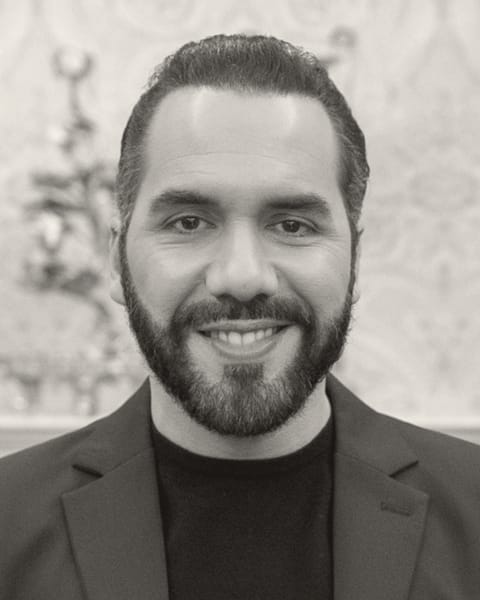 Nayib BukeleProposed El Salvador’s 2021 Bitcoin Law as president
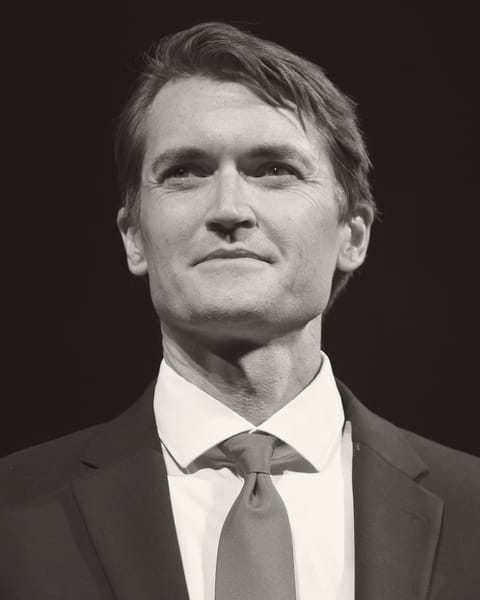 Ross UlbrichtCreator of Silk Road, convicted in 2015, pardoned in 2025
 Mark KarpelèsHead of Mt. Gox, the exchange that collapsed in 2014
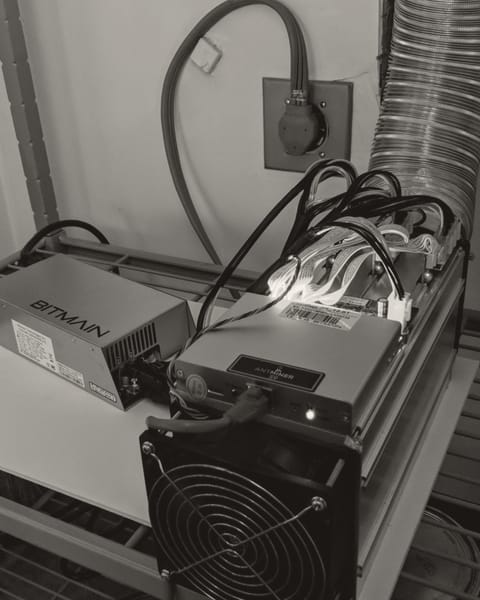 Jihan WuBitmain co-founder; chairman and chief executive of Bitdeer
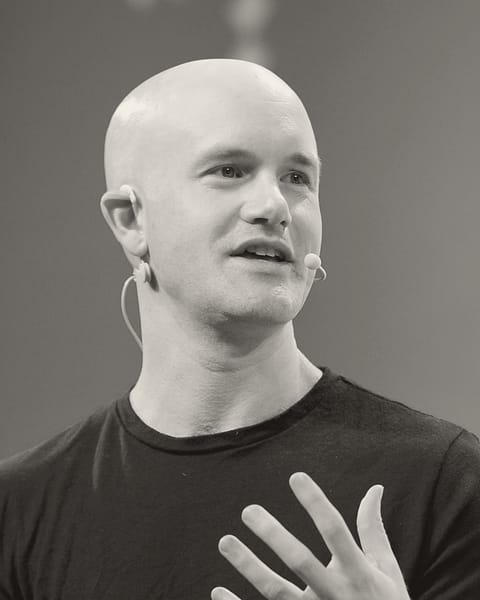 Brian ArmstrongCo-founder and chief executive of Coinbase
 Jack DorseyCo-founder of Twitter and of Block, formerly Square
 John McAfeeMcAfee antivirus founder who promoted cryptocurrencies
 Changpeng ZhaoFounder and former chief executive of Binance
References
- US Attorney’s Office, Northern District of California (US Department of Justice archive), “San Jose, California Man Pleads Guilty to Selling Explosives on eBay”, 2 May 2002.
- CNBC, “Meet ‘Bitcoin Jesus,’ a virtual currency millionaire”, 2 December 2013.
- ProPublica, “How “Bitcoin Jesus” Avoided Prison, Thanks to One of the “Friends of Trump””, 22 January 2026.
- Bitcoin Core (bitcoin.org), “Capacity increases FAQ”.
- bitcoin-dev mailing list (archived), “Capacity increases for the Bitcoin system (Gregory Maxwell)”, 7 December 2015.
- CNBC, “‘Bitcoin Jesus’ says investors should be ready in case bitcoin falls out of favor”, 20 December 2017.
- CNBC, “Why ‘Bitcoin Jesus’ is so bullish about Bitcoin cash”, 15 May 2018.
- Hijacking Bitcoin (book website, archived), “Hijacking Bitcoin: The Hidden History of BTC”, 6 April 2024.
- Internal Revenue Service, Criminal Investigation, “Early bitcoin investor charged with tax fraud”, 30 April 2024.
- US District Court, Central District of California (published by the US Department of Justice), “Deferred Prosecution Agreement, United States v. Roger Keith Ver, No. 2:24-cr-00103 (Doc. 63-1)”, 14 October 2025.
- US District Court, Central District of California (published by the US Department of Justice), “Government’s Unopposed Motion to Dismiss Indictment Without Prejudice, United States v. Roger Keith Ver (Doc. 63)”, 14 October 2025.
- CourtListener (US District Court docket), “United States v. Ver, 2:24-cr-00103 (C.D. Cal.)”.
- Bitmain blog (archived), “UAHF: A contingency plan against UASF (BIP148)”, 14 June 2017.
- Bitmain blog (archived), “Regarding “Bitcoin Cash”, ViaBTC and Bitcoin ABC”, 24 July 2017.