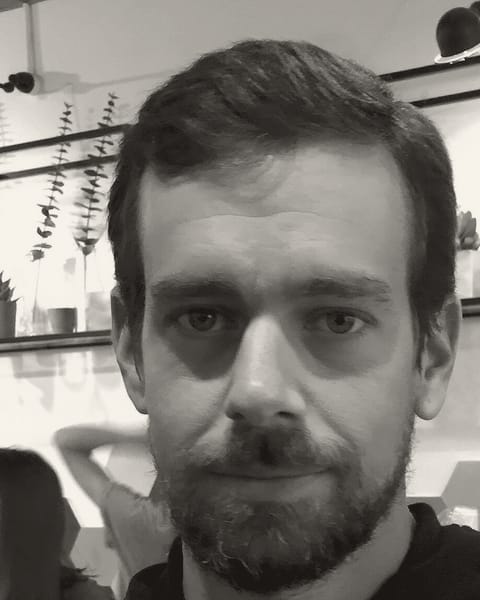
Jack Dorsey.
Co-founder of Twitter and of Block, formerly Square
Jack Dorsey has steered Block, the payments company he started as Square in 2009, towards bitcoin and away from other coins. “I don’t think there is anything more important in my lifetime to work on,” he said in 2021.
How he came to bitcoin
Jack Dorsey is one of Twitter’s co-founders and led the company twice, the second time from 2015 until he stepped down as chief executive in 2021. In February 2009 he started Square, a company that let businesses accept card payments. It is now called Block, and he still runs it.[1][2]
His interest in cryptography goes back further. In 2019 he told the bitcoin podcaster Marty Bent, on his show Tales from the Crypt, that he grew up in St. Louis, Missouri, where “we had a super-active hacker culture”. He was on a mailing list of the cypherpunksCypherpunkSomeone who believes in using strong cryptography to protect people’s privacy. Many ideas behind Bitcoin came from the cypherpunks of the 1990s., programmers and activists who argued for using cryptography to protect people’s privacy, he said, when a paper describing Bitcoin arrived from Satoshi Nakamoto, the name its unknown creator used. “Read it, thought it was beautiful,” he said. “I think it was one of the most seminal works in the past 20 years in computer science.”[4]
The Bitcoin white paperHe didn’t do much about it until January 2017, the crypto news site CCN reported. At a hack week for Cash App, Square’s app for sending money to friends and businesses, he worked with an engineer, Mike Brock, to see whether he could store bitcoin in the app and spend it on a coffee across the street. “The following week, I actually bought coffee with it, which was really cool,” he said.[4][5]
Bitcoin at Square
Later that year, in the last three months of 2017, Square let Cash App customers use the money in their accounts to buy bitcoin and sell it back to the company, its annual report says. At the Consensus conference in New York in May 2018, Dorsey explained why. “The internet is going to have a native currency so let’s not wait for it to happen, let’s help it happen,” he said. “I don’t know if it will be bitcoin but I hope it will be.” If such a currency could be used today, he added, “we could release our apps in every app store around the world instead of the five we’re in.”[5][3]
Two months earlier he had put a date on it. In March 2018, CNBC reported, he told The Sunday Times that he expected bitcoin to become the world’s single currency within about ten years, “but it could go faster”. Others doubted it could work as money at all. The investor Stanley Druckenmiller had told CNBC the previous December that it would not, “because you can’t do transactions, particularly retail transactions, with this kind of volatility.”[3]
Square put its own money in too. On 8 October 2020 it announced that it had bought about 4,709 bitcoins for itself, about 1% of its total assets. Square said it saw cryptocurrency as “an instrument of economic empowerment”. Block has kept buying since: at the end of 2025 it held about 8,883 bitcoins and had sold none in the previous two years, its annual report says.[6][2]
In June 2021, at the Bitcoin 2021 conference in Miami, Dorsey went further than he had in 2018: “Bitcoin changes absolutely everything. I don’t think there is anything more important in my lifetime to work on.” If he were not at Square or Twitter, he added, “I would be working on Bitcoin. If it needed more help than Square or Twitter, I would leave them for Bitcoin.” The next month, on a panel with Tesla’s chief executive, Elon Musk, and the fund manager Cathie Wood, he said what had shaped his view was “the network and the community”: “It’s deeply principled, it’s weird as hell [and] it’s always evolving. It just reminded me of the internet as a kid.”[7][8]
Paying for bitcoin’s development
Besides buying bitcoin, Square put money into its development. In 2019 it formed Square Crypto, an independent team working solely on open-source bitcoin projects “for the benefit of all”. In 2020 it launched the Cryptocurrency Open Patent Alliance (COPA), a non-profit “encouraging crypto innovation and opening access to patented crypto inventions”.[6]
COPA soon went to court. In February 2021 Craig Wright, who claimed to be Satoshi Nakamoto, had his lawyers ask COPA and its members to take the Bitcoin white paper off their websites. That April COPA sued him in London, asking the High Court to declare that he was not the paper’s author. In 2024 the court ruled that Wright is not Satoshi.[13]
Dorsey has given away his own bitcoin and money too. In February 2021 he and the rapper Jay-Z gave 500 bitcoins to start an endowment for bitcoin development, beginning in Africa and India, and Dorsey said he would have no say over its grants. In May 2024 his philanthropic fund, #startsmall, gave $21 millionSupply cap (21 million)Bitcoin's rules halve the new supply every 210,000 blocks, so issuance slows towards zero. The total approaches 21 million without quite reaching it. to OpenSats, a US charity that pays open-source developers working on bitcoin and related software.[8][9]
He has invested in bitcoin companies as well. TechCrunch reported in 2018 that he was among the first investors in Lightning Labs, co-founded by Elizabeth Stark, which builds software for the Lightning NetworkLightning NetworkA network built on Bitcoin for payments through channels, without recording every payment as its own blockchain transaction.: a layer built on bitcoin for faster payments with little or no fee. In 2023 he led a $6.2 million funding round for OCEAN, a mining pool co-founded by Luke Dashjr, the crypto news site The Block reported.[2][15][16]
What Block builds
On 1 December 2021 Square announced that it would rename itself Block, keeping the Square name for its service for businesses. “We built the Square brand for our Seller business, which is where it belongs,” Dorsey said. The new name had many meanings, the company said, among them “a blockchainBlockchainBitcoin's shared record of every payment since 2009, stored in blocks that each link to the one before — which is what makes it a chain.”. Its bitcoin team, Square Crypto, became Spiral, which “builds and funds free, open-source Bitcoin projects”.[10]
Block’s bitcoin wallet began as a question six months earlier. On the morning of his Miami talk, Dorsey wrote on Twitter that Square was “considering” a hardware walletHardware walletA small device that holds your private keys and signs payments inside itself, so the keys never touch your internet-connected computer or phone., a small device that stores the secret keys to someone’s bitcoin offline, and that it would be built in the open with the bitcoin community. “We just want to take it to the next level and get to 100 million more people who have non-custodial solutions,” he told the conference. Non-custodial means people hold their own keys rather than leaving their coins with a company. Cash App works the other way: Block keeps its customers’ bitcoin in an account for them, so they needn’t keep track of private keysPrivate keyThe secret number that lets you spend your bitcoin. Whoever knows it controls the coins, so it must never be shared., though they can send it elsewhere.[8][2]
The wallet, Bitkey, launched on 7 December 2023 in more than 95 countries. Most bitcoin owners, Block said, leave their coins on the exchange where they bought them, “under the control of the custodian”. Bitkey pairs a phone app with a hardware device in a multisigMultisig (multi-signature)A wallet whose coins need signatures from several keys, such as 2 of 3, so no single key can spend alone. setup: of three keys, any two can move the money. One key is in the app, one in the device and one on Bitkey’s server. Because it holds only one, Bitkey “cannot access or move a customer’s bitcoin without them”, and its key can help owners recover their wallet if they lose their phone or the device.[11]
What a bitcoin wallet holdsSquare, Block’s service for businesses, handles bitcoin too. Eligible sellers in the United States can accept it over the Lightning Network and keep it or convert it to dollars, and can turn part of each day’s card sales into bitcoin.[2]
Block also builds for mining, the work that adds new blocks of transactions to bitcoin’s shared record and pays miners in new coins. Its Proto business designs mining machines around chips Block developed, with open-source firmware, the software that runs them. Most of Proto’s revenue comes from selling them to one bitcoin-mining customer, Block’s annual report for 2025 says.[2]
What miners doBitcoin, not ‘crypto’
Dorsey has made a point of backing bitcoin alone. Square dealt in no other coins, he told the Miami conference in 2021: “We’re so focused on making Bitcoin the native currency for the internet.” As for the rest, he said: “All of the other coins, for me, don’t factor in at all.”[8]
That December he turned on Web3, the idea of an internet in which data and content are recorded on blockchains, which venture capital firms were then funding heavily. Its users don’t own it, he wrote on Twitter: “The VCs and their LPs do. It will never escape their incentives. It’s ultimately a centralized entity with a different label.” VCs are venture capital firms, and LPs, or limited partners, are the institutions and other investors who put money into their funds.[12]
Web3’s backers answered. Chris Dixon, a partner at the venture capital firm Andreessen Horowitz, called himself “a huge fan” of Dorsey but wrote: “BTC is great as digital gold but there are other important applications that require other chains.” Balaji Srinivasan, a former partner at the firm, wrote that corporate and political incentives had led Twitter to “deplatforming & censorship”, and that “Web3 offers the possibility, not guarantee, of something better.” Dorsey replied that Twitter had “had corporate incentives from day 1”, and that “‘web3’ has the same corporate incentives, but hides it under ‘decentralization.’”[12]
His position was tested in 2026, when Block prepared to support stablecoinsStablecoinA token designed to keep a steady value, usually one US dollar, which its issuer promises to buy back. It isn’t bitcoin, and it depends on that issuer., digital tokens designed to keep a steady value against a currency such as the US dollar. Asked by WIRED’s Steven Levy about Block’s “big push into crypto and Bitcoin”, Dorsey replied: “We didn’t make a push into crypto.” Block had backed bitcoin, he said, “because I believe the internet needs an open protocol for money transmission, and Bitcoin represents that protocol the best to me. It’s not controlled by any one company.” Then, of the new plan: “I don’t like that we’re going to support stablecoins but our customers want to use them. I don’t think it’s wise to go from one gatekeeper to another.”[1]
Cash App went ahead. On 27 May 2026 it let all eligible customers send and receive USDC, a stablecoin, converting incoming USDC “into U.S. Dollars in their Cash App balance”. It said Cash App “remains bitcoin-first”, and Miles Suter, Block’s bitcoin product lead, said that once customers were using “open financial rails”, “they’re one step closer to bitcoin”.[14]
Reviewed . To report a mistake, email hello@utxohub.com.
Picture: Jack Dorsey in 2014. cellanr, CC BY-SA 2.0, toned by UTXOHub.

More people
Bitcoin in public life Michael SaylorFounder and executive chairman of Strategy (MicroStrategy)
 Nayib BukeleProposed El Salvador’s 2021 Bitcoin Law as president
 Ross UlbrichtCreator of Silk Road, convicted in 2015, pardoned in 2025
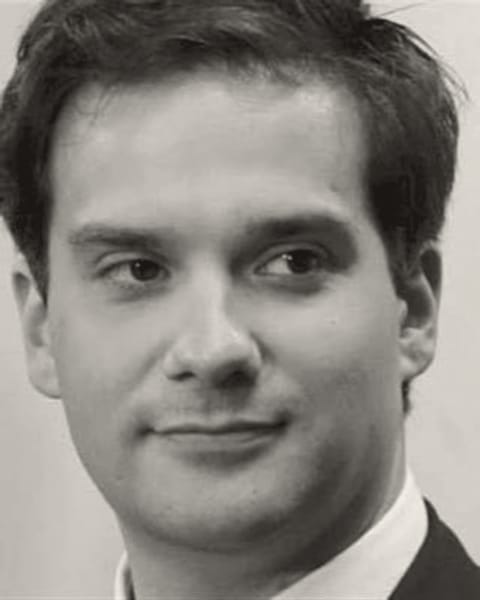 Mark KarpelèsHead of Mt. Gox, the exchange that collapsed in 2014
 Roger VerEarly bitcoin investor and promoter, later of Bitcoin Cash
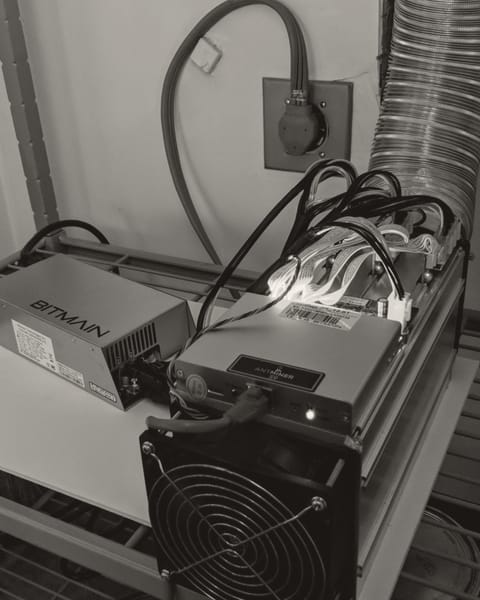 Jihan WuBitmain co-founder; chairman and chief executive of Bitdeer
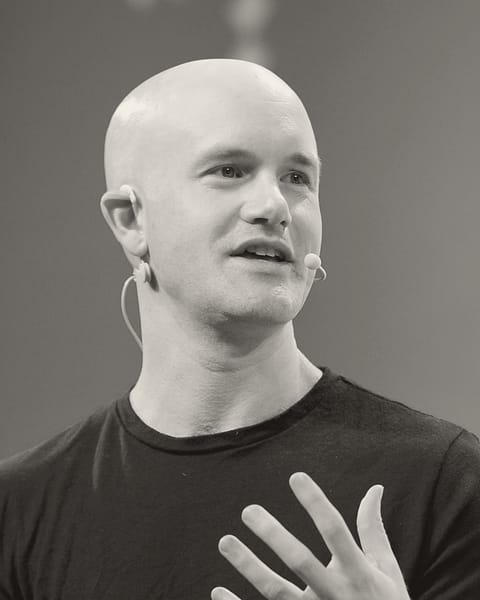 Brian ArmstrongCo-founder and chief executive of Coinbase
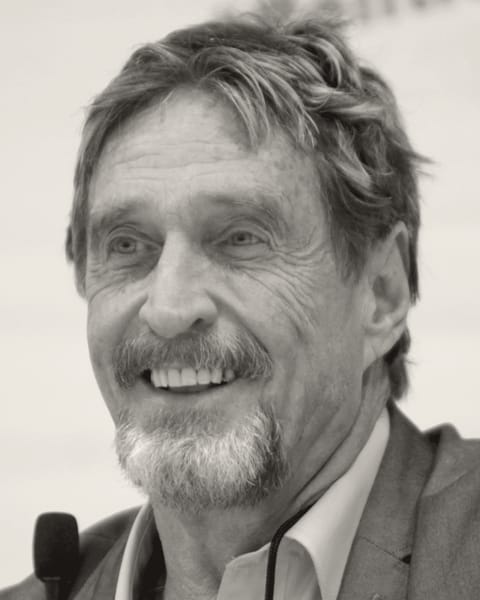 John McAfeeMcAfee antivirus founder who promoted cryptocurrencies
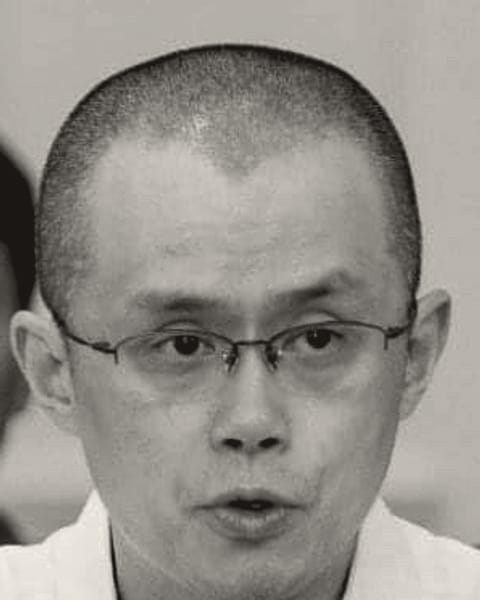 Changpeng ZhaoFounder and former chief executive of Binance
References
- WIRED (Steven Levy), “Jack Dorsey Is Ready to Explain the Block Layoffs”, 6 March 2026.
- US Securities and Exchange Commission (Block filing), “Block, Inc. Annual Report on Form 10-K for 2025”, 26 February 2026.
- CNBC (Kate Rooney), “The internet ‘needs a native currency’ and Jack Dorsey wants to help it be bitcoin”, 16 May 2018.
- CCN (Samantha Chang; archived copy), “Jack Dorsey: ‘Beautiful’ Whitepaper Hooked Me on Bitcoin”, 4 March 2019.
- US Securities and Exchange Commission (Square filing), “Square, Inc. Annual Report on Form 10-K for 2017”, 27 February 2018.
- Block (Square press release), “Square, Inc. Invests $50 Million in Bitcoin”, 8 October 2020.
- CNBC (Taylor Locke), “‘It reminds me of the early internet’: Jack Dorsey says this is what inspires him the most about bitcoin”, 21 July 2021.
- Decrypt (Andrew Hayward), “Jack Dorsey Is All In on Bitcoin: Ethereum, Dogecoin and Other Coins ‘Don’t Factor In at All’”, 4 June 2021.
- OpenSats, “Additional Funding from #startsmall”, 4 May 2024.
- Square press release, “Square, Inc. Changes Name to Block”, 1 December 2021.
- Block (Bitkey press release), “Self-Custody Bitcoin Wallet Bitkey, Built by Block, Inc., Launches Globally, Widening Access to True Financial Ownership”, 7 December 2023.
- Fortune (Jeremy Kahn), “Web3 fans and venture investors return fire after Jack Dorsey’s disparaging tweet”, 22 December 2021.
- High Court of England and Wales (The National Archives), “Crypto Open Patent Alliance v Craig Steven Wright [2024] EWHC 1198 (Ch)”, 20 May 2024.
- Cash App press release, “Stablecoins are now available on Cash App”, 27 May 2026.
- TechCrunch (Connie Loizos), “Lightning Labs just raised millions from Jack Dorsey and others to supercharge blockchain transactions”, 15 March 2018.
- The Block, “Bitcoin dev Luke Dashjr calls inscriptions ‘spam,’ community members push back”, 6 December 2023.