Mara van der Laan.
Lead maintainer of Bitcoin Core, 2014–2022 · Also known as Wladimir J. van der Laan, Wladimir van der Laan, laanwj
Mara van der Laan built Bitcoin-Qt, the wallet window still shipped with Bitcoin’s main software, then took charge of that software when Gavin Andresen handed it over in 2014, before the two had even met in person.
Graphics chips and Bitcoin-Qt
Mara van der Laan, whose Bitcoin work appears under the earlier name Wladimir J. van der Laan, is a Dutch software developer who started out in computer graphics. Van der Laan earned a PhD at the University of Groningen in 2011 with a thesis on processing and displaying large sets of 3D data with graphics hardware. In January 2013 the Linux news site Phoronix reported that van der Laan was leading Etnaviv, a free driver for the Vivante graphics chips in cheap tablets and other small devices, worked out by reverse engineering the maker’s own closed driver.[1][2][3][4]
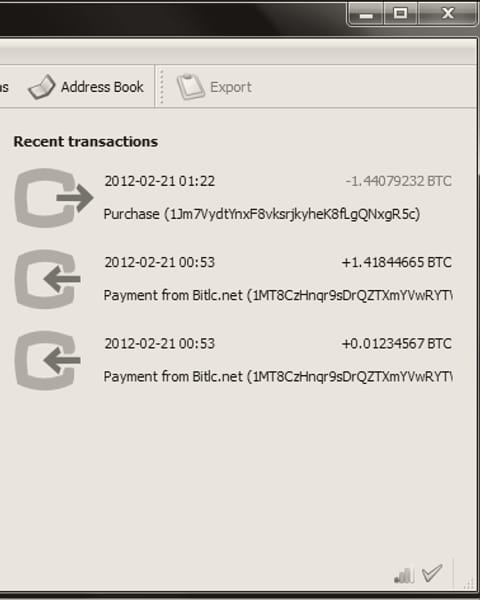
Van der Laan came to Bitcoin in 2011 to replace its desktop window. On 7 May van der Laan started Bitcoin-Qt as a separate project, billed as a “Qt4 based GUI replacement for Bitcoin”: a new graphical interface, built with a toolkit called Qt. It promised to ask “for confirmation before sending coins, for your own safety”, and to show a progress bar while the blockchainBlockchainBitcoin's shared record of every payment since 2009, stored in blocks that each link to the one before — which is what makes it a chain. downloaded, “so that you don’t have to wonder how many blocks it needs to download”.[5]
Gavin Andresen, who was running the project, reviewed the merge that September: “Looks good.” Bitcoin-Qt became part of Bitcoin’s main code on 26 September 2011, and Bitcoin 0.5.0, released on 21 November, brought “a completely new graphical interface that uses the Qt user interface toolkit.” It is still the window people see when they run Bitcoin Core on a desktop computer; the original project’s page calls it “the official UI for the reference bitcoin client”.[6][7][5]
Running Bitcoin Core
By early 2014 van der Laan was working on Bitcoin Core full time, drawing a salary from the Bitcoin Foundation. On 7 April 2014 Andresen announced that van der Laan would take over from him as the “Bitcoin Core Maintainer”, praising the work on the program’s window as “re-implementing, and vastly improving, the Bitcoin Core user interface.” The two had not yet met in person; Andresen hoped to do so for the first time at a conference in Amsterdam.[8][9]
The job meant reviewing and merging other people’s changes and putting out releases, signed from 2015 with a key in van der Laan’s name so that users could check them. When the foundation ran short of money in 2015, van der Laan, Andresen and another developer, Cory Fields, moved to the Digital Currency Initiative at MIT, which paid van der Laan from then on and called the role lead maintainer. Van der Laan’s own changes included automatic use of Tor, a network that hides where internet traffic comes from, and BIP-155, which lets nodes share the longer addresses of newer Tor services. By GitHub’s count, which includes merges, van der Laan has made more commits to Bitcoin Core than anyone else.[10][11][12][13][14][15][16][17][18]
Read BIP-155Who decides?
In 2015 Bitcoin’s developers split over raising the 1 MB limit on the size of each block. Van der Laan was “weakly against a block size increase in the near future”, worried that bigger blocks would “push people at the lower end away from running their own full nodes”, the computers that check every payment against the rules. The answer lay elsewhere: “The whole idea of everyone verifying the whole world’s bus tickets and coffee purchases seems ludicrous to me.”[19]
Mike Hearn, a developer who sided with Andresen, wanted someone to decide. Bitcoin Core, Hearn complained on the developers’ mailing list that June, had “no decision making ability at all, because anyone who shows up and shouts enough can generate ‘controversy’”. Van der Laan refused to be that someone: “Bitcoin is supposed to be a robust, global, decentralized network beyond anyone’s control.” The maintainer decided “code issues”, not Bitcoin’s rules, which every program on the network shares: “Bitcoin Core maintainer does not decide about protocol or consensus level changes.”[20]
To van der Laan those rules were “more like rules of physics than laws”, and changing them under pressure was dangerous: “I’ll jump ship before being forced to merge an even remotely controversial hardfork.” When Andresen and Hearn released their own version of the software, Bitcoin XT, van der Laan and Gregory Maxwell, another Bitcoin Core developer, saw it “as an act of betrayal”, The New York Times reported in January 2016. “No one ‘owns’ Bitcoin,” van der Laan told the paper. “No one can decide over Bitcoin as if it’s some kind of company.”[21][4]
When Maxwell proposed SegWitSegWitSegregated Witness: a 2017 upgrade that moved signatures into a separate part of each payment, making room for more payments. in December 2015, a soft forkSoft forkA change that tightens Bitcoin's rules, so nodes that haven't upgraded still accept the new blocks. that made room for more payments without a change older software would reject, van der Laan replied: “Sounds good to me.” Van der Laan merged its code in June 2016 and that October announced Bitcoin Core 0.13.1, with “activation parameters for the segwit softfork”. SegWit took effect in August 2017.[22][23][24][25]
See block 481,824, where SegWit took effectRemoving Gavin Andresen’s access
On 2 May 2016 Andresen wrote that he was convinced that Craig Wright, an Australian computer scientist, was Satoshi Nakamoto, Bitcoin’s creator. The same day his access to Bitcoin Core’s code was removed; the developer Peter Todd announced on Twitter that the team was “concerned that he may have been hacked.”[26][27][28]
Van der Laan explained the decision four days later in a blog post, “Dazed and confused, but trying to continue”. Someone claiming to be Bitcoin’s creator was “surrounded by technological and social trickery, based on backdated GPG keys, faked digital signaturesDigital signature (ECDSA, Schnorr)Proof, made with a private key, that the owner approved a payment. Anyone can check it; practical forgery is infeasible under current assumptions.”, and Andresen had once said that Satoshi could have access to the code whenever he asked: “there is a risk that he’d give away the repository to a scammer.” It was “only the final straw”: Andresen “hadn’t done anything as a maintainer for a year or so”, and van der Laan had asked him “various times to give up his privileges”, by phone and by email, and “The response was always that he’d ‘sleep on it’.”[28]
Some saw it differently. Erik Voorhees, the founder of the exchange ShapeShift, called it “Deceptively done”: “Hack hadn’t occurred.” Marek Palatinus, the founder of the mining pool Slush Pool, wanted to see community consensus: “Bitcoin is not yours.” Andresen himself asked people to calm down: “who has commit access is not important,” he wrote. “Stop bashing @orionwl,” he added, using van der Laan’s Twitter name. A year later van der Laan told CoinDesk that Andresen “had become more of a risk to the project than a boon.”[29][30][12]
Lawsuits and stepping back
Wright went on claiming to be Satoshi. In January 2021 his lawyers accused the websites bitcoin.orgbitcoin.orgThe website Satoshi Nakamoto registered in August 2008. It published the Bitcoin white paper and still hosts it. Volunteers run it today. and bitcoincore.org of breaching his copyright by hosting the Bitcoin white paper. The same day van der Laan took the paper off bitcoincore.org: “The licensing status of this file is unclear.” Bitcoin.org kept its copy, and said the change had been merged “with less than 2 hours of public review” and that the project had “lent ammunition to Bitcoin’s enemies, engaged in self-censorship”.[31][32][33]
The next day van der Laan published “The widening gyre”: “I realize I am myself somewhat of a centralized bottleneck.” The plan was to hand bitcoincore.org “to an organization instead of private ownership”, let other maintainers publish releases “without my involvement”, and “take (even more) of a background role”. The role was “particularly stressful”, van der Laan added.[34]
Wright had also gone to court. In 2021 his company Tulip Trading sued van der Laan and other Bitcoin developers in London, arguing that they owed it a duty to write code returning bitcoins it said had been taken in a hack; in 2022 Wright sued many of them again, claiming copyright in the white paper. A High Court judge ruled in 2022 that Tulip’s claim could not go ahead, but on 3 February 2023 the Court of Appeal let it proceed. If Bitcoin’s decentralised governance “really is a myth”, Lord Justice Birss wrote, there was “much to be said for the submission that bitcoin developers, while acting as developers, owe fiduciary duties” to owners: a legal duty to act in their interest.[35][36][37]
Van der Laan had announced a Bitcoin Core release for the last time in April 2022 and made a last merge that July. Three days after the appeal ruling came a post, “Of regrets”. It quoted the MIT licence, the only licence van der Laan had used for a decade of open-source code, with its promise of no warranty, and then: “I strongly regret it. It is a fool’s game in retrospect. The no-warranty clause apparently doesn’t hold up in court (at least in the UK).” It ended: “All for trying to do a good thing.” The next day van der Laan asked for the laanwj key to be removed from Bitcoin Core’s trusted keys, the list that lets maintainers merge changes; it was done on 16 February 2023.[38][39][40][41]
In March 2024 the High Court declared that Wright is not Satoshi. Van der Laan wrote of “years of gaslighting and harassment”, adding: “I did not expect this much sanity from the legal system.” Tulip Trading dropped its claim the next month, the copyright claim ended in the developers’ favour that June, and the judge certified both as totally without merit. On 23 May 2024 van der Laan put the white paper back on bitcoincore.org.[37][42][43][44][45]
Van der Laan had written that March of perhaps becoming “more active in bitcoin development again. No promises though.” A rewrite of how Bitcoin Core asks a home router to open a port for it, replacing an outside library with “a built-in implementation”, shipped in version 29.0 in 2025. Van der Laan’s GitHub profile now reads: “embedded software developer with an interest in P2P systems, robotics and decentralized infrastructure - former bitcoin-core maintainer”.[42][46][47][1]
Reviewed . To report a mistake, email hello@utxohub.com.
Picture: Bitcoin-Qt 0.5, the interface van der Laan brought into Bitcoin, in 2012. Bitcoin developers, via Wikimedia Commons, MIT, toned by UTXOHub.

BIPs by Mara van der Laan
1 proposalMore people
Building Bitcoin Pieter WuilleBitcoin Core developer, co-author of SegWit and Taproot
 Gregory MaxwellBitcoin developer, co-founder of Blockstream
 Andreas M. AntonopoulosAuthor of Mastering Bitcoin
 Elizabeth StarkCo-founder and CEO of Lightning Labs
 Peter ToddBitcoin developer behind replace-by-fee and OpenTimestamps
 Luke DashjrMaintainer of Bitcoin Knots, BIP editor 2016–2026
References
- GitHub, “laanwj (Mara van der Laan)”.
- University of Groningen, “Multiresolution volume processing and visualization on graphics hardware (PhD ceremony)”, 4 February 2011.
- Phoronix (Michael Larabel), “Etnaviv: An Open-Source Driver For Vivante GPUs”, 11 January 2013.
- The New York Times (Nathaniel Popper; archived), “A Bitcoin Believer’s Crisis of Faith”, 14 January 2016.
- GitHub (laanwj/bitcoin-qt), “Bitcoin-qt: Qt4 based GUI replacement for Bitcoin (README, September 2011)”, 7 May – 18 September 2011.
- GitHub (bitcoin/bitcoin), “Qt GUI #521”, 18–26 September 2011.
- GitHub (bitcoin/bitcoin), “Bitcoin 0.5.0 release notes”, 21 November 2011.
- Bitcoin Foundation (Gavin Andresen; archived), “Bitcoin Core Maintainer: Wladimir van der Laan”, 7 April 2014.
- MIT Technology Review (Tom Simonite), “The Man Who Really Built Bitcoin”, 15 August 2014.
- Bitcoin development mailing list, “New GPG signing key for Bitcoin Core binary releases”, 24 June 2015.
- Bitcoin Magazine (Giulio Prisco), “Gavin Andresen and Other Core Developers Join MIT’s Digital Currency Initiative”, 22 April 2015.
- CoinDesk (archived), “Where is Gavin Andresen? The Quiet Exile of Bitcoin’s Former Face”, 19 May 2017.
- MIT Digital Currency Initiative (archived), “Wladimir van der Laan”, November 2020.
- Bitcoin Core, “Bitcoin Core 0.12.0 (Automatically use Tor hidden services)”, 23 February 2016.
- GitHub (bitcoin/bitcoin), “net: Automatically create hidden service, listen on Tor #6639”, 4 September – 12 November 2015.
- GitHub (bitcoin/bips), “BIP 155: addrv2 message”.
- Bitcoin Core, “Bitcoin Core 0.21.0”, 14 January 2021.
- GitHub (bitcoin/bitcoin), “Contributors”, read 18 October 2026.
- Bitcoin development mailing list (Wladimir J. van der Laan), “Re: Block Size Increase”, 7 May 2015.
- Bitcoin development mailing list, “Concerns Regarding Threats by a Developer to Remove Commit Access from Other Developers (thread)”, 18 June 2015.
- Bitcoin development mailing list (Wladimir J. van der Laan), “Re: The need for larger blocks”, 27 June 2015.
- Bitcoin development mailing list (Wladimir J. van der Laan), “Re: Capacity increases for the Bitcoin system”, 8 December 2015.
- GitHub (bitcoin/bitcoin), “Segregated witness rebased #8149”, merged 24 June 2016.
- Bitcoin development mailing list (Wladimir J. van der Laan), “Bitcoin Core 0.13.1 released”, 27 October 2016.
- mempool.space, “Block 481,824”, 24 August 2017.
- Gavin Andresen’s blog (archived), “Satoshi”, 2 May 2016.
- CCN (Samburaj Das; archived), “Bitcoin Chief Scientist Gavin Andresen’s GitHub Commit Access Removed”, May 2016.
- Wladimir J. van der Laan’s blog, “Dazed and confused, but trying to continue”, 6 May 2016.
- Bitcoinist (Justin O’Connell), “Gavin Andresen’s commit access”, 7 May 2016.
- CriptoNoticias (archived; Spanish, with the posts it quotes), “Bitcoin Core revocó acceso a Gavin Andresen al código fuente de Bitcoin”, May 2016.
- Decrypt (Liam Frost), “Bitcoin.org refuses to remove whitepaper despite legal demands”, 21 January 2021.
- GitHub (bitcoin-core/bitcoincore.org), “Remove bitcoin.pdf #740”, 20 January 2021.
- Bitcoin.org (Cøbra; archived), “Regarding CSW and the Bitcoin Whitepaper”, 21 January 2021.
- Wladimir J. van der Laan’s blog, “The widening gyre”, 21 January 2021.
- High Court of England and Wales, “Tulip Trading Ltd v Bitcoin Association for BSV and others [2022] EWHC 667 (Ch)”, 25 March 2022.
- Court of Appeal of England and Wales, “Tulip Trading Ltd v van der Laan and others [2023] EWCA Civ 83”, 3 February 2023.
- High Court of England and Wales, “Crypto Open Patent Alliance v Wright [2024] EWHC 1198 (Ch), para 52”, 20 May 2024.
- Bitcoin development mailing list (W. J. van der Laan), “Bitcoin Core 23.0 released”, 25 April 2022.
- GitHub (bitcoin/bitcoin), “add glozow builder key #25552 (van der Laan’s last merge)”, 7 July 2022.
- Wladimir J. van der Laan’s blog, “Of regrets”, 6 February 2023.
- GitHub (bitcoin/bitcoin), “Remove laanwj from trusted-keys #27054”, 7–16 February 2023.
- Mara van der Laan’s blog, “Finally”, 19 March 2024.
- High Court of England and Wales, “COPA v Wright and others (form of order) [2024] EWHC 1809 (Ch), paras 3–5”, 16 July 2024.
- High Court of England and Wales, “Crypto Open Patent Alliance v Wright [2025] EWHC 1139 (Ch), para 34”, 12 May 2025.
- GitHub (bitcoin-core/bitcoincore.org), “Revert “Remove bitcoin.pdf” #1024”, 23 May 2024.
- Bitcoin Core, “Bitcoin Core 29.0”, April 2025.
- GitHub (bitcoin/bitcoin), “net: Replace libnatpmp with built-in PCP+NATPMP implementation #30043”, 5 May – 30 September 2024.